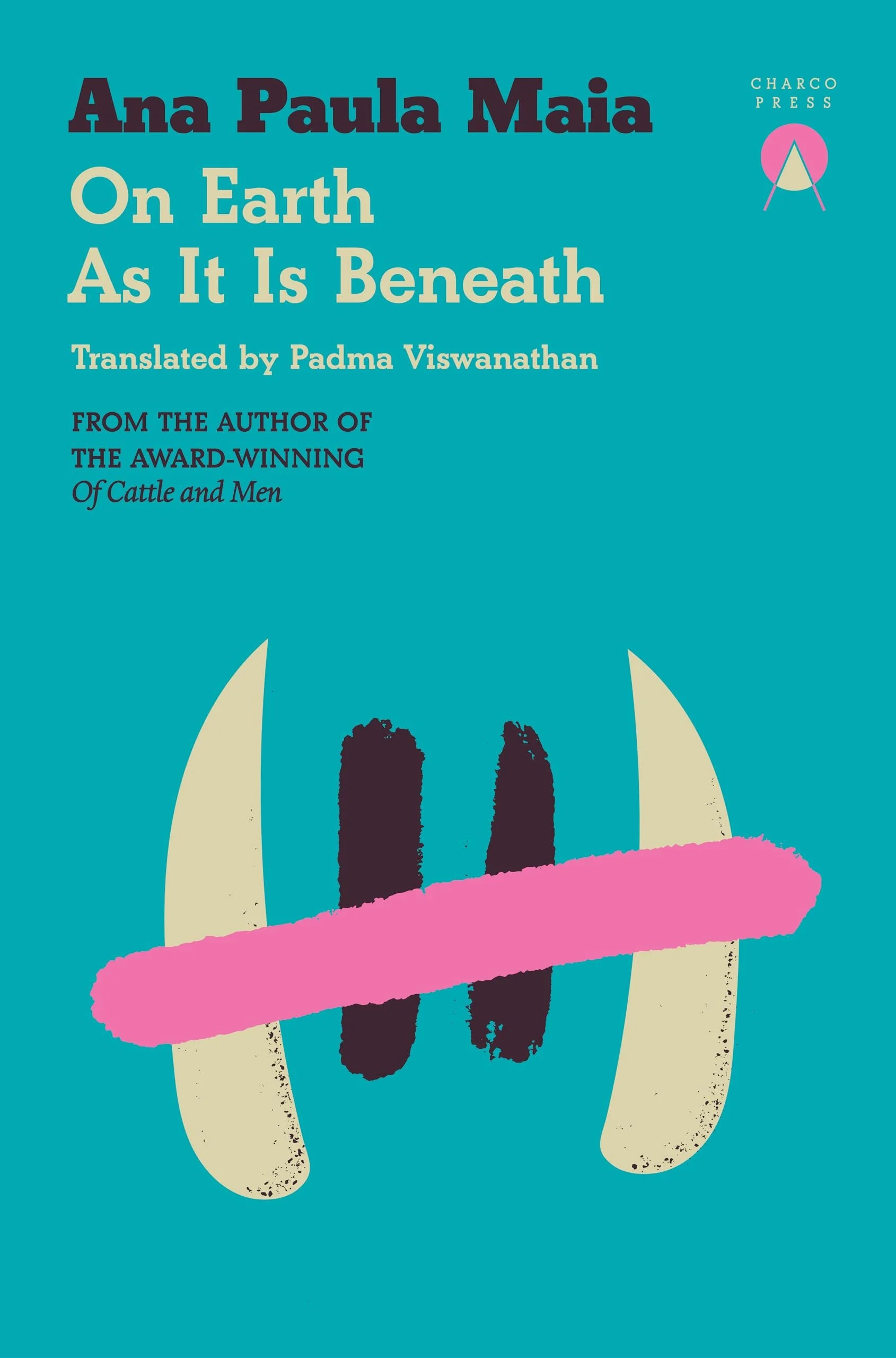
Book Review : Ana Paula Maia - On Earth As It Is Beneath (2017)
It's both a cliché and the world's most painful truth : nothing lasts forever. Not the most important nor the most painful things.
You can tell when an idea has outlived its usefulness. Think about video stores near the end. First the shelves stopped changing. Then the new releases became less new. Then the employees started looking like they were guarding a museum no one had asked to preserve. Video stores were a common luxury. One of those small civic rituals people abandoned before admitting they had abandoned them. Now imagine that same process happening to a prison.
Not a prison destroyed by revolution, scandal or reform. Just a prison everyone gradually stops believing in. The guards remain. The inmates remain. The routines remain. But the world around it has moved on, and no one knows what to do with the people trapped inside an obsolete idea. So they leave them there and just stop thinking about them. That is the terrifying hypothetical Brazilian author Ana Paula Maia explores in her novel On Earth As It Is Beneath.
The novel takes place in a decaying prison colony built on cursed land. People were tortured and killed there years before the current inmates arrive. Officially, the colony exists to rehabilitate its prisoners. In practice, it exists to outlive them. No one has ever escaped from it, though escape almost feels like the wrong ambition. The place is half-forgotten, almost empty and spiritually exhausted, occupied by three aging inmates whose identities have fused with the routines meant to punish them.
Over them rules Melquiades, a restless, aging warden with an extremely dim view of humanity and too much time to act on it. He is a man who has spent so long enforcing a dead system that he can no longer tell the difference between order and cruelty.
Power and Punishment
What makes this short novel fascinating is its understanding of prison as a power structure that survives even after everyone has stopped believing in it. There are real criminals here, men atoning for heinous crimes and there is one man with resources, weapons and the authority to decide whether they live or die. But as the colony falls into oblivion, the structure becomes bigger than any of them. The inmates submit to Melquiades because submission improves their odds of surviving another day, even if it guarantees nothing beyond that.
That is the horror of the place. There is nothing for a man with godlike power to do in a forsaken prison except use it.
This is why Melquiades begins thinning out his inmate population by hunting them. He has become his function. His purpose is to punish, and when there is no punishment left to apply except death, he obeys the logic of the institution with the calm conviction of a man doing paperwork. The remaining inmates barely resist because resistance would require imagining a world beyond the prison and that world has become theoretical to them. They are not just prisoners. They are performers in a dance choreographed before they arrived and one that will keep going after they are gone.
On Earth As It Is Beneath raises a question we rarely think to ask anymore: are our institutions still doing what they claim to do or have we simply gotten used to the desires of the people placed in charge of them?
Bronco Gil, Redemption and Morality
My favorite character in On Earth As It Is Beneath is Bronco Gil, a brutal killer imprisoned for murdering another brutal, corrupted man. His crime gets its own chapter and Maia lets it sit there without telling you exactly how to feel about it, which is part of what makes him so disturbing. Bronco Gil is not innocent. He is not misunderstood in any sentimental sense. Violence and death are central to his identity, maybe even his purpose. But in a society already organized around violence, exploitation and corruption, what exactly is a man like Bronco Gil supposed to become?
That is where the novel becomes sneakier than a simple prison allegory. Bronco Gil has been punished for doing something the outside world also does, only without uniforms, paperwork or the language of justice. He is an instrument of brutality produced by a brutal world, then discarded once his brutality becomes too literal to tolerate. Is his fate worse because he is incarcerated, or because incarceration denies him the only role he understands?
Maia never answers this directly, thank God. The novel is smarter than that. But through Bronco Gil, she suggests that brutality does not disappear when society locks it away. It waits. It adapts. It looks for a purpose, even in a place where purpose itself has started to rot.
*
On Earth As It Is Beneath was translated into English in 2025 and shortlisted for the 2026 International Booker Prize. It didn’t win, but it belonged there. This is exactly the kind of novel prizes are supposed to notice: short, brutal and built around difficult questions that feel both invisible and omnipresent.
A lot of the world we live in depends on faith in structures we no longer think to question. Prisons. Workplaces. Governments. Families. The daily machinery of authority. We move through these systems automatically, trusting that someone, somewhere, remembers what they were supposed to do in the first place. Maia’s novel suggests that maybe nobody does. Maybe the structure keeps going because the structure is the only thing anyone still understands.
That’s an uncomfortable observation, and On Earth As It Is Beneath is an uncomfortable novel. But some discomfort is clarifying. It reminds you that the world does not become less brutal just because brutality has been organized.
7.7/10
* Follow me on Instagram , Bluesky and Substack to keep up with new posts *