Movie Review : Eddington (2025)
Whoever said political turmoil breeds great art probably enjoyed the movie Don’t Look Up a little too much. Most art that responds directly to current events fucking sucks. Not because artists aren’t trying, but because real cultural consequences take years to ferment into something digestible. And half the time, those consequences turn out to be nothing anyway. So the idea that anyone would try to make a movie about the COVID-19 era this soon feels like jumping into a volcano to see if it’s hot.
And yet, here comes Ari Aster with Eddington, betting his entire post-Midsommar career on the idea that anyone still wants to engage with the psychic residue of lockdown. Bold move. Insane move. Except Eddington isn’t really about COVID at all. It’s about a much older, more durable pathology. One that predates quarantine, predates Columbine, maybe even predates the invention of suburbia.
Eddington is a movie about American violence. Why it’s always simmering under the surface, and what happens when everyone finally runs out of reasons to pretend it’s not there.
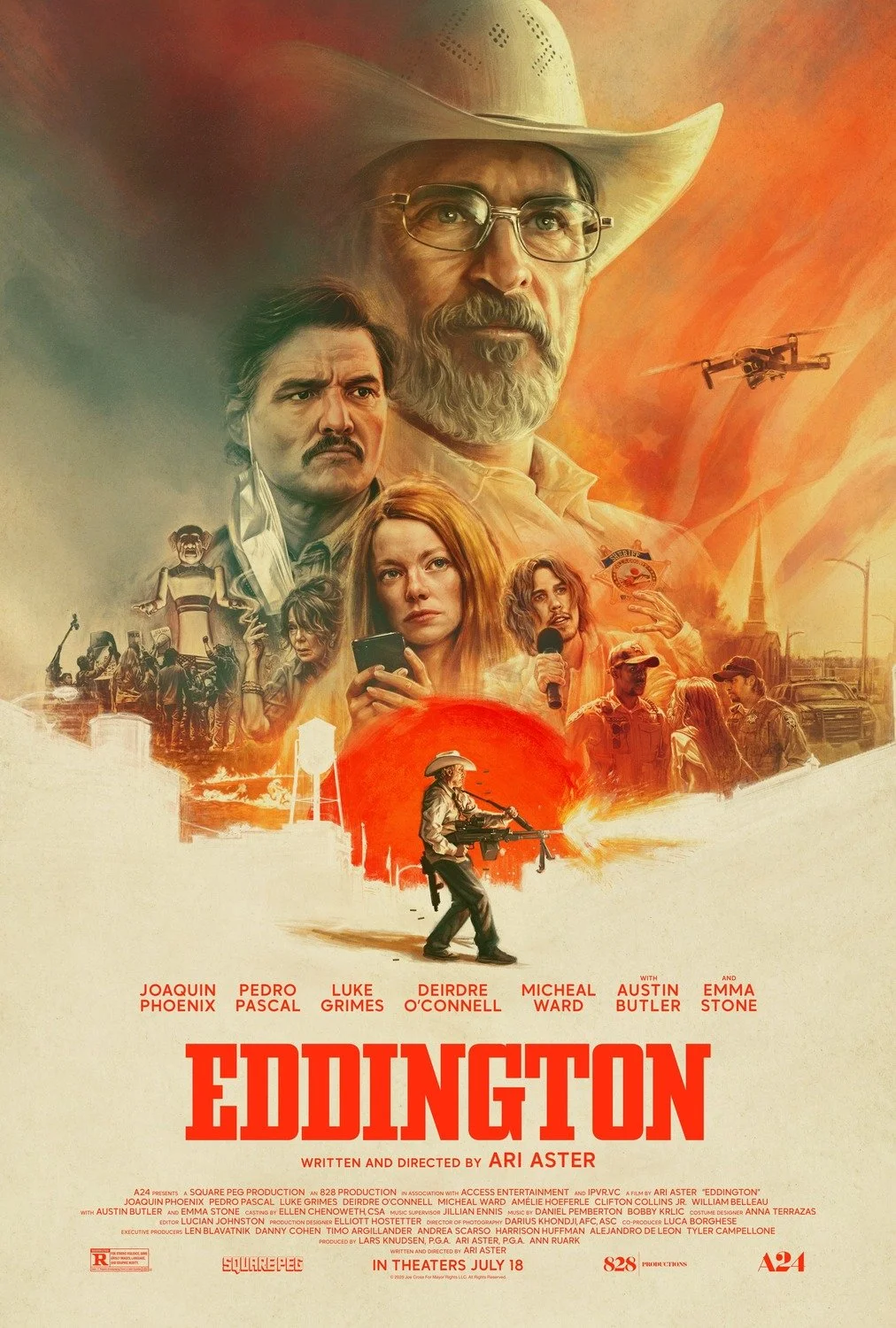
The movie takes place in a dusty New Mexico town during May 2020, the exact moment when everyone realized the pandemic wasn’t going to be over by summer, but still hoped it might be. The plot (on paper) is about a municipal election. But in practice, it’s a slow-motion collapse of two male egos in surgical masks.
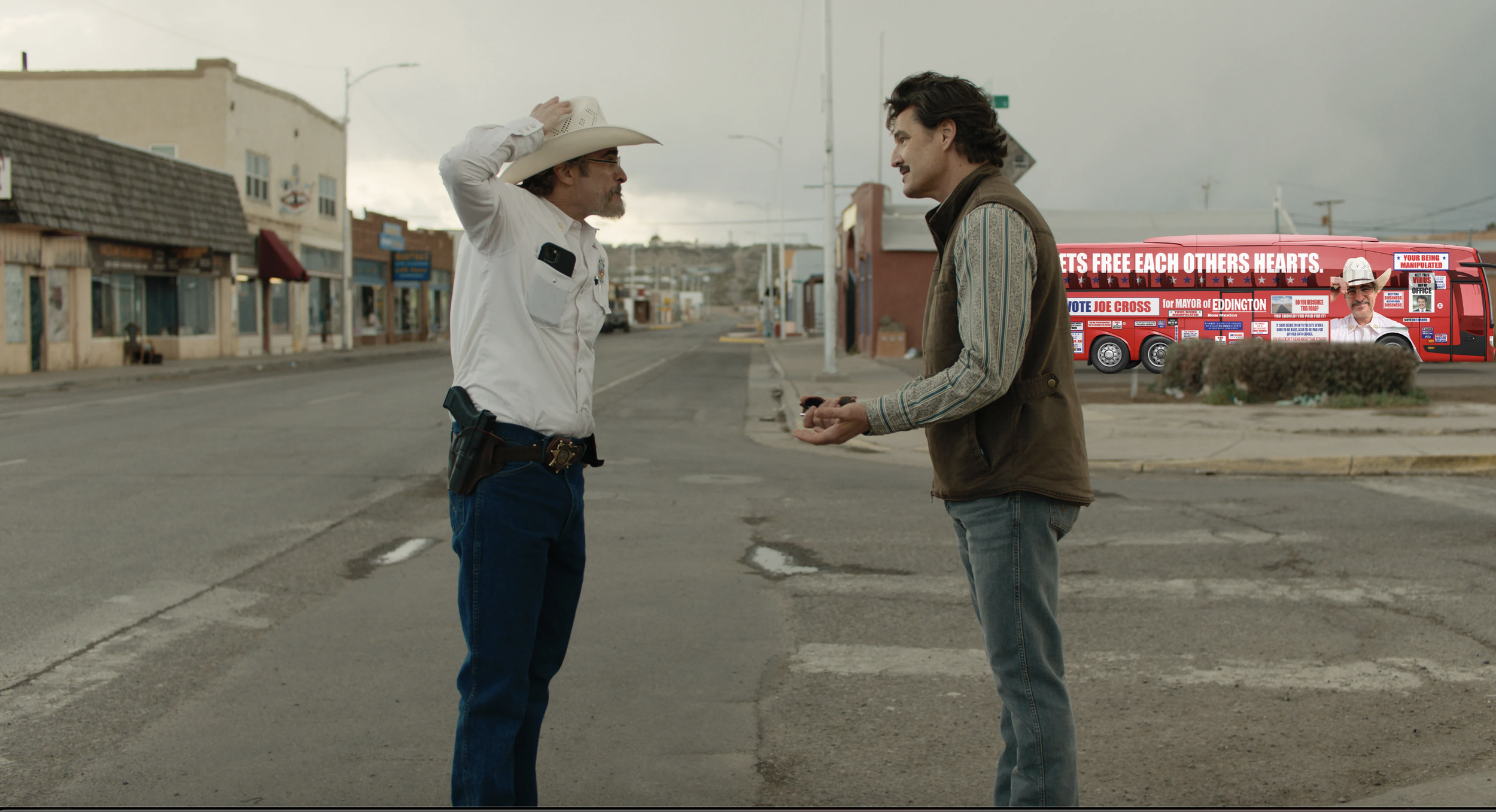
Mayor Ted Garcia (played by middle-aged thirst trap Pedro Pascal) is trying his best to enforce mask mandates without turning into a dictator or a meme. Opposing him is Sheriff Joe Cross (Joaquin Phoenix). Joe’s not just against the rules, he’s against the entire idea of rules. So he runs against Garcia. Tension builds. Reality breaks down. And then Katy Perry shows up, not physically, but spiritually, like a modern Greek chorus guiding both men toward their own private Armageddons.
This isn’t satire. It’s not realism either. It’s something weirder: a COVID-era western disguised as a moral standoff where everyone loses, and no one’s quite sure why they were fighting to begin with.
Ari Aster & Guns
In his 1994 duet with Ice Cube Natural Born Killaz, Dr. Dre calmly declares: You got a problem?/I got a problem solver/And its name is revolver. In American movies (and Occidental culture more broadly), violence is almost always the answer. Doesn’t matter what the question is. Violence is the reset button. The redemptive arc. Even when the problem is violence, the solution is inevitably one last righteous beatdown administered by someone with a tragic past, better values and perfect aim.
Ari Aster is going after this myth in Eddington. In his world (and I guess in our own too), violence doesn’t fix problems. It is the problem and it’s contagious.
For most of its first hour, Eddington immerses you in the tension and malaise of the early pandemic: empty streets, masked faces, that endless waiting-for-the-other-shoe-to-drop vibe. Then, just when you think it’s settling into a bleak quarantine comedy, it flips the script. The film becomes a full-blown modern Western, with its most potent weapon being something almost laughably low-tech: the slap.
This isn’t a spoiler: you can watch Pedro Pascal deliver them like cold justice to Joaquin Phoenix in the trailer. The slaps are meant to restore honor, to reset some moral ledger. But here’s the kicker: the guy getting slapped doesn’t have any honor left to repair. So instead of fixing anything, the slaps just open wounds that won’t close.
From the moment a gun fires and actually hits its target, Eddington starts rewinding the classic Western playbook. Instead of shooting problems into submission, sheriff Joe Cross only manufactures more chaos trying to solve his mess with bullets but ending up as the architect of his own undoing. You can practically taste your own anxiety at some point, but no one watched Ari Aster movies to feel good about themselves.
You watch him to dive headfirst into your worst unchecked feeling knowing that he'll let your off at the end by letting the credits rolls. This is a Western turned inside out: not the myth of the lone hero taming the wild, but the story of a man disappearing into the chaos he's trying to quiet. There’s no survival of the fittest in Eddington. Survival might not even be what you really want given that you're part of a nation that thrives on myth and the use of overpowered assault rifles to sort your problems out.
The Part That’s About Covid-19 and Political Polarization
But yeah, Eddington is also about COVID. Somewhat. It doesn’t pretend to offer any sweeping revelations about the pandemic (and thank God for that), but it does something better: it zooms out just far enough to show both ends of the political spectrum absolutely losing their goddamn minds in response to an invisible threat. Nobody looks good here. That’s the point. Fear makes everyone irrational, but in different flavors. Everyone’s improvising ethics in real time.
Including the George Floyd protests was a bold move, and Aster pulls it off by refusing to focus on them. Instead, he frames the subplot on the white people who made those protests about themselves. The self-declared allies. The educated opportunists who monopolize the conversation under the guise of "amplifying Black voices," while constantly interrupting the only Black guy in town to explain how woke they are.
The film doesn’t mock the protests, it mocks the people who used them to score points, likes, and implied sex. And it does so with the kind of cold, observational cruelty that makes you feel complicit just for watching. Eddington is judgmental, yes, but it’s an equal-opportunity judgment. Nobody gets a free pass, and anyone willing to expose themselves to ridicule gets a full helping of it. The film doesn’t moralize so much as it documents moral collapse in high definition.
The only character who feels slightly out of sync with this ecosystem is Vernon (Austin Butler), who enters like a podcaster with a prepper fetish and slowly mutates into a millennial David Koresh. I’m convinced I’m right about this, because Koresh's birth name was actually Vernon.
At first, he seems like comic relief, your standard-issue conspiracy guy with overbearing confidence. But by the final act, he’s radiating cult-leader energy like he stumbled in from a different movie entirely. He serves a purpose, but Aster keeps him at a distance, as if he’s saving Vernon for something else. Maybe a sequel. Maybe a spiritual cousin in another nightmare. Either way, he’s more of a magnetic question mark than a person, and that might be the most unsettling thing about him.
I feel like Aster is not done talking about American violence.
*
Eddington isn’t just good, it’s great. It unfolds like an alien flower blooming in slow motion, beautiful and grotesque, releasing invisible death spores into the air. It rewards you for watching in real time. For paying attention. For caring about people who are completely losing it.
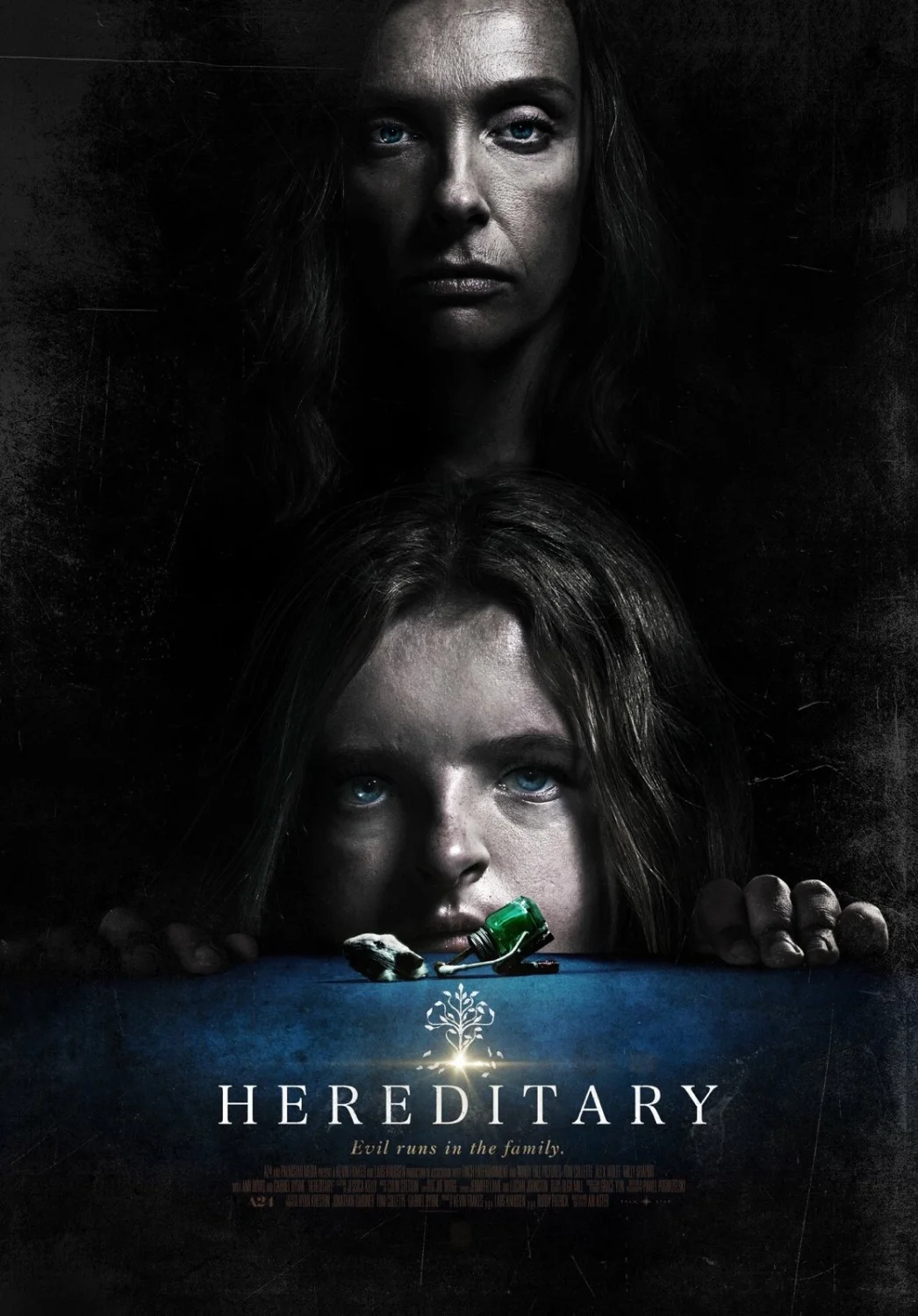
It’s not as personal as Hereditary or Beau is Afraid, so maybe it doesn’t hit masterpiece status, but it turned up with the same manic energy. The same sense that Ari Aster is making exactly the movie he wants, whether or not you’re emotionally prepared for it. If anything, Eddington confirms him as one of the defining filmmakers of our era, someone capable of moving from intimate, primal fears to surgical takedowns of public dysfunction without losing his voice or his venom.
We’re lucky to have him. Seriously. At a time when most directors are just trying to get through test screenings without losing their budget, Ari Aster is out here staging existential collapse like it’s grand opera. Let the man do whatever the hell he wants next. He's earned all the blank checks in Hollywood.
8.3/10
* Follow me on Instagram and Bluesky to keep up with new posts *