Movie Review : Hokum (2026)
Hotels and horror have always understood each other. Maybe we can blame Stephen King and Stanley Kubrick for turning room service into collective trauma, but it probably goes deeper than The Shining. Hotels are impersonal by design. They are temporary homes for people between identities, full of rooms where strangers sleep badly, lie to each other and pretend the carpet has not absorbed fifty years of human failure.
They are also perfect places for terrible people to hide, because no one stays long enough to develop a complete theory of anyone else’s terribleness. Hokum is a haunted house movie trapped inside a creepy hotel movie, or maybe the other way around. Either way, it fills its rooms with people of questionable character who have nowhere better to go, which is a recipe for a terrible time and great horror.
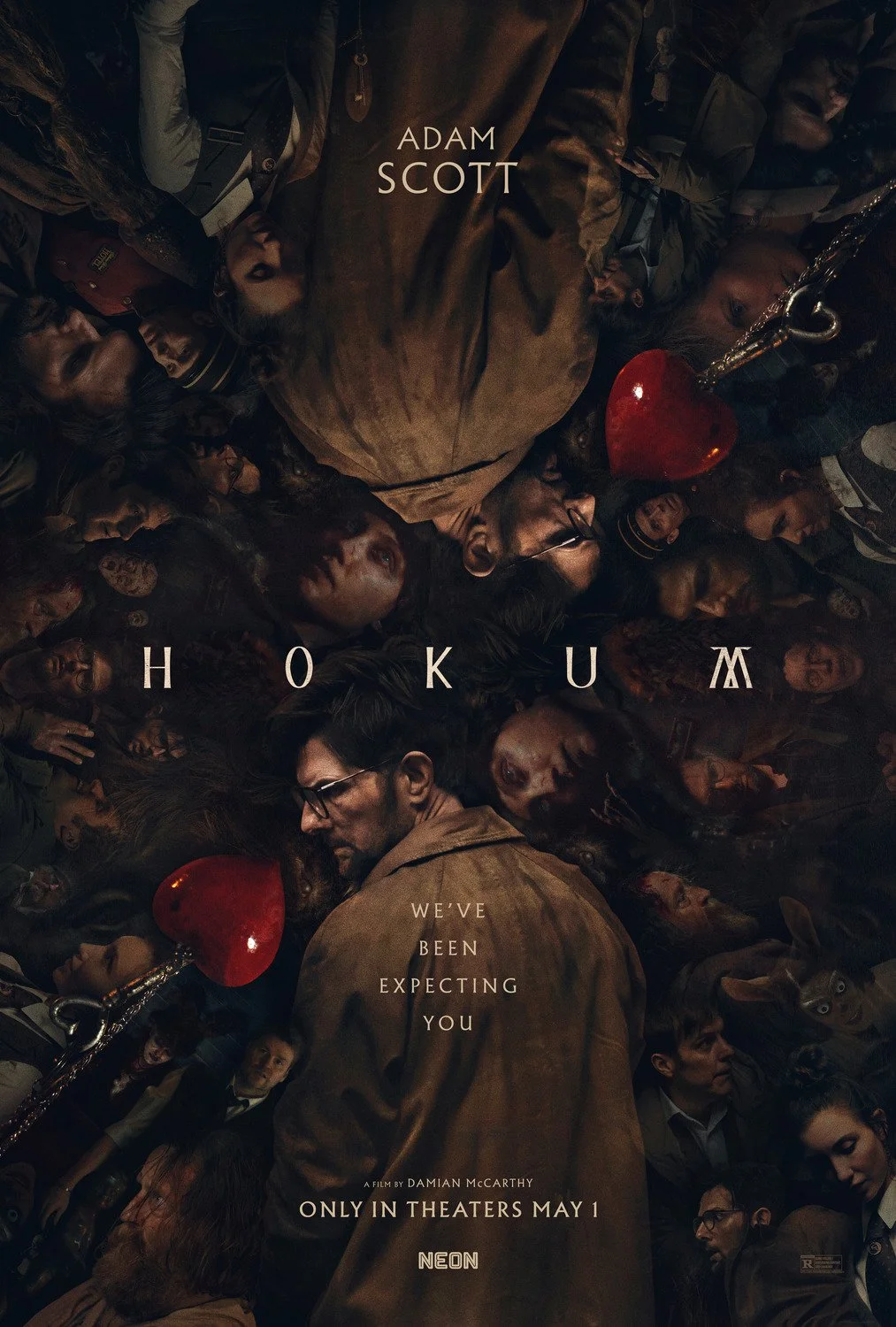
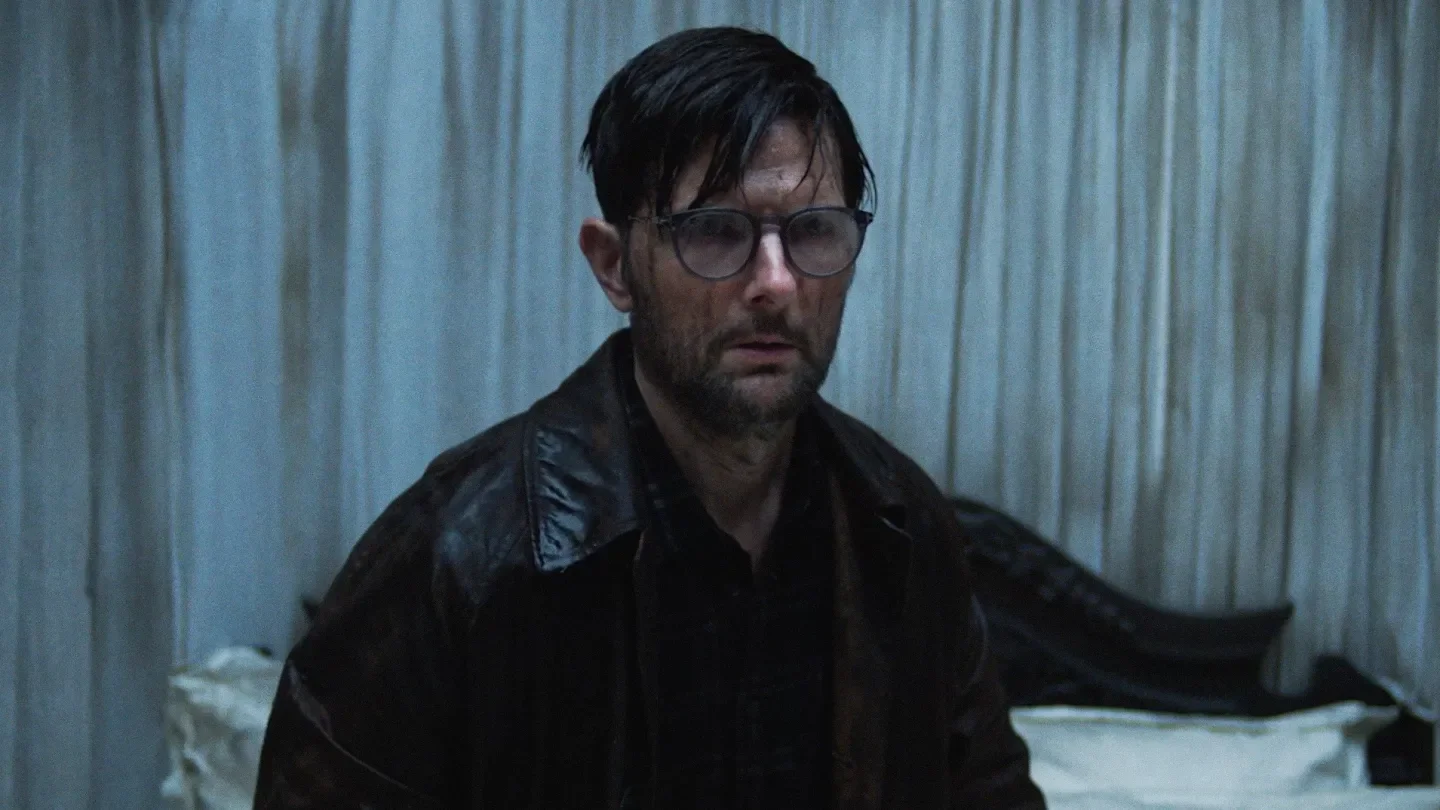
Hokum tells the story of Ohm Bauman (Adam Scott), a lonely, depressed author who appears to be haunted by the ghost of his dead mother. Unsure how to live with this curse, he travels to Ireland, to the hotel where his parents spent their honeymoon. His plan is simple enough: scatter their ashes, finish his novel and literally call it a wrap on his life. Bauman's plan doesn't exactly work out this way as whatever it is that haunts the Bilberry Woods hotel has a purpose for him.
Hotels & Narrative Claustrophobia
Hokum is a solid horror movie because it understands that originality is not always a matter of inventing new monsters. It takes the haunted hotel, the cursed family legacy, the grieving protagonist and the disappearing woman and filters them through Ohm Bauman’s depression.
That is where Hokum has its strongest personal touch (and I’m a sucker for movies with personal meaning). In the first half of the movie, Ohm is barely even a person. He is a walking wound that bleeds through every social interaction. Adam Scott plays him like a man who has become allergic to being perceived. Every conversation looks painful. Every attempt at connection feels like someone touching a bruise.
This matters because depression is not a sexy emotion, even though several movies have tried very hard to pretend otherwise. No one wants to save the depressed guy. They don’t recognize his pain as romantic depth. They see the bad vibes, the neediness, the emotional weather system forming over his head and they start looking for the exit. Hokum gets that right. Ohm is not lonely because people fail to understand his beautiful sadness. He is lonely because sadness has made him difficult to be around.
But something keeps Hokum from becoming iconic and I’m not sure the problem is any one thing. There are too many characters, too many side stories, too many little narrative debts to settle and they end up parasitizing Ohm’s journey through his own personal demons. The movie has atmosphere, sometimes a lot of it, but it’s too crowded to be properly hypnotic.
That matters in a haunted hotel movie. These stories need negative space. They need hallways that feel like they continue beyond the frame and doors you don’t want opened because you’re not sure reality has the proper permits behind them. Hokum has creepy moments, but it rarely threatens to become terrifying in the way the best horror can be. It knows what kind of movie it is, maybe a little too well. The kind that makes you lose your connection with language.
This is where it runs into its limit. It never really draws outside the lines of horror convention. You are frightened, entertained, sometimes even unsettled, but you are never confronted with something truly unspeakable. The monster has rules. The hotel has mechanics. The mystery has an architecture. That makes Hokum satisfying, but it also keeps it kind of safe.
Reinventing Jump Scares
One technical detail I really enjoyed about Hokum is its take on jump scares. I usually hate them because most jump scares are not truly scary. They are neurological pranks. They jack the volume at the right moment, kick your lizard brain in the ribs and then pretend they’ve shown you something horrifying. A lot of movies that use them (hello The Conjuring) end up relying on that trick like it’s a philosophy.
But Hokum does something smarter. It has quiet jump scares, which sounds like a contradiction until you see them work. McCarthy understands that silence, or even worse, ordinary ambient sound, can be the best possible soundtrack for stumbling upon an aberration. No musical shriek. No industrial thunderclap. Just the world continuing as usual while something impossible appears inside it.
That makes the vision more striking because it does not feel announced. It feels discovered. The normal backdrop reinforces the idea that you are seeing something that should not exist, something reality has failed to reject. Director Damian McCarthy is not completely reconciling me with jump scares, but he is making a persuasive case that the problem was never the device itself. The problem was all the hacks using it like a car horn.
*
I enjoyed Hokum a lot. Maybe it was overhyped by Red Letter Media and walked into my living room carrying impossible expectations, but that is not really the movie’s fault. What matters is that it finds something personal and specific inside familiar machinery. It does not reinvent haunted hotel horror. It does not need to. Sometimes there is more merit in understanding the old tools than pretending you invented new ones.
The movie’s biggest problem is that it wants to do almost too much. There is so much happening that the dread does not always get enough room to breathe, and horror, more than almost any other genre, needs oxygen. It needs silence, emptiness, the terrible pause before the thing in the corner becomes legible. Hokum occasionally crowds out its own best qualities.
Still, it is hard to begrudge a movie for being this enthusiastic about its own bad ideas. Hokum is messy, strange, funny, creepy and emotionally bruised in a way that feels sincere. It may not become the modern horror classic some people wanted it to be, but it has enough personality to make its ghosts feel like they belonged to someone before the movie found them.
7.6/10
* Follow me on Instagram , Bluesky and Substack to keep up with new posts *