
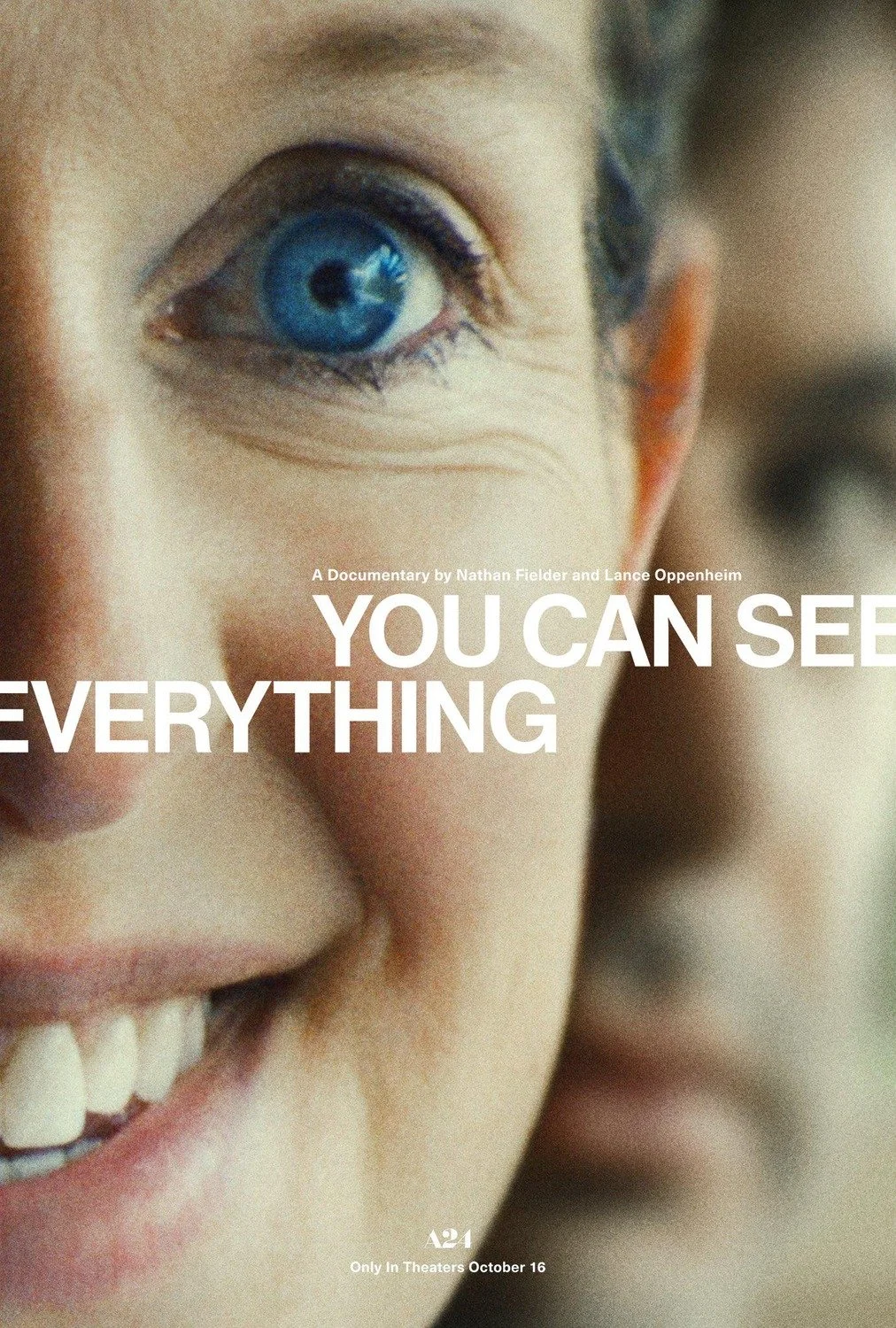
Movie Review : You Can See Everything (2026)
Nathan Fielder is a Canadian comedian who's famous for blending reality and performance by the virtue of existing. Anybody who's aware of his existence is convinced that he's either mildly autistic or preternaturally committed to the bit of being an autistic-looking comedian who delights in creating uncomfortable moments and the pleasure of his work is in not knowing and not even questioning what is actually true. Nathan Fielder is both a real person and a character at the same time.
No one questions whether or not disgraced entrepreneur Elizabeth Holmes has defrauded her investors and created a hell machine that erroneously told people they had cancer by analyzing a single drop of blood. But that's not what she believes Elizabeth Holmes and her boyfriend Billy Evans claim she's done nothing wrong and somehow thought the guy who mastered blending reality and fiction would help them prove it or forever muddy the waters enough to help them starts anew.
The result is a three hours-long documentary called You Can See Everything that is intense, shapeshifting, magical that basically doesn't answer any question.
In case you've been living under a rock for the last two months, You Can See Everything tells the story of Nathan Fielder and co-director Lance Oppenheim's chronicling of Elizabeth Holmes' last thirty-four days of freedom in 2023 and Fielder subsequently trying to understand whether they were being truthful or not, which only complicated the portrait further. If the truth is out there, it is disintegrating in front of our eyes and You Can See Everything asks whether it even existed to begin with.
The Great Unknowability
What makes You Can See Everything so compelling from the first minutes is how obvious it is that what Holmes and Evans are offering Nathan Fielder is a complete portrait. They are running away or running interference for one another whether the conversation becomes intense and Fielder is asking precise questions. They are trying to project the idea that Holmes is too awkward and atypical to have ever willing committed fraud. The couple seems completely uninterested in being truthful.
What they are interested in is relaunching Theranos in another form, which torpedoes their credibility right from the start. Although they never explain why they would give someone like Nathan Fielder access to their lives, it's hard not to believe they just want to undermine the public discourse around them and why wouldn't they? Between AI, social media performance, hyperreality and fiction, no one know what is true anymore and their bet — I believe — is that we're past caring about truth.
I'm not going to spoil the absolute mindfuck that is the second half of You Can See Everything, but it feels like they've won. They have shoved Nathan Fielder into a psychological torture chamber where he's forced to as himelf whether what he perceives to be the truth is actually true or the first coherent story he pieced up from that colossal effort in obfuscation they have put together. What happens is so out there that I'd forgotten myself several times I was technically not watching fiction.
We live in a time of distrust and where You Can See Everything becomes more than just a riveting movie is that it interrogates that distrust by putting in perspective what kind of movie they’re trying to make. It changes forms before your eyes trying to capture best not only what Elizabeth Holmes and Billy Evans are claiming is the truth, but the experience of chasing this alleged truth. What they claim, what Nathan feels is true and what YOU think is true are all highly incompatible versions of what's going on.

The Part About Billy While Elizabeth's in Jail
Now, the complete deconstruction of the narrative Holmes and Evans are selling Fielder in the Beach House lies on an incomplete portrait that Fielder chooses to show you in the second half. There's a clear cut conclusion that's easy to take here: Billy’s a violent narcissist and Elizabeth is under his spell. Part of this obviously true — or at least it's what Billy projected, but this portrait lies entirely on claims that Billy makes on his own. Nothing else in You Can See Everything points to this being true.
How does this benefit Elizabeth and Billy to act like this? Are they ever going to launch this theoretical Theranos 2.0? If anything, You Can See Everything shows that no one can really know the truth about them, but it also shows their unwillingness to be transparent and how manipulative they can be if you’re after something they have. That alone should keep any investor who is of sound mind and body as far away as possible from their shenanigans.
I'm possibly judging and condemning them based on poor information and biased perspective here, but it’s poor information they provided and a biased perspective they engineered. Unless Billy Evans is about to announce he's signed a contract with WWE as a villainous manager to kill time before his wife gets out of jail, I have no idea what he had to gain by acting like the most entitled turd in the Western Hemisphere on camera even if it feels like Nathan Fielder wanted nothing but to stick it to him.
*
You Can See Everything is the most exciting film I've seen in theatre this decade. It's not a big budget monolith. It's not even the project of a hot shot indie director. Nathan Fielder and Lance Oppenheim just killed it and provided the definitive document of our era of distrust. You Can See Everything shifts and shifts trying to wrap itself around a form of truth and only gets further and further away from it. It's technically a failed portrait, but it's also a huge victory for cultural self-awareness.
9.4/10
* Follow me on Instagram , Bluesky and Substack to keep up with new posts *