Movie Review : 28 Years Later: The Bone Temple (2026)
We live in a post-zombie society. They came, raided the all-you-can-eat buffet of brains and went on their merry way when we realized that we had become rotting dopamine zombies ourselves. Paradoxically, horror movies are undergoing a renaissance in theatre as being scared in large group is kind of fun. 28 Years Later : The Bone Temple is very much a post-zombie movie. The great majority of the on-screen characters are indeed zombies, but the one who matter aren't.
This is not really a movie about surviving them. You could argue it’s not entirely about surviving other people either. It’s about the more humiliating problem that comes in the midst of pure survival : whatever it is that you’re supposed to do with yourself when you don't have anything left to hope for.
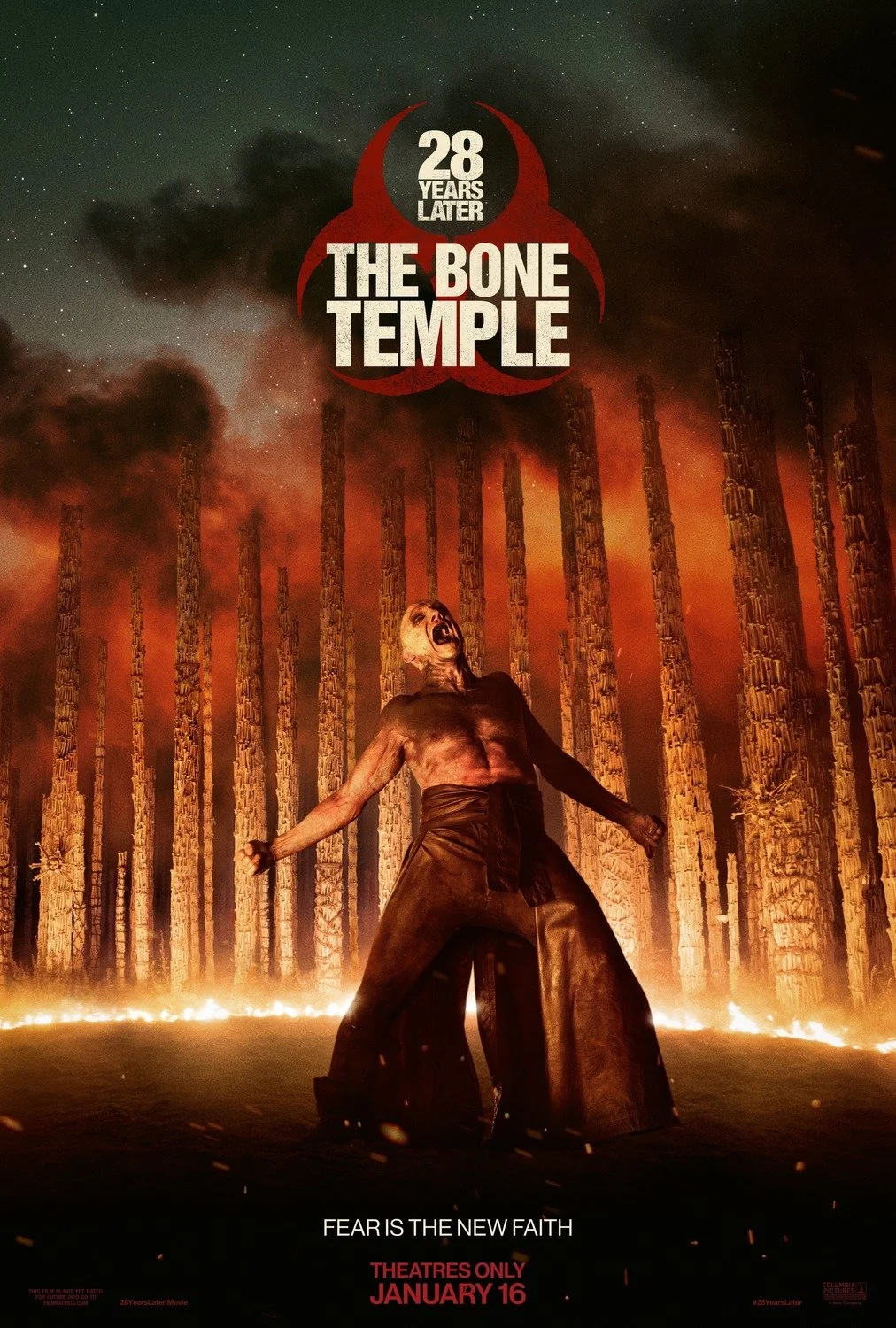
The Bone Temple tells the story of Dr. Kelson (Ralph Fiennes), a sad scientist trying to literally cure his male loneliness by drugging and trying to befriend a bloodthirsty "alpha" zombie (Chi Lewis-Parry). This is not exactly peer-reviewed behavior, but civilization has clearly stopped offering better options. Nearby, Spike (Alfie Williams) survives a fight to the death with a member of a wig-wearing Satanic cult, only to earn the privilege of joining the same wig-wearing Satanic cult.
If this sounds like a bad career move, it's because it is. Spike is just trying to find his place in a world that has no use for a soft and kind boy like him.
Abandon All Hope
The reason why this movie was sent to die in the cinematographic graveyard of January is obvious: it’s utterly unmarketable. There are zombies on screen, but only slightly and just one of them matters to the plot. There is a cruel, post-apocalyptic faction leader, but only half of the time and he’s kind of shoehorned into the central conflict. The least marketable, but most charming storyline of The Bone Temple involves an old man shooting a monster with a blowgun and dancing to old Duran Duran records.
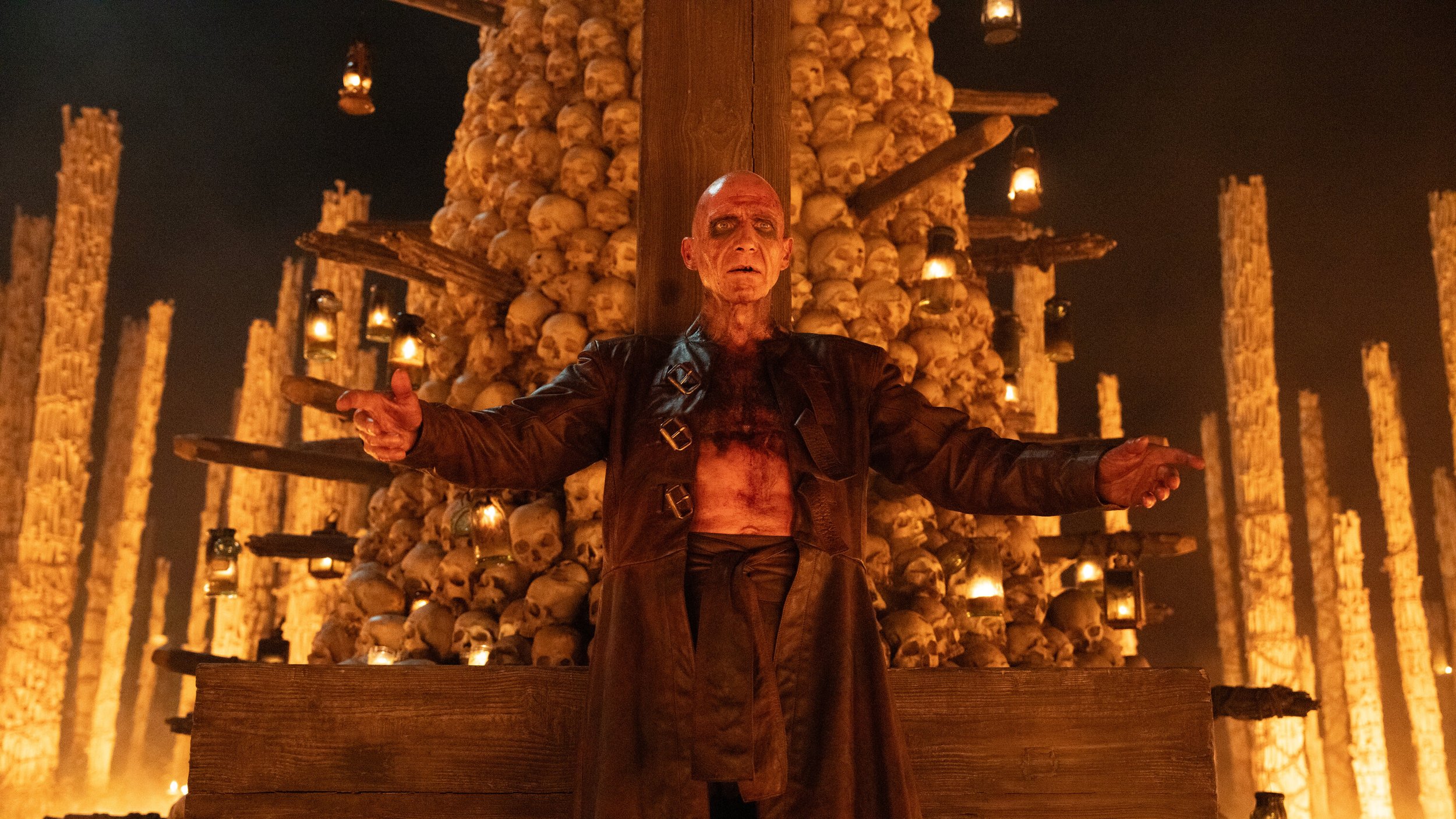
Dr. Kelson has replaced hope with companionship. Even in death, he's built an ossuary to keep close the people ripped away from him by the infection. It’s grotesque, obviously, but it’s also strangely moving. He has created a space where life and death coexist on the same plane, because accepting that everyone is gone would require accepting that he has no one left to be.
He’s the most interesting character in The Bone Temple not because he refuses to give up on humanity, but because he’s trying to keep his own identity alive after the world has stopped giving him reasons to do so. Kelson is an artistically inclined social creature trapped in a reality where society has become mostly theoretical. His tragedy is not that he still believes things can go back to normal. It’s that he remembers who he used to be and refuses to let the apocalypse make him smaller.
Spike's identity is threatened by a more coercive force, but Kelson is the most relatable of the two because he refuses to let the literal end of the world dictate who he’s gonna be. Spike is another anonymous victim while Kelson is a beacon of symbolic hope that doesn’t have any real world echo anymore. It’s not that he believes that the world can be good again, but he’s an example that you can refuse to let something as life altering at the freakin’ apocalypse change the foundation of your identity.
Art, Performance, Belief and Science
Kelson and wig-wearing cult leader Sir Lord Jimmy Crysal (Jack O’Connell) are two sides of a coin almost always flipped in post-apocalyptic movies: belief vs science. But once again Alex Garland and Nia DaCosta find a way to make it more interesting through a subtle, but crucial addendum: whatever will dictate which way you lean is how it is performed. That’s why Jimmy leans towards extreme violence and cruelty and that is why Kelson uses science for entertainment and spectacle.
Before their paths even cross, Kelson and Jimmy are auditioning for spiritual leadership at the end of the world. They represent different ways to engage with reality after social order has collapsed. One enforces control over your environment, the other enforces control over oneself. Even to the audience, it’s how Kelson and Jimmy embody their philosophy that makes them convincing. Kelson isn’t relatable because he’s a scientist. He’s relatable he’s lonely and he likes dancing.
*
To my surprise, 28 Years Later : The Bone Temple is an excellent movie. I haven’t watched any of the three prequels and I have thoroughly enjoyed it. Marketable or not, a good movie will find its way to an audience even if the suits at Sony leave it to die in January. We live in a post-zombie world. They have stopped being a question without an answer. They have stopped being scary. How not to disappear in a world that aggressively wants you to has become the problem to solve.
8.1/10
* Follow me on Instagram , Bluesky and Substack to keep up with new posts *