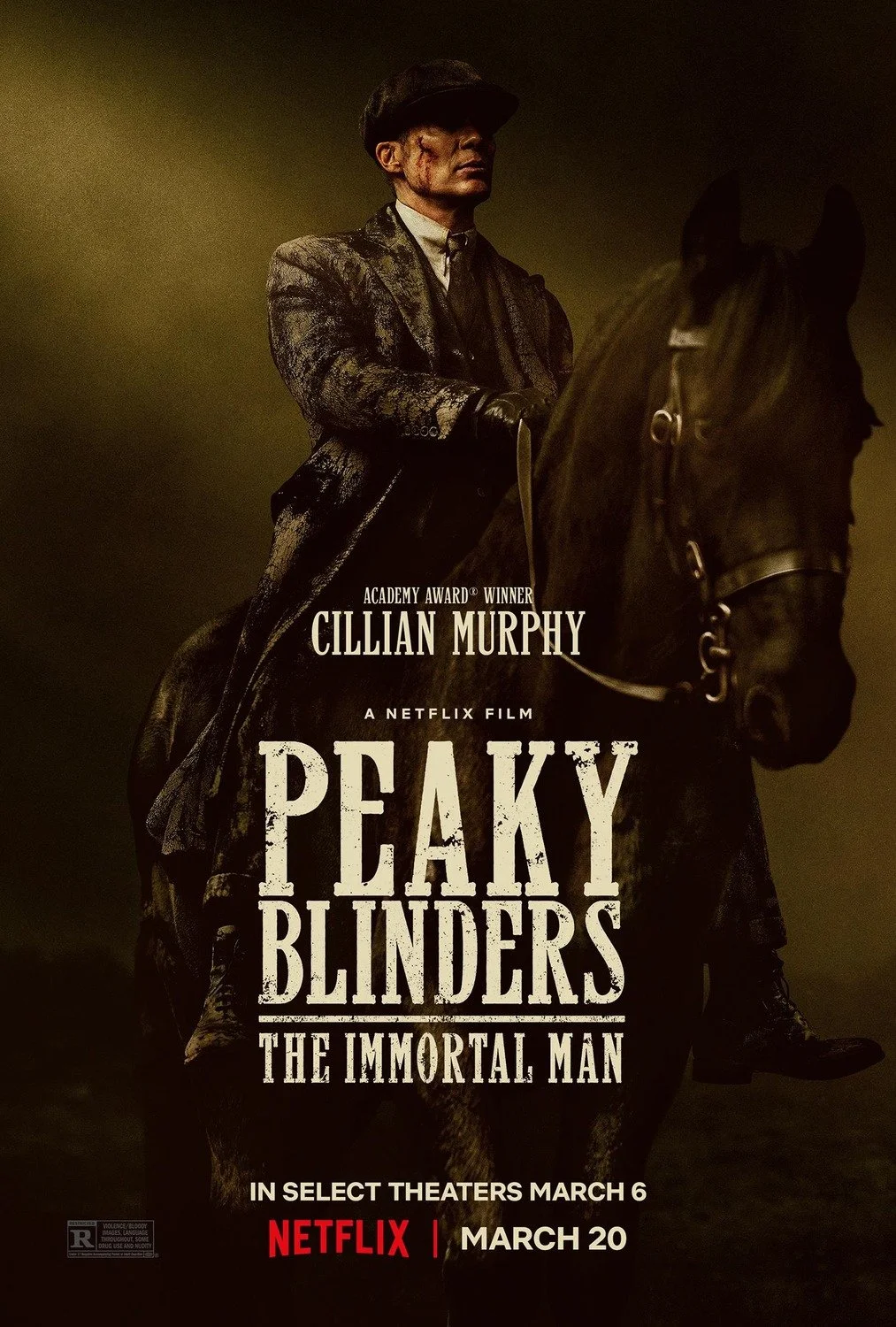
Movie Review : Peaky Blinders: The Immortal Man (2026)
Author of The 7 Habits of Highly Effective People Stephen R. Covey came up with this deceptively profound formula to express the importance of prioritizing: the main thing is to keep the main thing the main thing. It might sound like another self-help platitude to you, but it’s something you can only understand once you’ve Success doesn’t just reward you, it complicates you. Once something works, the world floods you with options, and suddenly the hardest task isn’t winning. It’s remembering why you won in the first place.
I’ve long believed Thomas Shelby is one of the best fictional characters of the twenty-first century. What makes him compelling — beyond the immaculate coats and the mythic cool — is that he’s fundamentally brokenhearted. Shelby is a violent, reckless man who often seems like he’d prefer being dead. When he stays calm under pressure, it never reads like heroism. Steven Knight always framed that composure as hypervigilance: the survival instinct of someone who assumes disaster is always five seconds away. That contradiction is what makes Shelby interesting. He makes kicking ass look exhausting.
Peaky Blinders : The Immortal Man understands this about him, which is why it remains consistently watchable. But I’m not convinced it remembered what its main thing was.
The film picks up in the middle of World War II. Thomas Shelby (the perpetually smoldering Cillian Murphy) is now older and supposedly retired, hiding out in a decaying country estate outside Birmingham with his last loyal soldier Johnny Dogs (Packy Lee). Meanwhile, his son Duke Shelby (Barry Keoghan) has inherited the Peaky Blinders and runs the organization exactly the way you’d imagine a nineteen-year-old edgelord running a criminal empire.
When the Nazis show up hoping to use the Blinders to flood the British economy with counterfeit money and quietly bankrupt England, everyone turns to the one man who supposedly left that life behind. Because Thomas Shelby may want to disappear, but his reputation refuses to retire with him.
Thomas Shelby vs The Nazis
Not going to beat around the bush — Peaky Blinders : The Immortal Man somewhat instrumentalizes Thomas Shelby to turn him into a symbolic war hero against the normalization of fascism and the nihilistic edgelord culture that are plaguing our society as we speak. It's not subtle in the least, but I kind of works? Steven Knight and director Tom Harper portray the Nazis less as terrifying masterminds than as smug, middle-aged men who’ve spent too much time alone with ideological literature. This feels correct for a political allegory.
What makes Peaky Blinders: The Immortal Man work despite essentially being The Dark Knight Rises with funnier hats and a more historically informed stance on fascism is that the ideological conflict isn’t framed as good versus evil. It’s doctrine versus self-definition, which is both interesting and perfectly aligned with how Thomas Shelby has always operated.
Shelby’s war in the film is personal and political at the same time. The Nazis represent ideological surrender: a worldview that tells you exactly who you are and what your life means. Shelby has spent his entire existence rejecting that kind of certainty. His defining instinct is the opposite, he insists on deciding for himself, even when those decisions destroy him. In that sense, fascism in The Immortal Man almost reads like the ultimate edgelord ideology: a ready-made identity for people who would rather inherit meaning than fight to create it.
Shelby refuses that bargain. He’s a man who wants to live or die on his own terms. That makes the film unmistakably on the nose, but never quite annoying.
Daddy Issues
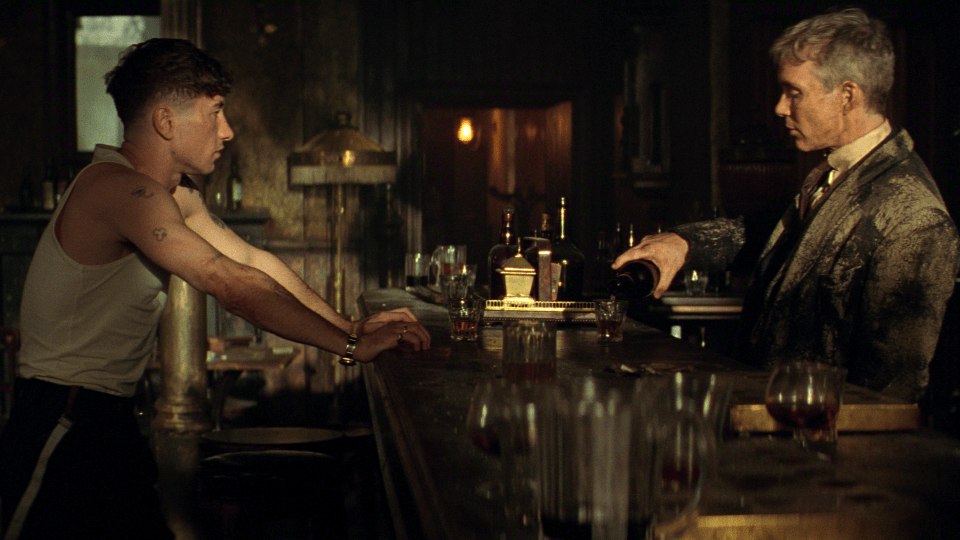
The other aspect of Peaky Blinders: The Immortal Man I find too interesting to dismiss is Barry Keoghan’s performance as Duke Shelby. He is almost comically hollow. Keoghan doesn’t look like a young, unproven man trying to appear tough; he looks like a thespian performing an unproven kid who’s trying to appear tough on stage.
It’s uneven at best, but the awkwardness matters. Every exaggerated gesture and every overly serious stare feels intentional, like Duke learned how to be dangerous by watching someone else do it. Because what he’s really doing is imitating the legend of Thomas Shelby, not the man himself. And that distinction is the point. Duke is the myth Shelby spent years constructing, now reflected back at him by someone who believes the image without understanding the cost.
Letting myth decide who you are is exactly the kind of thinking that slides people toward fascism. Take that, Jordan Peterson. By reappearing in the life of his thoroughly unwanted son and dragging him through the events of Peaky Blinders: The Immortal Man, Thomas Shelby ends up doing something quietly radical: he dismantles his own legend in front of the person who believed in it the most. What Duke witnesses isn’t the myth of the man, it’s the cost of becoming him.
And in the process, Duke Shelby is forced to build something new from the wreckage of that illusion. That’s ultimately why his dad endures as a character. He refuses to live inside someone else’s narrative, not society’s, not ideology’s, not even the myth he accidentally created for himself. Thomas Shelby tells the story. He doesn’t read it. And he definitely doesn’t believe anyone else’s version. That also makes Peaky Blinders: The Immortal Man one of the only movies allegorically about current political events that kind of works.
*
I should’ve hated Peaky Blinders: The Immortal Man , but I ended up quite liking it and that's one of the best feelings as a critic. Being happy to be wrong about something, that is. That said, this feels like the exact moment to stop. Peaky Blinders has now reached a strangely perfect quantity. With The Immortal Man, we have enough of it to feel complete, but not so much that it starts feeding on its own legend. Continuing from here would almost certainly lead to the kind of exploitative offshoots that mistake mythology for storytelling.
Right now the balance is perfect. We don’t need more and we’re lucky we don’t have less. Please let The Immortal Man be the end of it.
7.7/10
* Follow me on Instagram , Bluesky and Substack to keep up with new posts *