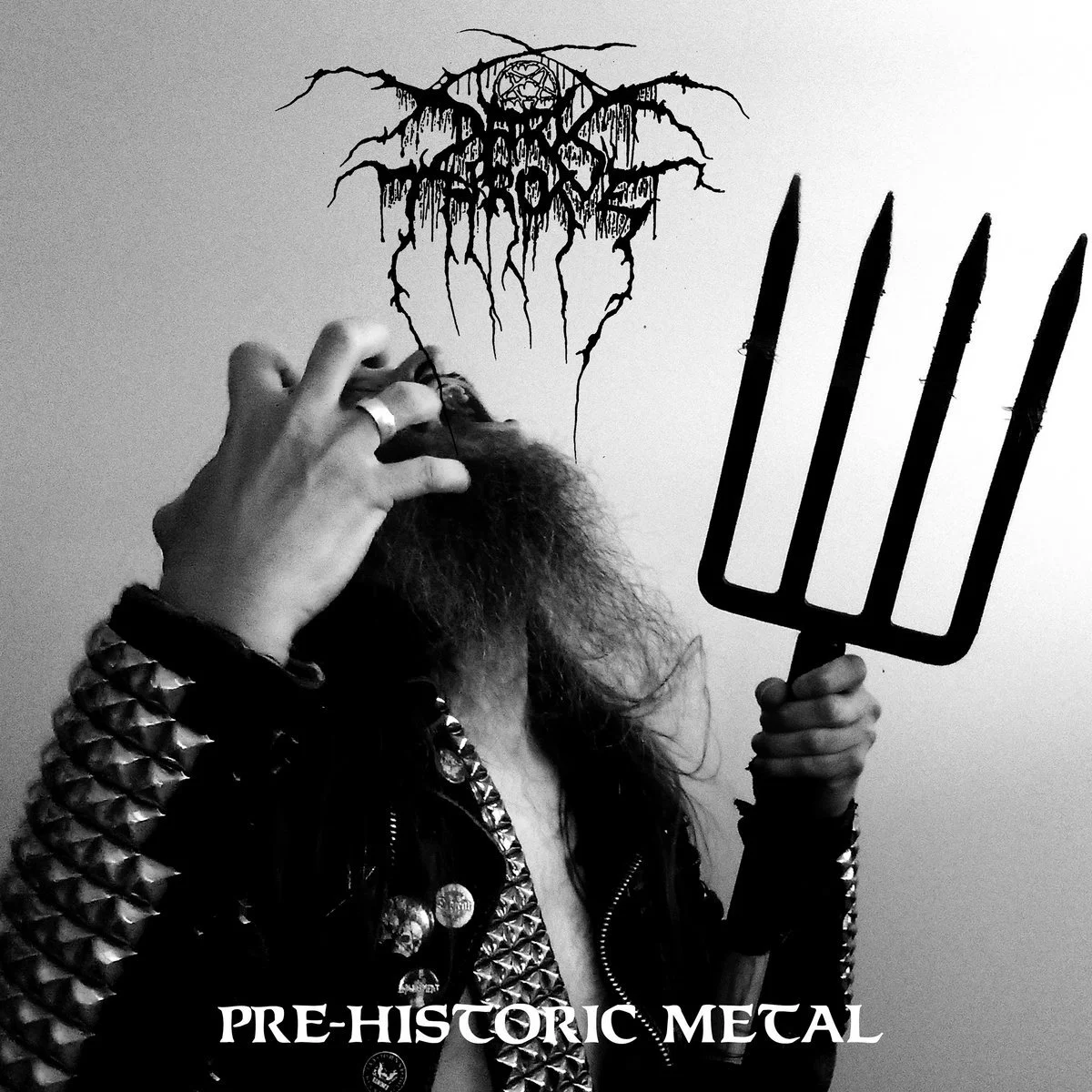
Album Review : Darkthrone - Pre-Historic Metal (2026)
Darkthrone are one of metal’s great anomalies. They became immortal by playing some of the most abrasive, uncompromising Norwegian black metal ever recorded, then somehow got bored with immortality and spent the next twenty-five years sounding like two guys rummaging through th e ruins of their own hideoutat the end of history. This should have destroyed their credibility. Instead, it made them more untouchable.
Modern Darkthrone doesn’t sound anything like classic Darkthrone, but anyone who knows what to listen for can still identify them in about six seconds. The essence was never blast beats, corpsepaint or a specific guitar tone. The essence was refusal: refusal to modernize correctly, repeat themselves correctly and make reverence sound polite. They have embraced a sonic philosophy rather than a genre.
On the aptly named Pre-Historic Metal, that philosophy becomes literal, creating what might be the most modern Darkthrone album of this era precisely because it is so aggressively uninterested in sounding modern.
Pre-Historic Metal features eight songs and forty-one minutes of the most stripped-down, straightforward classic heavy metal you’ve heard north of 1988. There are traces of synths, the occasional progrock detour and some creepy graveyard falsetto vocals floating around the edges, but the whole thing is admirably bare and uncomplicated.
Fenriz and Nocturno Culto are playing exactly the music they want to play, with the serene confidence of two men who have long ago stopped mistaking accessibility for compromise. Darkthrone does not live in the past. The past and the present are the same thing to the two Norse gods.
Pre-Historic Metal is gleefully prehistoric on two levels. It explores timeless artifacts and the indifferent powers of nature, but it’s also played in a style that barely exists anymore outside of collector mythology and extremely suspicious European basements. This is heavy metal as an unearthed relic of a half-forgotten past : rusty, ceremonial, still somehow dangerous.
On opener They Found One Of My Graves, uncharacteristically catchy riffs and simple, anthemic structures coexist with Nocturno Culto’s grainy, grim vocals in a way that shouldn’t work but absolutely does. It sounds like the ghost of metal’s cultural history dragging itself out of the dirt and chasing you down for revenge. It’s intoxicating and mystifying in a way only Darkthrone could’ve come up with.
Straight-shooting arena rock riffs are the engine of this record, which is a hilarious thing to say about Darkthrone until you actually hear it. A song like Siberian Thaw runs on crushing power and hypnotic repetition, but it keeps slipping these strange prog quirks into the machinery, invoking Cirith Ungol as much as Diamond Head and Celtic Frost. It’s caveman music with a wizard hiding behind the amplifier.
The riffs on Deeply Rooted uncoil like a serpent over the length of the song, gradually becoming simpler, bouncier, and somehow more sinister. That’s where late-period Darkthrone thrives: in this ghastly overlap between past and present, where old metal doesn’t feel revived so much as reanimated against everyone’s better judgment. Haunted by ideas you’ve thought you’d never hear again.
Speaking of haunted, I love the instrumental interlude So I Marched to the Sunken Empire, which splits the slightly more demanding second half of Pre-Historic Metal like a flooded corridor in an old dungeon. It’s trudging, doomy and contemplative, but contemplative in the Darkthrone sense, where thinking too long about anything immediately becomes painful and vaguely geological.
The tasteful synth and careful use of reverb give the song a subterranean atmosphere without turning it into dungeon synth cosplay. It reinforces one of the album’s strongest ideas: nature doesn’t care about history because nature was there before anyone invented it. Darkthrone understand this better than most bands because they’ve spent the last twenty-five years making music that sounds like the soundtrack of pillaging the cursed tomb of a forgotten tyrant.
Darkthrone’s old obsession with crust punk can still be heard on songs like The Dry Wells of Hell and especially Eat, Eat, Eat Your Pride, which feel slightly less committed to the album’s thematicspell. They’re not uninteresting, but they do scan a little more like modern-Darkthrone-by-numbers: gruff, charming, stubborn and probably more fun to play than to overanalyze.
Closer Eon 4 is the doomiest cut on Pre-Historic Metal and the clean, bombastic, almost chanted vocals make it stand apart from everything around it. It’s a feverish and fitting exit to such an insular record, as if the album races toward its own self-destruction just so it can survive as a strange memory in your mind.
*
Pre-Historic Metal is what Darkthrone does best: catching us off guard while staying loyal to their core principle of collapsing the present into something new and vaguely undead. It’s a satisfying listen for an odd, almost non-musical reason: it reflects the process of aging without making aging feel tragic, ominous or spiritually embarrassing.
As you grow older, the past doesn’t disappear. It becomes stranger, heavier, more useful, and occasionally more alive than whatever is happening right now. Pre-Historic Metal understands this. It is old and new at the same time, not because Darkthrone are trying to prove anything, but because they’ve become one of the rare bands capable of treating time like another instrument. That’s why they’re still one of the best metal bands around.
8.1/10
* Follow me on Instagram , Bluesky and Substack to keep up with new posts *