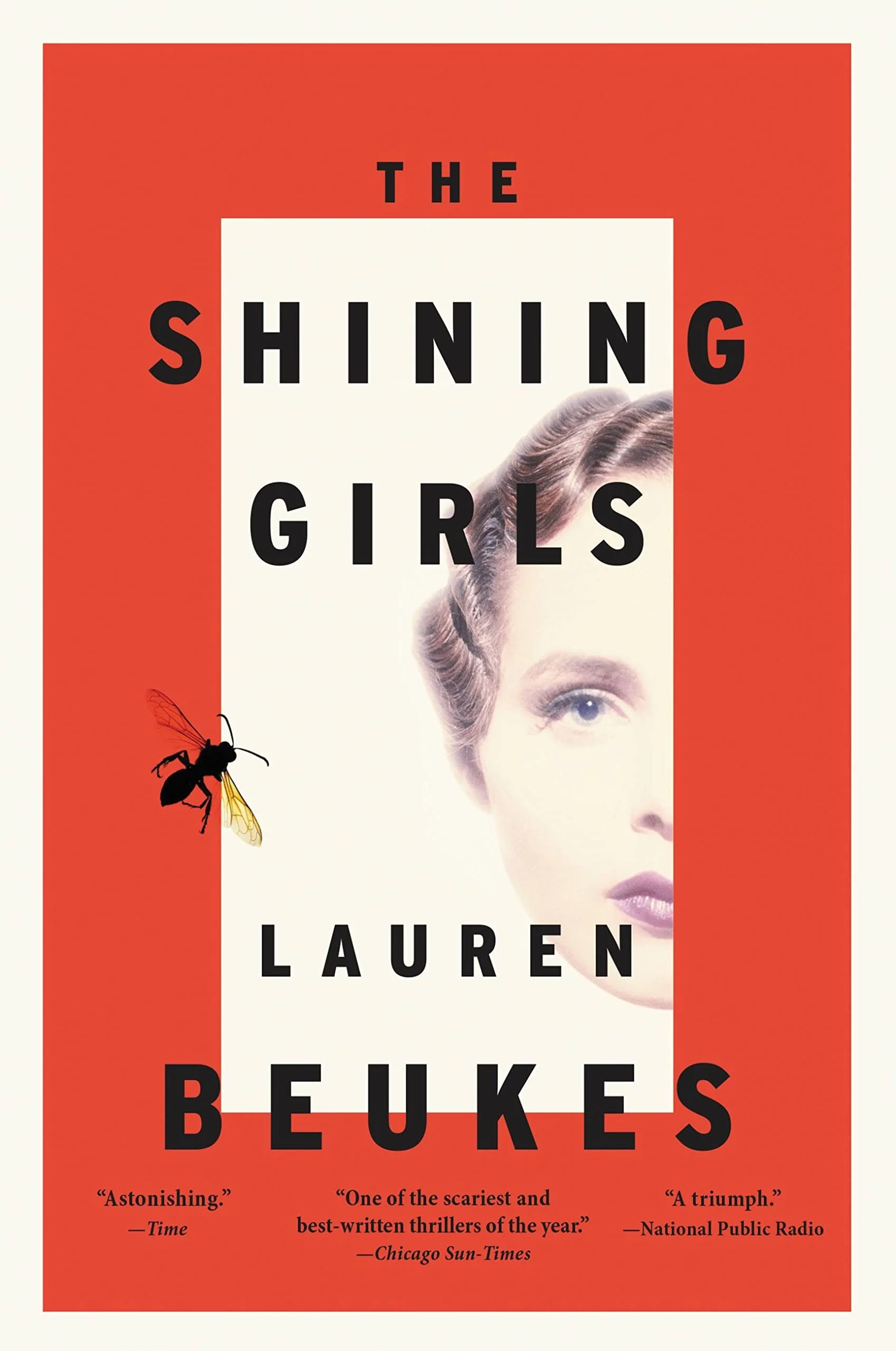
Book Review : Lauren Beukes - The Shining Girls (2013)
Novels featuring an investigation on a serial killer who murders young women for fun and will-to-power are as popular as they are unoriginal. They're not designed to challenge you. They're not even designed to scare you. They're comfort reads, oddly enough. Moral fantasy in a trench coat. They reassure us that evil is tidy, knowable and punishable as long as someone’s obsessed enough to put the pieces together. Books like this all promise something different. Some bold new twist on the old ultraviolence.
Sometimes it’s a fresh setting. Sometimes it’s a new pathology. And sometimes, just sometimes, it’s a magical time-traveling murder house.
If that sounds disastrous, that’s because it is. And yet Lauren Beukes' The Shining Girls was a massive hit when it dropped. It was adapted for television and whatnot. Why? Because when you’ve got a gruesome serial killer and a fierce, vengeful woman hunting him down, that’s the sell. That’s the genre’s elevator pitch. It practically markets itself. The house might bend space and time, but the formula is painfully familiar. Sometimes, a good story is not important to commercial success.
The Shining Girls follows Harper Curtis, a drifter-turned-serial killer from the Great Depression who stumbles upon a magical house that’s either haunted, sentient, or just very committed to the bit. Inside, he finds a room covered in women’s names, each linked to a random object like a serial killer moodboard curated by a malevolent interior designer. The house wants him to murder these women. Why? Unclear. Possibly because you gotta admit it sounds edgy as fuck.
The twist is that all his victims live in the future, some decades ahead of Harper’s 1930s origin point. One of them, Kirby Mizrachi, survives a particularly sadistic attack in 1989 (he killed her fucking dog, that asshole) and becomes obsessed with tracking her assailant down. She doesn’t know he’s a time traveler. No one does. Because how do you explain that to your editor without sounding like you’ve been microdosing magic mushrooms in a sensory deprivation tank?
Whether or not any of this makes sense is up to you.
Non linear storytelling done wrong
This book is probably fine. Like, technically. If you’re looking to kill a couple afternoons by the pool while pretending you’re into postmodern narrative structures, you could do worse. Or maybe not. The time-traveling, nonlinear chaos of The Shining Girls is both structurally convoluted and narratively obvious. A kind of Rubik’s cube where all the sides turn, but the colors never change.
Beukes uses this kaleidoscopic format to insert sharp-edged social commentary about America’s darker decades: racism, sexism, class warfare, the works. Which, on paper, is ambitious. But it’s also kind of funny, because Beukes is South African. So the whole thing plays like a cultural postmortem conducted by someone watching Mad Men on mute (she did live in America for a while. I’ll give her that). You can feel her trying to hold America accountable for its historical sins, but it feels like critical tourism.
If you're not shocked that Western society used to be racist and sexist, you’re probably going to find this all a little exhausting. But if you are? Well, buckle up, you’re in for a very educational rollercoaster.
The nonlinear structure also works against the book in some weirdly self-defeating ways. Most notably: Kirby’s near-fatal attack (the one that defines her entire arc) doesn’t happen until almost halfway through the novel. For the first 150 pages, we’re just told she’s a survivor. We’re expected to accept her trauma as a narrative given, not something we’ve actually seen unfold. It’s like being handed a vigilante origin story with all the flashbacks blacked out.
Instead of torturing her protagonist like any solid writing manual would suggest, Beukes goes with the classic "tell, don’t show" approach, which makes it hard to really feel for Kirby. She comes off more like a stubborn investigative intern than someone who was brutally, almost fatally attacked. And that’s not a knock on her character, it’s just that motivation needs context. And we don’t get it until late in the game.
Also, and I’m dead serious about this, it’s hard to emotionally buy into someone’s relentless vendetta until you find out that the killer also murdered her dog. That one detail turns her from "feisty journalism student" into a goddamn force of nature. Somehow, the death of a dog justifies the most excessive acts of vengeance. Ask John Wick. Ask anyone who’s ever cried during I Am Legend.
But why do people enjoy this novel, Ben?
I don’t know. It gets the job done, I guess.
Since The Shining Girls leans more into science fiction than procedural, we’re spared the usual clichés no grizzled detective with a tragic backstory, no quirky coroner explaining bruising patterns over Chinese takeout and all that. Instead, it’s Kirby who ends up dealing old timey justice. And honestly? That part kind of works. I’m not huge on straight-up revenge stories, they usually feel like moral math for people who think therapy is for cowards, but I do love a good doom spiral where the protagonist and antagonist chase each other into mutual obliteration. There’s a flicker of that energy here. Predator and prey orbiting the same black hole.
In the end, the bad guy gets what’s coming to him. Kirby finally gets a future. The boxes are checked, the final act lands (more or less), and there’s a sense of closure you can take to the poolside bar.
Maybe Harper Curtis is the problem?He never feels like a person. He’s less a character than a time-traveling proto-human ghoul, an allegory in boots who just sort of '"lets the dogs out" across multiple decades. (And yes, I do mean that in the most metaphysical, vaguely apocalyptic sense of the phrase.)
There’s a limit to how much you can humanize a Depression-era drifter, especially when he’s been handed a supernatural murder house and told to go full Zodiac Killer across time. Harper is supposedly a product of his environment (poverty, desperation, masculine rot) but so was everyone else back then, and they weren’t all out there slashing their way through the timeline. He’s not a man. He’s a level boss. More Bowser than Bundy. More Shang Tsung than Son of Sam. (Yes, I’m old. And yes, I still remember when video games ended in boss fights and not existential dread.)
He’s there to be beaten. To get got. And that’s fine for a video game. But for a novel that wants to say something about violence, trauma, or systemic rot? It’s not quite enough.
*
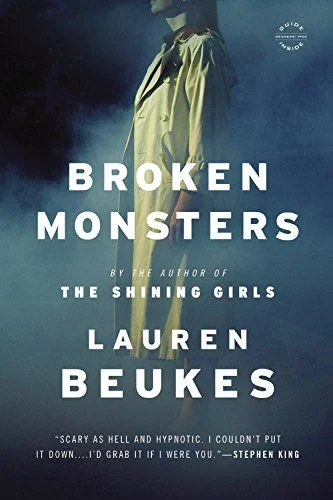
I feel kind of terrible writing this, because I remember really liking Lauren Beukes’ following novel, Broken Monsters. That book had teeth. It had atmosphere. It felt like it was doing something. But hey, I gotta keep it real. I read novels the way other people chain smoke: compulsively, judgmentally, and with the unspoken belief that I’m somehow doing it better than you. If that makes me a literary snob, so beit.
The truth is, The Shining Girls felt,at various times, derivative, disorienting, and strangely inert. It didn’t thrill me, didn’t haunt me, didn’t even frustrate me in an interesting way. It was a clever premise with nowhere to go, a thought experiment pretending to be a page-turner. It’s already a huge success, so it’s not like it needs my approval to survive. That’s what’s great about being an internet pop culture critic. No one needs your approval to survive, so you can say what you want.
Anyway. I’m off to reread all of Proust again or whatever. Literary snob out.
4.9/10
.* Follow me on Instagram and Bluesky to keep up with new posts *