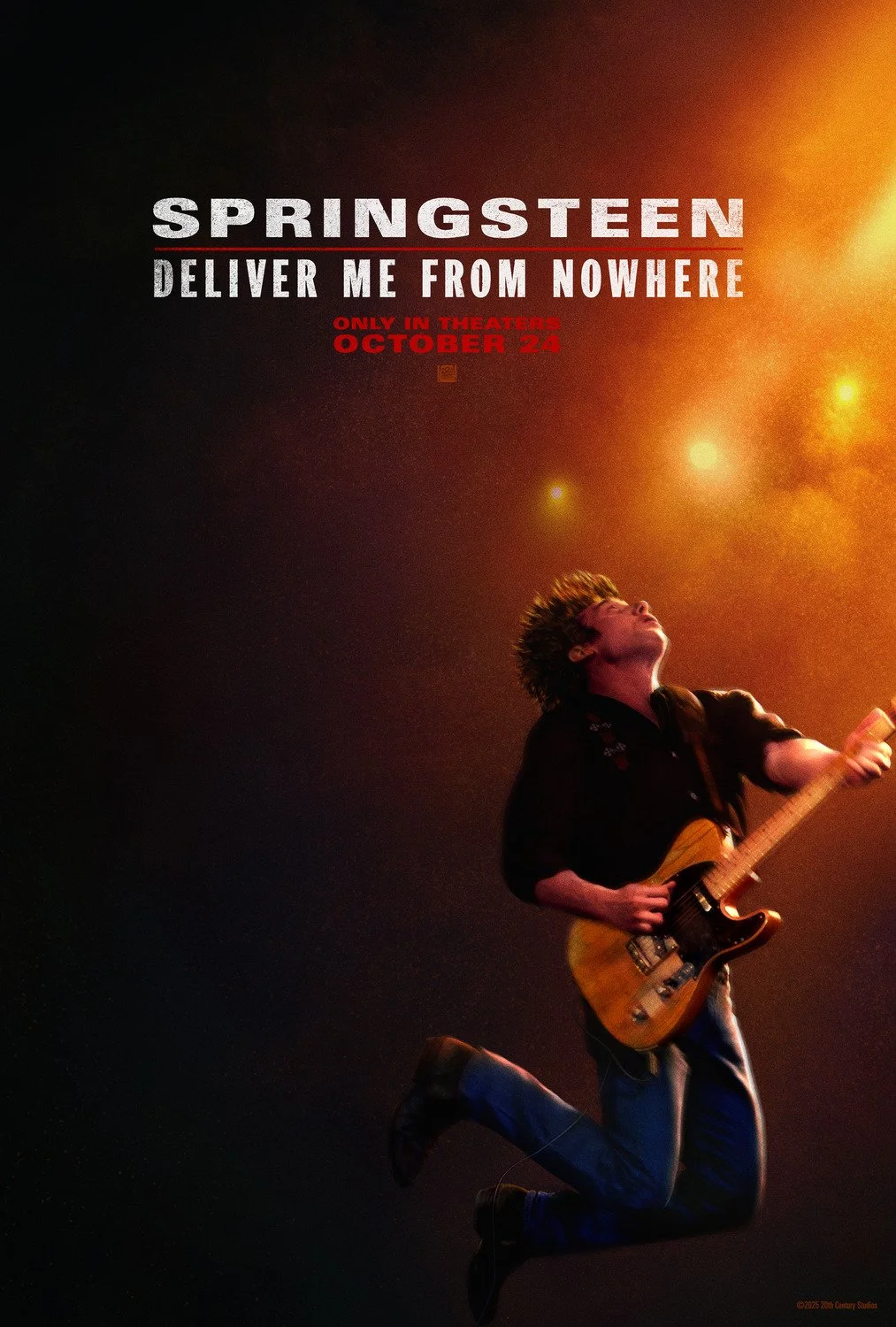
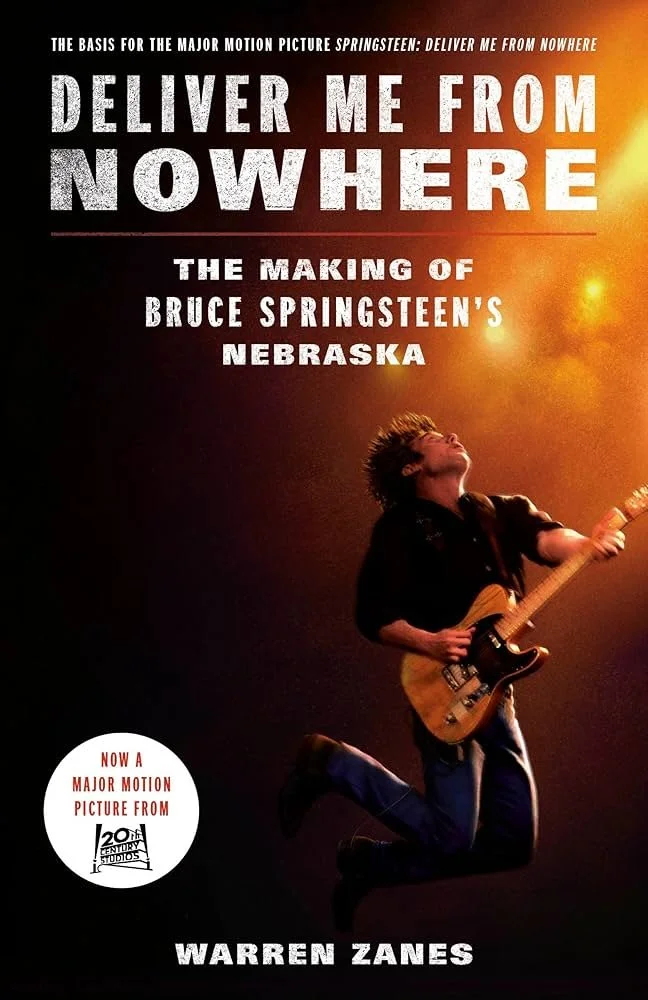
Book Review : Warren Zanes - Deliver Me From Nowhere: The Making Of Bruce Springsteen's Nebraska (2023)
Casual Springsteen fans don’t really exist anymore. Maybe they did once, somewhere between Born to Run and the years when every American dad quietly decided Bruce was the closest thing he had to a moral philosophy, but that species has gone extinct. At this point you’re either a true believer or someone who can maybe name Born in the U.S.A and then immediately admit you only know it from baseball games and ill-advised right wing political rallies.
And the strange thing about Springsteen’s fandom is that the real measure of devotion has never been the live shows or the box sets or even the tattoos of his lyrics: it’s your stance on Nebraska. That’s the shibboleth. The album that is somehow both quintessentially Springsteen and aggressively un-Springsteen, released at a moment when he was supposed to be everything to everyone.
What makes Nebraska fascinating (almost cosmically so) is that it also matters to people who don’t care about Springsteen at all. People like me. People who find the mythology of Bruce more interesting than the mythology of America. Warren Zanes’ Deliver Me From Nowhere is a three-hundred-page descent into the conditions that made this record possible: the mood, the fear, the accidental epiphany that comes from someone too famous to fail deciding he might actually want to fail on purpose.
Nebraska didn’t just materialize out of the primordial ether. It was the aftershock of a long, private reckoning and the starting gun to another one for whoever heard it. Zanes’ book tries to explain why Nebraska keeps mattering and in doing so, accidentally explains why it feels like a message Bruce recorded for a future version of himself, unsure if he’d ever bother playing it back.
To make an extremely long story short: Deliver Me From Nowhere is the story of the one Bruce Springsteen album he made completely alone, sitting in a bedroom, clinically sad, roughly two decades before depressed teenagers discovered Radiohead and decided that being sad in a bedroom was a viable artistic strategy. Nebraska isn’t a record so much as a controlled detonation of everything Springsteen was supposed to be at the time: a refutation of the soul-sanding machinery of commercial music, an existential audit conducted right at the moment when the world assumed he was invincible, and (whether Bruce intended it or not)the blueprint for the kind of iconoclast creativity that later generations would pursue as a lifestyle.
What Zanes makes clear is that Nebraska arrives in 1982 like a glitch in the monoculture matrix, the kind of anomaly that forces everyone else to consider the possibility that authenticity might actually be more interesting than ubiquity. It’s the moment where Bruce stops being the guy who explains America and becomes the guy who explains Bruce, which, in its own weird way, ends up explaining America even more.
The Weird Existential Pitfall of Extreme Success
Warren Zanes’ core argument (and it’s a compelling one) is that Bruce Springsteen never meant to make a record when he made Nebraska. His plan was closer to a psychological fire drill: lock himself in a room, press record on a four-track, and see what happened before the smoke filled the place. What emerged wasn’t a demo tape or a sketchbook or anything resembling the prep work a normal musician does before corralling their band into a studio.
What came out was the sound of a man fundamentally exhausted with being Bruce Springsteen, a guy worn down by the logistics of leadership, by the existential headache of trying to be democratic in a process where someone invariably ends up unhappy and by the crushing expectation that everything he touched needed to be chart-friendly, universal and spiritually uplifting.
Nebraska becomes, in Zanes’ telling, the unfiltered residue of that exhaustion: a rare moment where the machinery falls silent long enough for the human being inside to mutter something real. Leonard Cohen’s proverbial ashes from the fire. It’s an album created not from ambition but from depletion, not from confidence but from disorientation. And because of that, it ends up being this anomalously pure thing. Spontaneous, unguarded, borderline feral in its honesty.
The irony, of course, is that Bruce unintentionally proved he could be more truthful alone in a bedroom than he ever could with the most airtight band in America, which is the kind of revelation that must feel both liberating and vaguely insulting to everyone involved.
The genius of Nebraska, the real magic trick, is that Bruce Springsteen manages to articulate the alienation of celebrity without ever lapsing into the kind of celebrity whining that instantly cancels out its own point. What he says instead (through those dry, spectral songs) is something far stranger: that the most disorienting part of success is having to satisfy a demand you created. yourself. It’s realizing you’ve become the curator of your own persona and that the world prefers the curated version. It’s being trapped inside an identity that once felt aspirational but now feels like someone else’s Halloween costume.
Zanes makes the case that Nebraska is where Springsteen confronts that fork in the road: stay loyal to the internal vision that got him writing songs in the first place, or embrace the role of cultural thrill-provider, a kind of Americana theme-park ride designed to make people feel the things they already want to feel. And Bruce draws a line, not subtly, not politely, but unmistakably. Nebraska is the sound of a man choosing the real version of himself, even if that choice made absolutely no sense to the industry, to his fans, or arguably to Bruce himself.
The Part That’s About America
But here’s the thing: Nebraska is also (maybe accidentally, maybe inevitably) about America. Or at least it becomes about America once Warren Zanes gets involved. Zanes is so committed to reading every Springsteen gesture as a communiqué from the nation’s founding spirits that he could probably connect Tunnel of Love to the Monroe Doctrine if you gave him an afternoon. And yet, despite the overreach, the argument lands more often than it should. He frames Bruce not as a songwriter but as a medium: a guy who channels the unresolved emotional static of American history whether he choses to or not.
Take his example of Mansion on the Hill. The song is already a reclaimed artifact, directly inspired by Hank Williams’ track of the same name, but Springsteen isn’t doing homage so much as a kind of mythological autopsy. He’s remembering his childhood while staring up at a house he could never enter, an architectural symbol of wealth inequality that stands there with the same indifferent grandeur as a Roman statue. Zanes argues that this reciprocal stare, this moment where class resentment calibrates itself against destiny, is something that would make Nietzsche grin in his grave.
And he’s not wrong: Bruce is narrating the experience of an outsider so determined to understand the world that he almost wills himself into becoming the person who can explain it.
Which brings us to the atmosphere of Nebraska, and honestly, this might be the record’s most enduring trait, the part that lingers even after the historical context dissolves and the mythology thins out. The America inside Nebraska isn’t strong or righteous or even aspirational; it’s a country haunted by the ghost of its own righteousness. A place where the moral compass is technically still there but spinning wildly, like someone dropped it on concrete and bent the needle.
Springsteen writes from inside that disorientation. On the title track, Charles Starkweather isn’t just a murderer, he’s the logical conclusion of a culture obsessed with power and invincibility. Atlantic City isn’t about mob killings so much as the collapsing infrastructure of American promises. State Trooper directly channels Suicide, which is Bruce’s way of saying that success had pushed him so far away from the center of the world that he could suddenly see the margins with painful clarity.
All of this, every shattered ideal, every flicker of dread, is delivered through those stark, lonely melodies and the brutal minimalism of a TEAC 144 Portastudio. In true American-gothic fashion, Nebraska positions itself in the unsettling space between people and the destructive ideas they cling to, like a flashlight sweeping across a room where the furniture shifts ever so slightly when you’re not looking. It captures a country that hasn’t fallen apart but has clearly started to fray, and a songwriter who understands that sometimes the most honest version of America is the one you can only access when you’re tired, alone, and recording in the dark.
*
Not gonna lie: Deliver Me From Nowhere ended up being my favorite read of 2025. Part of this is because Warren Zanes writes about Bruce Springsteen with a reverence so intense it almost becomes performance art, there are moments where he makes Bruce sound less like a musician and more like a Midwestern Christ figure wandering the desert with a four-track. But here’s the thing: I dare you to find anything in your life that you love with even half the obsessive, granular devotion Zanes brings to Nebraska. This is a man who hasn’t just listened to the record; he’s made it a part of himself.
And the wild part is that the passion pays off. Through sheer conviction and a surprisingly panoramic understanding of pop culture, Zanes convinced me that Nebraska wasn’t just another weird left-turn album, but a fault line in contemporary music. The moment when rock stopped trying to represent the world and started reckoning with the interior lives of the people trapped inside it. A moment when the genre got smaller, stranger, more personal, and ultimately more honest.
I loved this book. I wish more cultural criticism radiated this level of devotion, where the writer believes, without irony, that the thing they’re studying matters enough to reshape the landscape. Because every once in a while, it actually does.
8.5/10
* Follow me on Instagram and Bluesky to keep up with new posts *