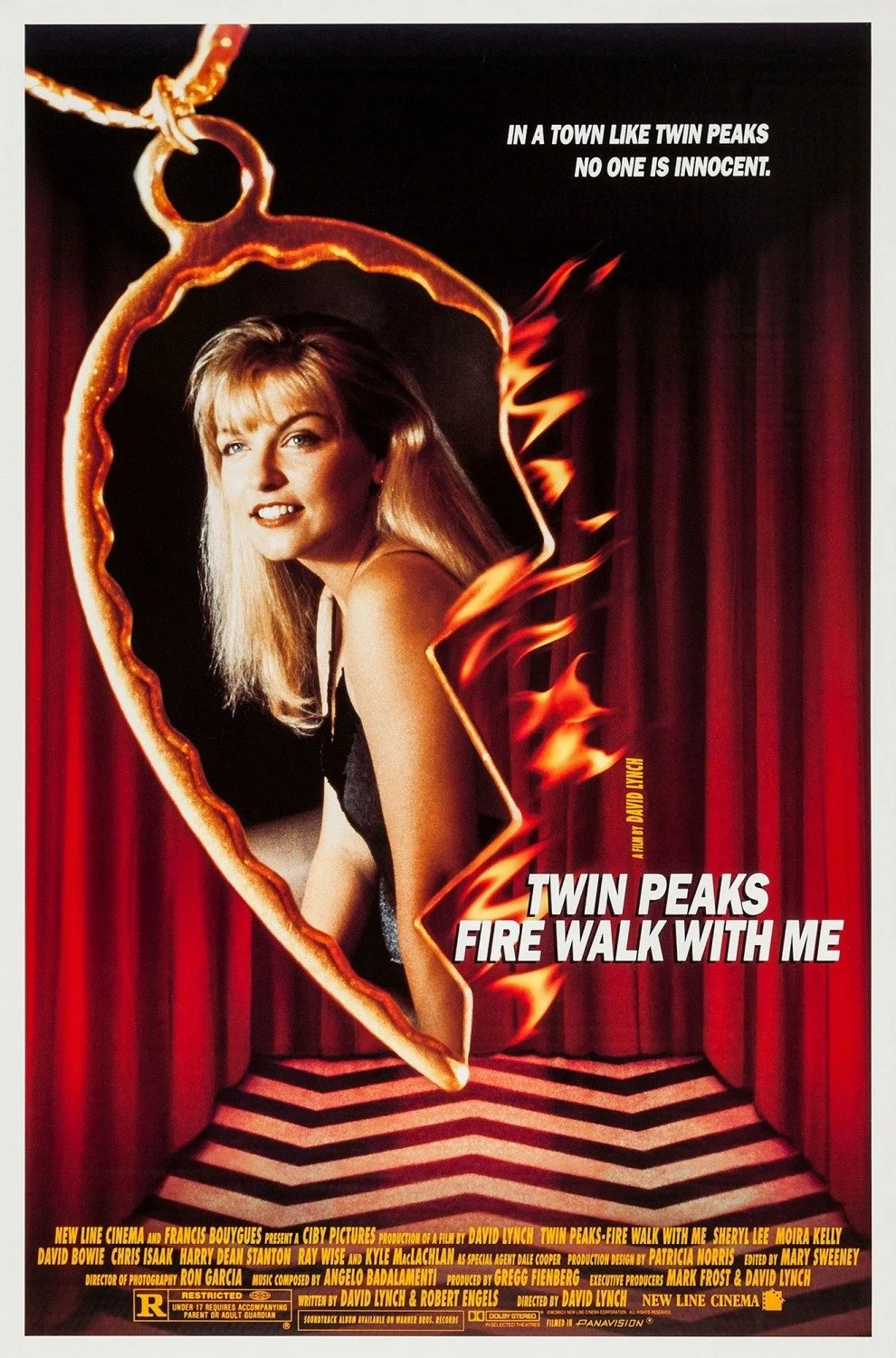
Classic Movie Review : Twin Peaks: Fire Walk With Me (1992)
The movies of David Lynch are a pleasure that grows with usage. They require a certain level of comfort and abandon with the idea that you will never understand them because he doesn't either. At least not totally. Because they’re more efficient if they’re impossible to deconstruct. Lynch's easier project to deconstruct and perhaps his most beloved is the first run of the cable television series Twin Peaks, where camp and the inexplicably bizarre coexisted in almost perfect harmony like strange roommates.
Of course, David Lynch had to complicate Twin Peaks with the 1992 movie prequel Fire Walk With Me and complicating it turned a cozy bonfire of a series into a blazing inferno no one will ever be able to forget and it feels like this was the point all along.
Long story short, Twin Peaks: Fire Walk With Me is set before Laura Palmer’s murder — which Special Agent Dale Cooper (Kyle McLachlan) investigates in the series. There are two storylines: the FBI's investigation of a serial murderer rampaging through the Pacific Northwest one year before Laura's death. Their work is marred by supernatural occurrences. The second storyline explores the last seven days of Laura Palmer to reveal a terrifying truth: she was well aware that she was going to die and that very thought destroyed her slowly, then suddenly.
Everybody’s Everything
It's difficult to discuss art that have a powerful emotional effect on you and I strongly believe Twin Peaks: Fire Walk With Me one of the best movies I’ve ever had the privilege to walk. A hybrid of surreal horror and personal tragedy masquerading as film noir. Fire Walk With Me does many great things, but what it does best is to give Laura Palmer a body and a voice. A presence that doesn't belong to other people's memory of her and a context to how she became everybody's everything.
For the uninitiated, Laura Palmer is haunted by a demonic entity referred to as Bob (Frank Silva) who, like everyone else in Twin Peaks, wants to possess her. Unlike the other, he wants to either literally possess her or end her life and Laura understands this is not all in her head when Bob takes possession of her father Leland (Ray Wise). Painfully aware that her time on this Earth is short, she throws herself at every possible life she won’t be allowed to live, henceforth turning herself into a local myth.
In the series, Laura Palmer is something different to everyone Special Agent Dale Cooper comes across. In the film, she's a desperate, terrified young woman who's fighting a battle she can’t win. She's also a conduit between two planes of existence, a pawn in a game she doesn't know the rules of and her visions are simple, but nothing short of horrifying. From Bob hiding behind her nightstand to an angel disappearing from a painting, reality is abandoning her to her violent struggle with her own personal demon.
The combination of her beauty, the urgency of her predicament and her burning desire to live, make mistakes, be a bad girl, be a prom queen and a big sister all at the same time supercharge her iconography. Whether you’ve seen the series of not, it’s hard to watch Fire Walk With Me without feeling your heart break multiple times considering what’s about to happen and what does happen is more violent and depressing than anything you can prepare yourself for.
Fire Walk With Me is the American Dream embodied fighting off its own inevitable doom told in a way that makes it inescapable.
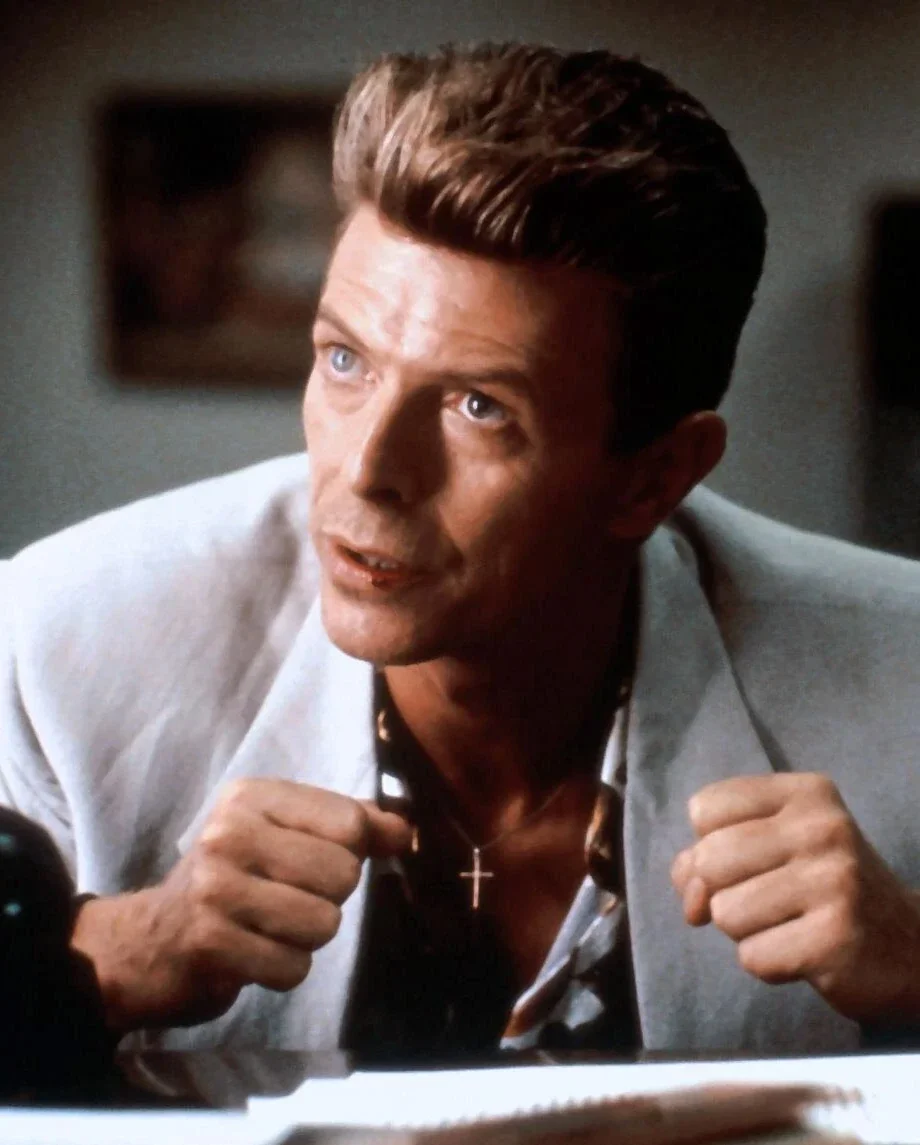
The Nightmare Inside Philip Jefferies' Nightmare
Now, the first twenty to thirty minutes of Twin Peaks: Fire Walk With Me tell a whole other story. It features a team of FBI investigators in a bizarro world Twin Peaks called Deer Meadow where everything's dingy and everyone's rude. A year before Laura Palmer would be murdered, they were already tracking down her eventual killer and nothing about the investigation came easy as their agents kept disappearing at random, alluding the the supernatural nature of Laura’s predicament.
The most potent, but divisive scene happens in the Philadelphia office of the FBI where Special Agent Philip Jefferies (played by none other than David Bowie) who emerges from the elevator to recall a vision he had before disappearing, never to be seen again. It has all the makings of an incomplete scene that was butchered in editing, but it makes all its appeal. Jefferies reveals the existence of this alternative realm of an uncertain nature and his disappearance affirms its hostile nature.
As it is the case with many other scenes in Twin Peaks: Fire Walk With Me, the simple and deadpan delivery is what makes it work. The flat, boring FBI office turns into a wormhole for an otherworldly atrocity no one can see or feel (yet). Never the one to shy away from incongruity, David Lynch just hurled this scene into his police procedural narrative, transforming it into cosmic horror instantly. I don’t want to know who Philip Jefferies is or what happened to him. His absence weighs heavier this way.
*
I’m going to say it and I'm not going to say it lightly. Twin Peaks: Fire Walk With Me is David Lynch's best movie. It's not as stylish as Lost Highway, but it has a way of weaponizing its limitations and a tragic earnestness that transcends its own theoretical problems. It’s one of these satisfying experiences that makes any investment of time and emotion worthwhile because the payoffs is both spectacular and fiercely original. David Lynch was not playing anyone else's game and that’s why we will always love him.
9.5/10
* Follow me on Instagram , Bluesky and Substack to keep up with new posts *