
The Long Hard Road Into Nothing (Or How The Internet Killed Marilyn Manson)
The best way I can describe life before the internet became commercialized is this: everyone felt more or less as lonely, restless, overstimulated and confused as we feel now, but we didn’t have the emotional or intellectual vocabulary to articulate it. And even if you somehow figured out where to look for clarity, seeking knowledge was difficult, expensive, and often a matter of pure luck. So instead, everyone turned to the one thing everyone could access at the same time: television.
You didn’t just watch it. You used it to shape your sense of what a life should look like. You chose who you wanted to be in relation to the people inside the screen. The cast of Saved by the Bell, Beverly Hills, 90210, or My So-Called Life, or the megastars like Whitney Houston, Mariah Carey, Arnold Schwarzenegger, and Sylvester Stallone. These weren’t hollow figures or cultural frauds. They were aspirational, magnetic, often deeply talented. But because they all came through the same commercial pipeline, they reflected a consistent, pre-approved set of values: strength, beauty, confidence, simplicity. Not in a sinister way, just in a way that you could project whatever the hell you wanted on them.
They were universal signifiers. Whatever virtues they embodied personally, they all collectively meant the same thing:This is what you should want. This is what you should try to be.That’s what you call a monoculture. It was orderly, stable, and emotionally legible. Everyone was watching the same shows, idolizing the same people and worshipping the same gods even if they didn’t realize they were doing it.
Because there was such a rigid sense of order, you could rebel against it. That was the trick. The history of popular culture is littered with figures of rebellion: Elvis Presley, James Dean, Marilyn Monroe, Janis Joplin, Iggy Pop, Ozzy Osbourne, David Bowie, David Lynch, Alanis Morissette, Kurt Cobain, you name ‘em. For the longest time, there was a blueprint to rebelling. It didn’t need to be nuanced or deeply intellectual. If the mainstream looked one way, you turned and looked the other. That was enough. In a binary world, you were either black or white, clean or dirty, loud or silent. It was easy to switch teams.
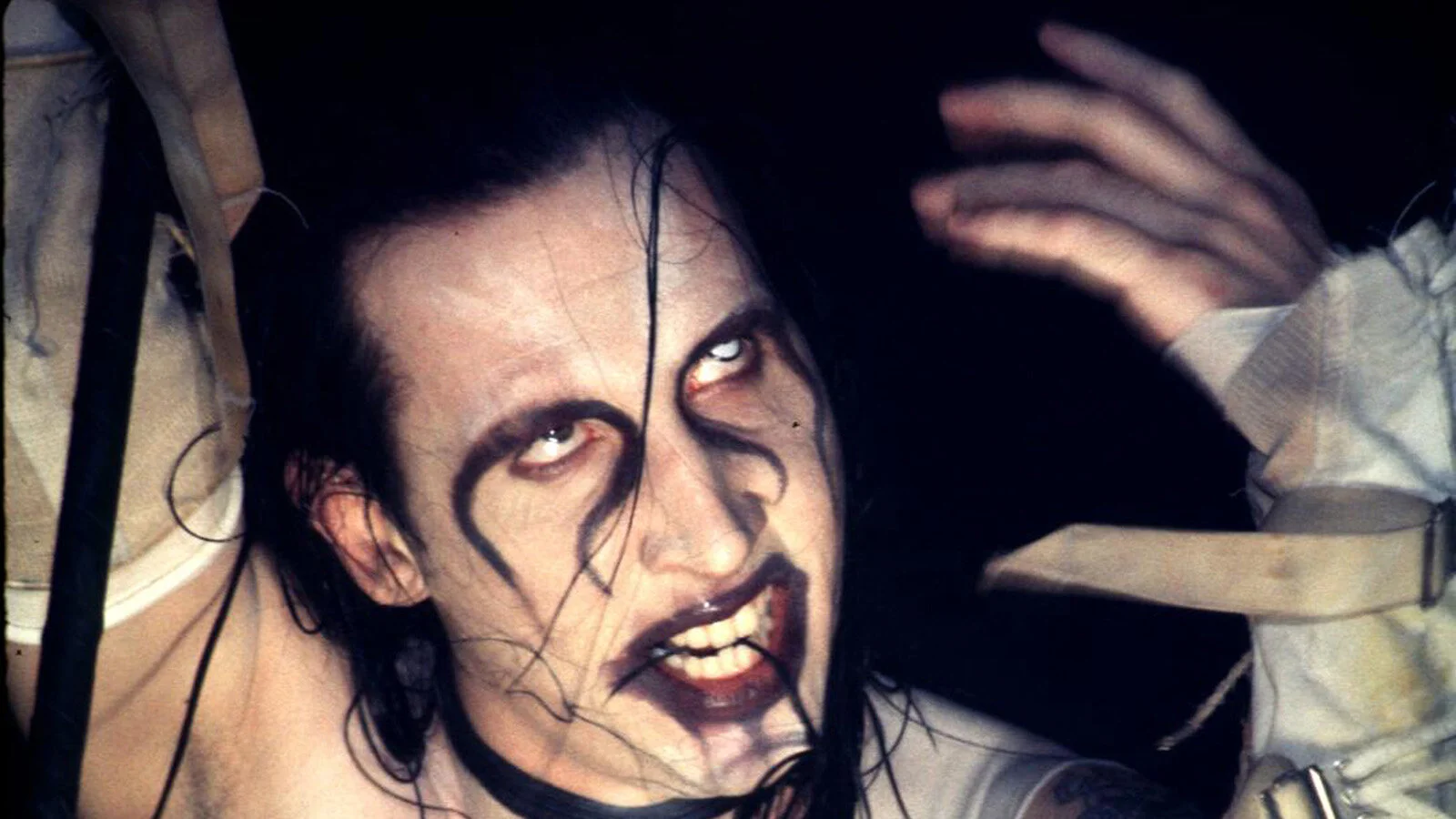
Enter Marilyn Manson. Not the perfect rebel, but maybe the most rebellious of them all. He was like the evil Pokémon evolution of David Bowie’s Ziggy Stardust before it was cool to channel Ziggy. Manson didn’t invent sexual subversion or apocalyptic imagery, but he embodied all the pieces of the rebellion puzzle at once, and somehow made each of them darker, meaner, more committed to the bit.
Ziggy Stardust was innocent and curious, an androgynous self-discovery set to glam riffs. Manson was an androgynous demolition project: aggressively hedonistic, maliciously seductive. Henry Rollins yelled at politicians; Manson corrupted their kids. Kurt Cobain pulled away from the world; Manson wanted to set it on fire. You see the difference? He wasn’t just what God-fearing America hated. He was what it feared most: a culture virus that couldn’t be ignored, dismissed, or pitied. A thing that made your kids ask questions you didn’t want to answer.
Manson was omnipresent, omnipotent. A real-life pied piper who wormed his way into your house through the magic of the CD tray. There were worse boogeymen out there. GG Allin and Varg Vikernes were alive and well, but Manson was infinitely more popular and his brand of danger was merely symbolic. Symbolic, but potent. He made kids dissatisfied with the options they were given. He mirrored something different, uncategorizable, theatrical, seductive without offering prefabricated answers. A Manson kid could look at his dad in Dockers and a golf shirt and see the Beast incarnate. Salvation, clearly, lay somewhere else.
Now, you might think that kind of reaction doesn’t come out of nowhere. That a kid has to already be hurting at home for Manson’s vision to hit that hard. And you’d be totally right. But there were (and still are) a lot of emotionally illiterate, spiritually bankrupt parents out there trying to bully their kids into the same boxed-in life they resented themselves. Manson gave those kids a different vision of the apocalypse. One that was theatrical, but also deeply personal. Their father wasn’t just a hypocrite like Dee Snider called it; he was a symbol of a decaying moral order.
Before he (allegedly) transformed into a domineering and libidinous elite he once railed against, Marylin Manson genuinely made the world a better place. Not because he offered solutions, but because he trusted youth to find their own way through the darkness. He gave them a mirror. He let them be weird, and angry, and uncertain without apologizing for it.
So what the fuck happened to him?
Well, as your Facebook friend in a toxic relationship might say: it’s complicated.
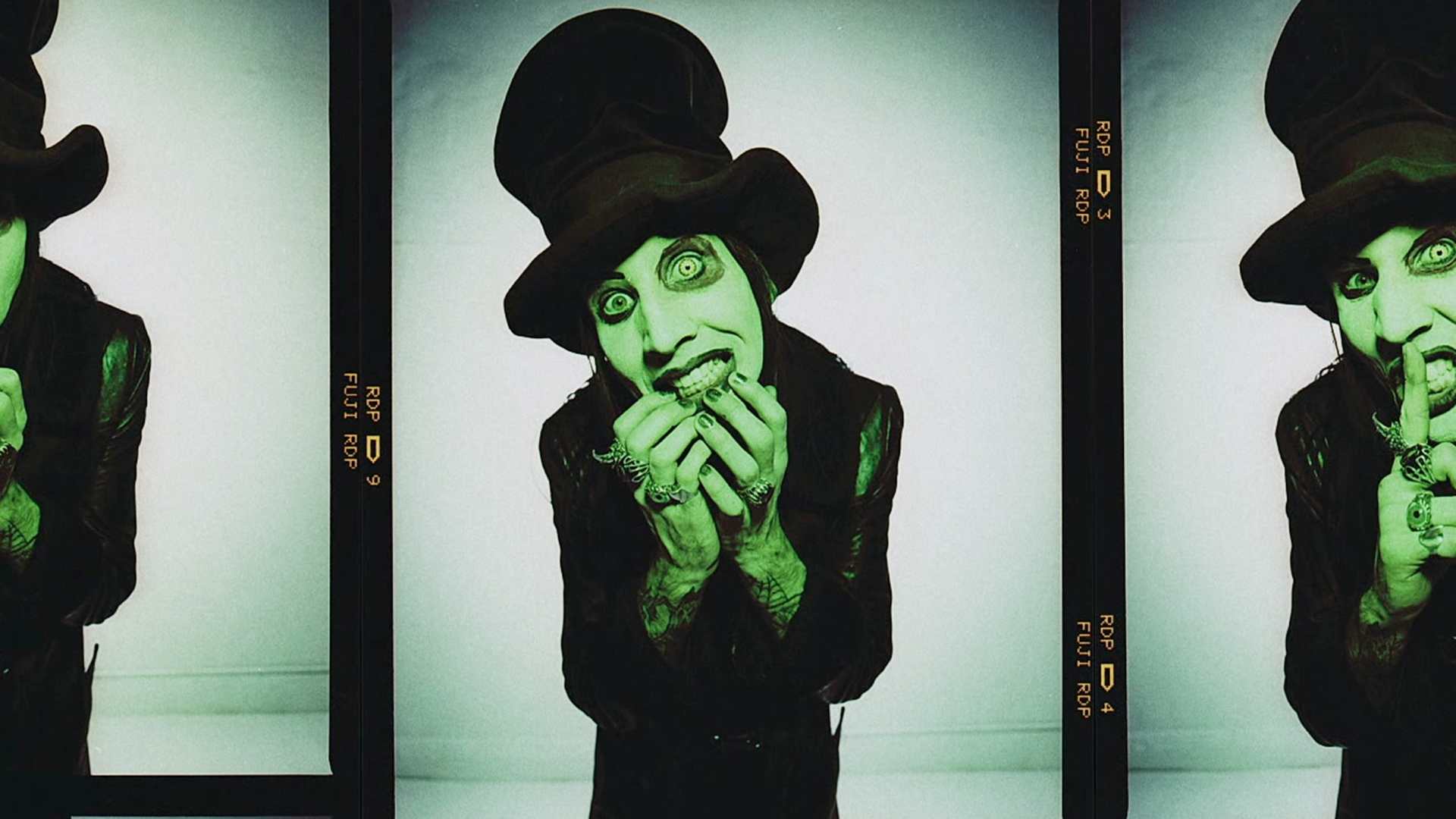
The Faceless Monster We All Know And Love
The easy answer is that Marilyn Manson got co-opted by capitalism. And while that’s technically true, it’s also a horrendous oversimplification. Yes, the market adapted to his ideas and resold them to unsuspecting youth in more digestible packaging, but none of that would’ve worked without the advent of the internet.
Here’s my actual thesis: Manson was a pre-internet beast. He thrived on mystery, personal mythology, and a monoculture that instinctively demonized him for being rebellious and aggressively different. That was his power source.
There’s a reason his cultural peak came in 1996 and 1997, after the release of Antichrist Superstar. The internet was still in its infancy, just advanced enough to supercharge his presence without fracturing it. He was a new, uncontainable idea, unfolding in real time across a mostly unified culture. And in those early web days, Usenet threads, GeoCities fan sites, crude but passionate forums, Manson was still operating in an environment shaped by the same monoculture that had created him.
That mattered. Because the internet back then didn’t replace reality, it extended it. It let you find others like you, to stumble into strange little communities where your “provocative ideas” were just part of the landscape. You were still a weirdo, but now you had peers, whatever you were into. Hentai porn, Linda Ronstadt, Legos, jai alai, Ethiopian jazz, you name it. That was the magic trick.
And for a while, that magic worked in Manson’s favor. It expanded his reach and deepened the cult. But almost in the same breath, it started to unravel him. Because the internet didn’t just kill loneliness as we knew it, it killed outsiderness. And Marilyn Manson’s entire act depended on the feeling that you were fundamentally alone in a world that wanted you to disappear.
If you were a lonely, abused kid, Marilyn Manson wasn’t the only one who could reach out and offer you a solution anymore. Now everyone could. Your local church group, the government, Norwegian black metal bands, the LGBTQ+ community, Abercrombie & Fitch, Dennis Cooper, Jenna Jameson, that Heaven’s Gate cult who ended up killing themselves, every ideology, fetish, lifestyle, or escape hatch had a direct line into your bedroom. If reality had failed you, the internet gave you options.
And that’s the thing: if Manson rebelled against the dominant social model, the internet triggered a literal Big Bang of new ones. Suddenly, no model was dominant. No rebellion was central. And if everything is subversive, then nothing really is.
The internet also uncovered a deeper layer of extremity that had always existed but was previously inaccessible, tucked behind the veil of polite reality. Suddenly, the androgynous guy singing about patricide and societal collapse wasn’t the most disturbing thing you could find. You could watch people die on camera. You could stumble into war footage, cartel executions, body horror masquerading as porn. The sexuality that was once too risqué for MTV now felt quaint.
I remember being fifteen or sixteen, walking in on a group of friends huddled around a monitor, downloading low-res JPEGs of bestiality like they were smuggling classified intel. It wasn’t even about arousal. It was about the thrill of having seen it. Of participating in something so far beyond the cultural boundaries Manson once played with.
There was no coming back from that. Not for me, and definitely not for the Antichrist Superstar.
Marilyn Manson saw it coming. His 1998 record Mechanical Animals (which in hindsight is his best offering by a mile) was a deliberate attempt to move beyond the binary of order and rebellion. The album leaned into glam, melancholy, and the existential dread of fame. It hinted at the man beneath the monster, the performer underneath the persona. He was tracing a path out of his character. But the kids weren’t ready for it. They wanted more fire and brimstone. More Satan. More outrage.
It was too soon for vulnerability. His audience hadn’t matured yet. There are some truly awful jokes you could make about that, but I’ll spare us both. The point is: Manson tried to evolve alongside the internet, to become a digital creature and meet it in its infinite weirdness. It was the right move. The timing just sucked.
He had one more important album in him, Holy Wood (In the Shadow of the Valley of Death) in 2000, but from there, the returns started to diminish. The Golden Age of Grotesque in 2003 was merely good, although This Is the New Sh*t is legitimately one of his best songs. But by the time he released Eat Me, Drink Me in 2007, the provocation had moved off the record and into his personal life. His romantic relationship with Evan Rachel Wood, who was barely of legal age at the time, felt designed to generate headlines rather than interest in the music.
And we all know how that story ends.
To be honest, I don’t even know if “grooming” was part of the cultural vocabulary back then. I was more or less the age of being groomed myself, so it didn’t register as sharply. That doesn’t make it okay. Even then, pop culture intuitively understood something was off. The energy around that relationship was uncomfortable, even if we didn’t yet have the moral framework to explain why.
Manson had hoped lightning would strike twice. It did for bands like Green Day or the Red Hot Chili Peppers who managed to reboot themselves with another generation. But their connection to their audience was always built around the music. Manson’s relationship with his fans was messier, more existential and mythological. And that kind of complexity doesn’t survive the internet.
The internet didn’t just decentralize power, it decentralized identity. Acceptable life paths multiplicated. We didn’t have to be either normal or a freak, either saved or damned. There were a thousand microcultures to plug into. And in that new landscape, Manson’s whole paradigm, one villain, one system, one rebellion, just didn’t scale. We were worshipping a new god. A new faceless monster we loved more than we loved him.

How The Internet Changed Villains (And Us)
Contrary to what revisionist history might suggest, it wasn’t the sexual grooming allegations that killed Marilyn Manson’s career. That had been dead for years. What Evan Rachel Wood slayed was the cultural memory of Manson as one of the “good rebels” The misunderstood provocateur, the artistic outsider who aged into little more than your marginal uncle that you see once a year at family dinner. She forced us to reconsider the story we’d been telling ourselves about him.
More than that, she cast a reasonable doubt over just how much of a part of Marilyn Manson as a self-conscious spectacle his obsession with power, sex, and violent symbolism ever really was.
Manson could have let himself become a cultural artifact the way legacy acts like KISS did, willingly embalmed in their own mythology and sold back to us with fireworks and vinyl reissues. For a brief moment, it looked like that might be his path. His 2015 record The Pale Emperor was quieter, more introspective. Songs like Killing Strangers and Third Day of a Seven Day Binge sounded like the work of someone genuinely exhausted by the merry-go-round of violence, excess, and performance. The record flirted with blues and post-punk, but more importantly, it flirted with vulnerability. You could almost see Brian Warner, blinking behind the corpse paint. It felt like he was doing it for himself now. He could do what he wanted while he earned a living from his audience’s nostalgia alone.
But then came 2016. And Donald Trump was elected president of the United States.
I can practically hear Manson yelling “I’M SO BACK” on November 8, 2016 and honestly, you couldn’t blame him. The cultural winds seemed to be blowing in his favor again. He was like a heel turning babyface in pro wrestling: still the adversary, still grotesque, but now (almost) everyone agreed the guy in charge was a real-life villain. Manson leaned all the way in, beheading a Trump lookalike in the video for Say10 like it was 1996 all over again.
But it didn’t work. And there are a lot of reasons for that.
First of all, by 2017, Manson’s brand of provocation had lost its teeth. Visually, Say10 wasn’t shocking. It was slick, sure, but not new. It looked like a high-budget sequel to what Cradle of Filth already did in From the Cradle to Enslave back in 1999. More importantly, it was exactly what we expected Manson to do: go after Trump with blood and symbolism and unsubtle menace. But expectation was the problem.
Manson had built his entire career on subverting cultural binaries, on doing the thing you didn’t see coming. Say10 was just him playing a part and doing it alongside Johnny Depp, another guy coasting on pre-cancellation nostalgia. The video didn’t reclaim Manson’s cultural relevance. It felt rich. It felt entitled. It confirmed the uncomfortable truth: Marilyn Manson was now part of the Hollywood establishment.
Another key reason Manson dissolved into the ocean of digital noise was the rise of social media and user-generated content platforms like YouTube. Once everyone was online, constantly talking, constantly reacting, there was no need for symbolic provocateurs anymore. The issues were already front and center. Outrage was ambient. So when Manson released the Say10 video, it didn’t add anything new to the conversation, it just echoed it.
He was no longer saying out loud what everyone else was too afraid to admit; he was just one more voice in the feed. And worse: he wasn’t even first. Comedian Kathy Griffin had already "beheaded" Trump in a photo shoot, and she wasn’t exactly known for trafficking in shock imagery. If anything, she out-Mansoned Manson and nobody saw that coming.
Another reason Manson lost his grip on the culture is simple: people now have plenty of real, immediate things to be angry about. Gaza. Ukraine. ICE. The housing crisis. Mass shootings. Femicides. These aren’t abstract threats. They’re livestreamed, algorithm-boosted atrocities that feel personal and urgent. I don’t think Manson’s existential preoccupations were ever less real. But they’ve plummeted down the hierarchy of outrage in a world where an Instagram story can be a hundred times more horrifying than a Manson video.
His war was always with the soul-crushing machinery of conformity, but that machine has changed shape and now, even kids growing up in shitty homes in nowhere towns can feel less alone by attaching themselves to real-world causes online. They don’t need a rock star to rebel on their behalf. They can do it with a phone and a half-decent WiFi signal.
The adversaries now are real adversaries. Culture has polarized and literalized. The villains are still the same rotten politicians and sociopathic billionaires, but we no longer need a dark narrative to unmask them. They’ve unmasked themselves. The heroes are no longer the shock-rockers or provocateurs; they’re the journalists, whistleblowers, and organizers who risk everything to expose what’s already plainly visible.
Are we drowning in a shallow pool of historical outrage that feels deep because we’re hyper-informed? Maybe. But the terrain has shifted. The world changed and Marilyn Manson didn’t. That refusal to evolve didn’t just make him irrelevant. It made him feel like what he once raged against: a bloated symbol of a system he no longer understood. A disgraced artifact of a war that is not waged by artists anymore.
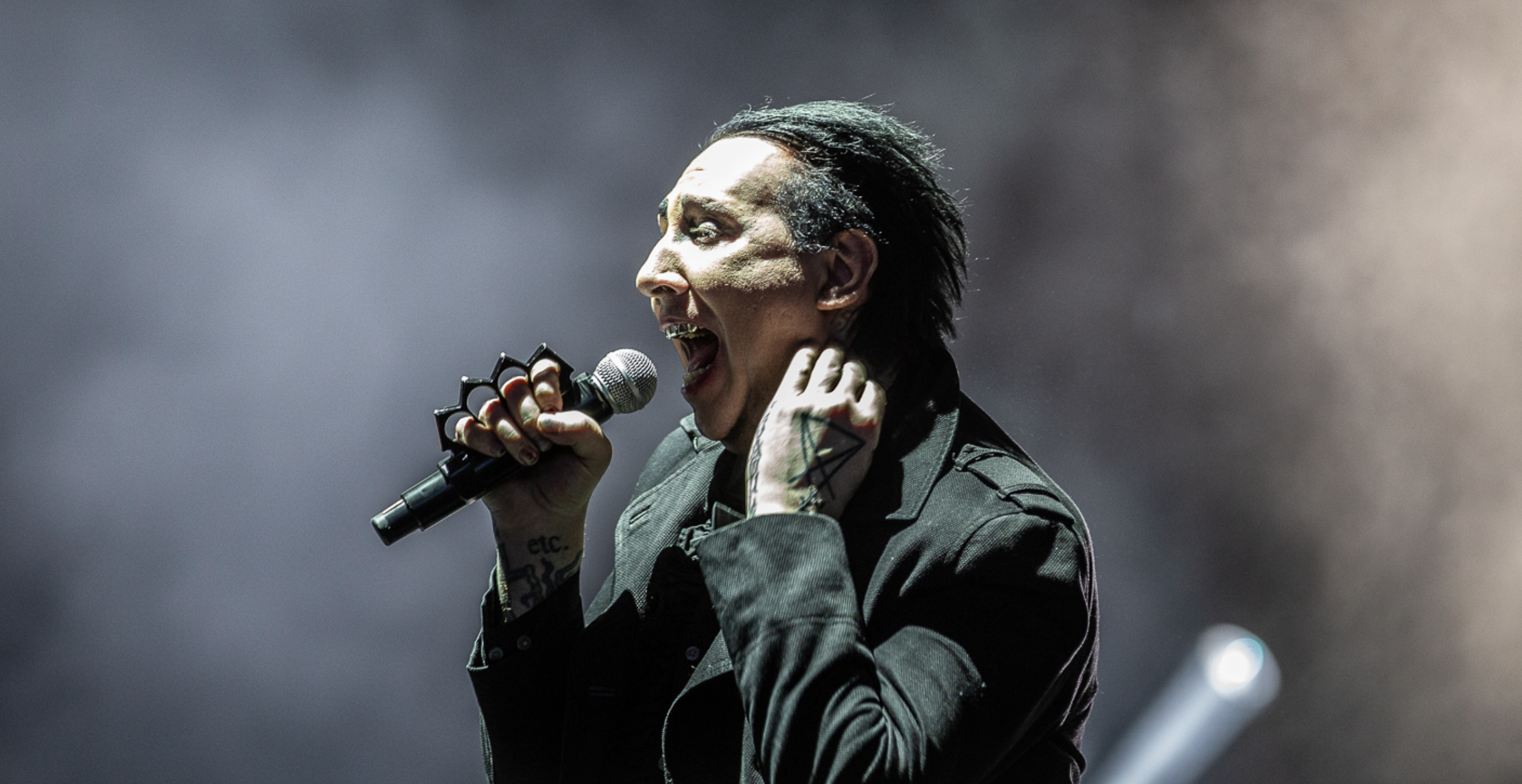
What Should We Learn From This?
Morality has excommunicated itself in the age of self-imposed mass surveillance. A phenomenon we welcomed into our lives with the soft glow of social media.
Being a good person doesn’t just mean going to church, raising two kids, owning a dog, and shoveling your neighbor’s driveway anymore. That formula used to act as a kind of moral camouflage. A lifestyle costume you could wear while doing unspeakable things behind closed doors. Not anymore. If you’re an asshole now, someone will tell the internet about it. And the internet remembers everything.
Your digital footprint is starting to matter more than your actual life. We’ve all become each other’s panopticon. Silence isn’t even a refuge, it’s just the fastest route to being forgotten.
Which brings us to Marilyn Manson’s “final” transgression: the grooming and abuse of a young Evan Rachel Wood during a vulnerable stretches of her life. Like most things in the construction that is Marilyn Manson, it’s hard not to assume that dating someone half his age was, at least in part, a premeditated shock tactic. A performance. Another boundary to push in the name of provocation. And when I say final, I don’t mean it chronologically. I mean it narratively. This is the one that will define him. This is the story people will tell when they talk about who he was, and what legacy he left behind.
Yes, Manson has resumed making music. Yes, he’s touring again. But it doesn’t feel the same. Not even close.
Because he’s not a character anymore. The self-consciously scripted apocalypse he once performed has bled into real life, and now you have to look at him. Really look at him. You have to take him at face value. Not as a symbol, not as a myth, but as Brian Warner. The myth only works when it stays a myth. When it’s a shadow play on the cave wall that inspires people through metaphor, suggestion, possibility. He broke that spell. And what’s worse because it’s obvious he didn’t even mean to.
I don’t think he realizes it’s broken. I don’t think he understands that the curtain’s been pulled and no one is looking at the Antichrist Superstar anymore. Marilyn Manson is dead. What’s left is Brian Warner, dressed like your goth older brother who never got over Bauhaus and hanging out with whoever wants to pay him attention.
Let me be clear: I don’t think the internet led him to commit heinous sex crimes. I’m not making excuses. What I’m saying is that he willingly tried to make himself a participant in a competition he couldn’t win because he thought he was invincible, untouchable and he was defeated in a very boring, evolutionary way.
Marilyn Manson couldn’t have predicted the internet any more than the dinosaurs could’ve predicted the asteroid. But he got old. Physically and culturally. And his refusal to accept an increasingly smaller place in the zeitgeist drove him to acts that will ultimately annihilate his historical significance. If there’s anything to learn from this assassination-by-paradigm-shift, it’s that you get old. Your ideas get old. And pretending otherwise won’t reverse the tide.
The internet killed Marilyn Manson, but it did so using tools he helped invent. He was one of the first artists to fully understand how powerful image, controversy, and moral panic could be when used to shape a public persona. But the digital world scaled those tactics beyond anything he could control. The same culture of shock, identity construction, and public performance that once made him famous eventually became the norm, except now, everyone had access to it.
Manson wasn’t special anymore. The game changed and he got absorbed by the internet just like everybody else.
* Follow me on Instagram and Bluesky to keep up with new posts *