Movie Review : The Odyssey (2026)
I'm one of these people who fancy themselves fans of the idea of Christopher Nolan more than a fan of Christopher Nolan's actual movies. A Hollywood director bigger than his own movies who never compromises on his artistic vision and dominates box office anyway is a necessary beacon of hope for any creative person. But I've never been obsessed with one of his films. Not in the way I’ve been with Paul Thomas Anderson’s The Master or the Coen brothers' No Country for Old Men.
He might've joined this club with The Odyssey, though. I was not expecting an adaptation of a three thousand years old epic poem I've already read to make me cry MULTIPLE TIMES, but here we are. I'm still trying to wrap my head around that.
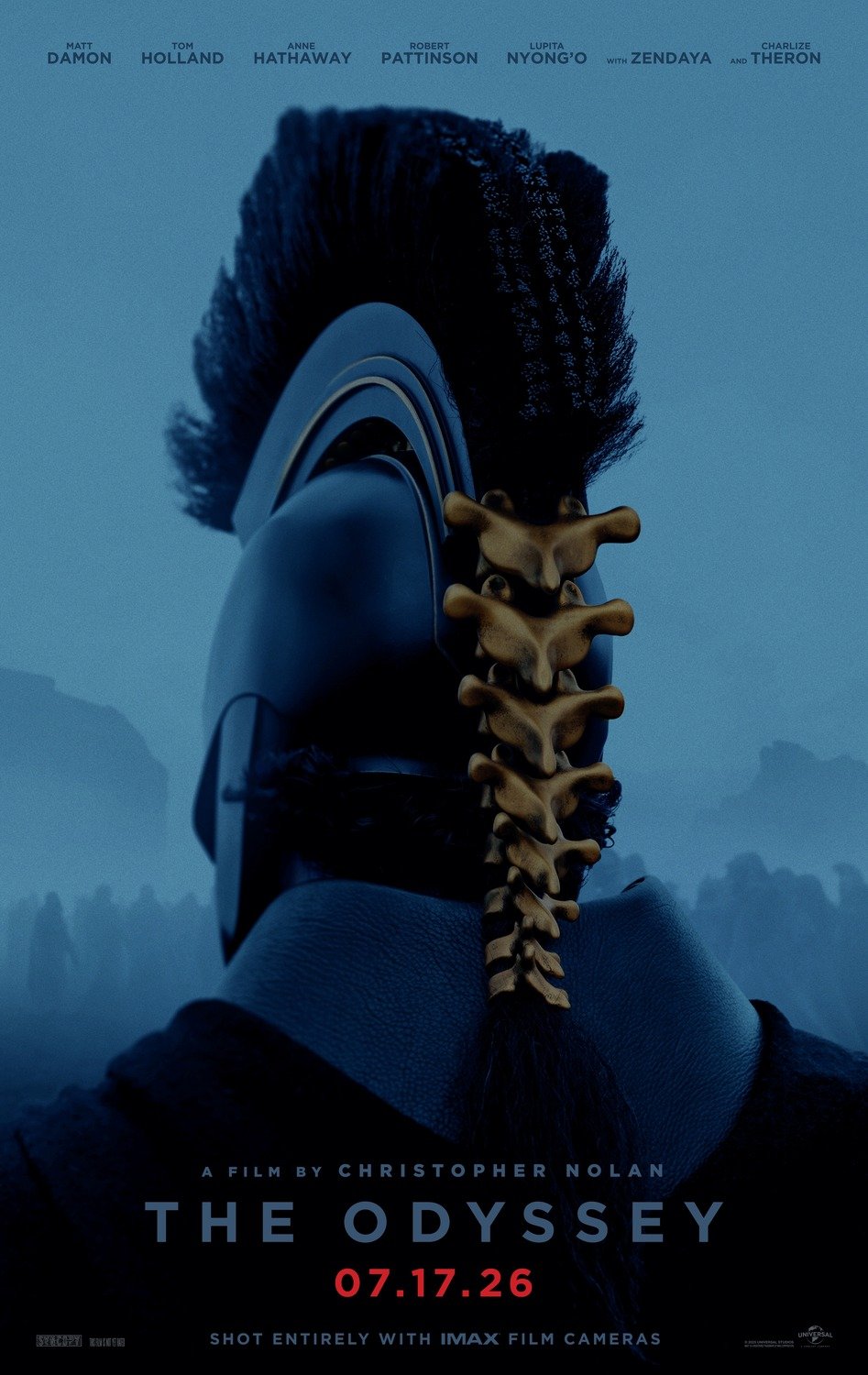
In case you're the last person on Earth who hasn’t seen The Odyssey, it tells the story of Odysseus (Matt Damon), the cunning warrior who has won the Trojan war with the idea of hiding soldiers inside a gigantic wooden horse in order to unlock the door of the city from the inside. No one has heard of him since his iconic victory and his wife Penelope (Anne Hathaway) is getting pressured to remarry in order to protect Odysseus' kingdom of Ithaca. But she refuses to give up on him.
The American Odyssey
A lot has been said about the accuracy of Christopher Nolan's adaptation of The Odyssey and every critic that has been thrown at the movie is valid, somewhat. It's an American movie written by an American male, featuring what is essentially a contemporary American hero and this is exactly why the movie is any good. Who cares if Odysseus is any similar to his three thousand years old original self? What is important is that he resonates with whoever watches the film and he so does.
Matt Damon's Odysseus is cunning, but he's also responsible and compassionate as any leader of men should be. The reason why I was so moved by the second half of The Odyssey is that even if he's considered a war hero and a legend in Ithaca, all he lives with is the failure to protect his men and to uphold his values in the taking of Troy. His decision and motivations are clouded by defeat and regrets, leading him into a righteous path. I do not care whether or not it’s faithful to the original, it speaks to me.
Any contemporary adaptation of The Odyssey was bound to be… I mean, contemporary? Maybe it's the most middle-aged white man coded movie in recent history, but the weight of responsibilities, impostor syndrome, trauma and sacrifice are both issues and moral beacons in my life. I have no idea how it was for three thousand years old fictional heroes, but if Christopher Nolan's movie proves anything is that these preoccupations could’ve existed in a mythical, life-or-death context.
So, The Odyssey is not a faithful adaptation of Homer, but it's a great and relatable one. So who cares about faithfulness? This is how you keep works of art alive. An utmost faithful adaptation of the original Odyssey would've most likely sucked and bombed at the box office. I don’t want Odysseus to be cunning, I want to be able to project myself in him and Christopher Nolan understood the assignment. The Odyssey is a swashbuckling adventure for people who go to therapy and it's how it should be.
The Part That's About Penelope
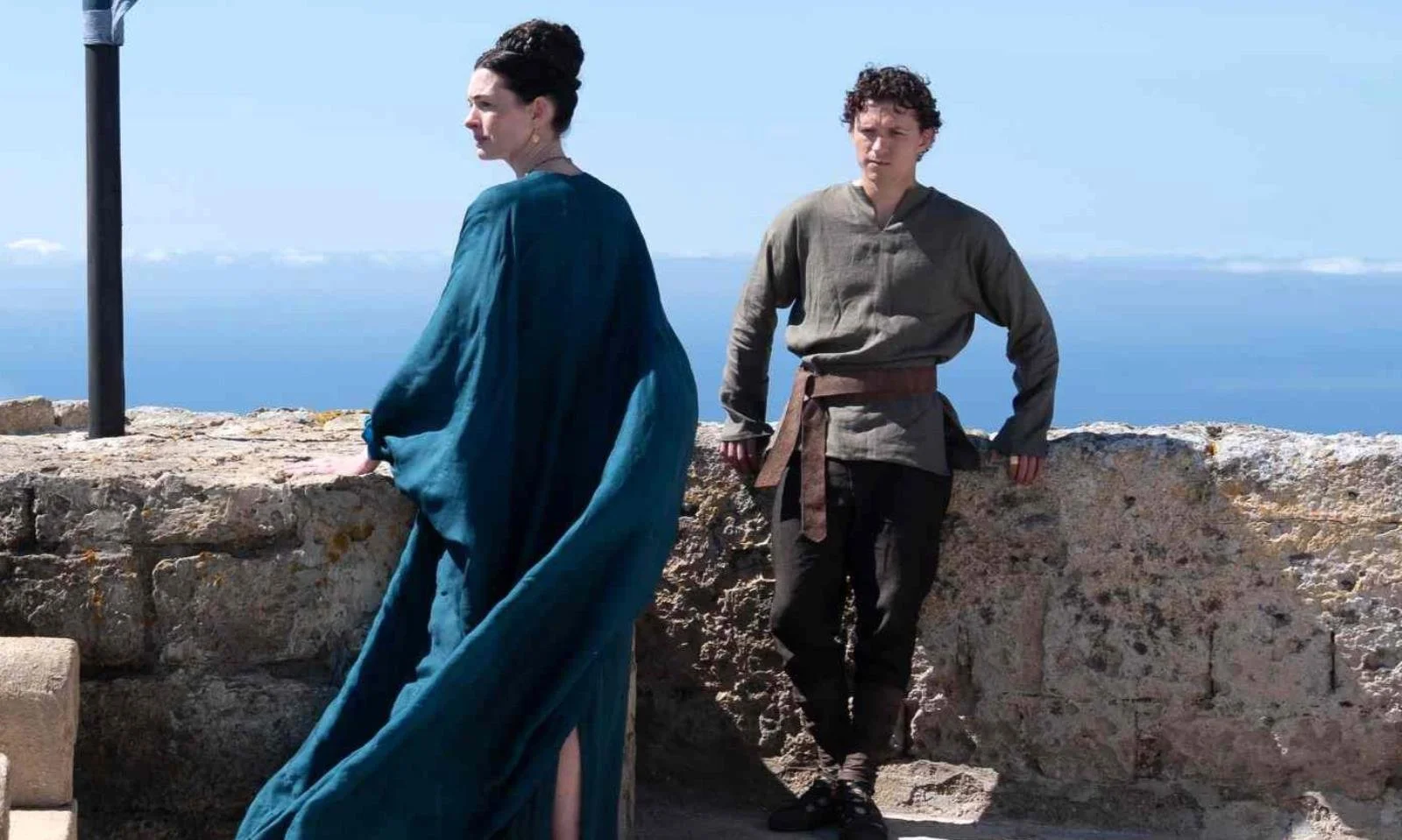
Now, a lot of The Odyssey happens in Ithaca, as a horde of horny and power hungry pretenders are clogging the reception hall of Odysseus' palace. This is where the movie's most complex moral battle is waged. Burdened with the fears of her kingdom, Penelope is asked not only to declare her husband dead, but to relinquish control by remarrying. Her fate and the fate of Ithaca are inextricably linked, but one question lingers: is this the right thing to do for Ithaca? Because that is not clear.
Obviously the closest person to Odysseus, Penelope has the most experience with power of all these people and experiencing power is not the same thing as desiring power. That’s why she holds on to it. Because she loves Odysseus of course, but she also loves the way he commanded order in Ithaca and she will let the shadow her husband’s absence reign over Ithaca before letting anyone with the wrong motivations do so. If Odysseus is all guts and feelings, Penelope's Odyssey is all wits and abnegation.
This shadow, this renown Odysseus has gained in Ithaca is, in many ways, the motor of The Odyssey. It's intangible and yet it’s hovering over everyone.
*
I don't care what you might think. I fucking loved The Odyssey for reasons that are 100% personal. The tension between Odysseus' legend and his pervasive feelings of failure and guilt spoke to me in a way few movies do. This might not be your experience at all, but at some point in your life, feelings that you’ve never really progressed at anything will eventually become overwhelming even though you live a completely other life in the eyes of everybody else and seeing it reflected to you in fiction will make you feel seen.
9.1/10
* Follow me on Instagram , Bluesky and Substack to keep up with new posts *