Movie Review : The Invite (2026)
Twenty years ago, I was a different person. I wanted to teach literature in college and fight professionally in mixed martial arts. Life, genetics and basic probability would decide otherwise, but I had to grieve this idea of myself that I now find somewhat ridiculous. It's what growing up and finding yourself is supposed to be like. Your plans all fail, you win at things you didn’t know you were good at and you take enough irreversible decisions that you eventually become who you are.
Olivia Wilde's latest movie The Invite is about letting go of earlier versions of yourself , embracing what life has given you and the person you’ve become. It’s also about fucking. These topics are more related than they appear to be.
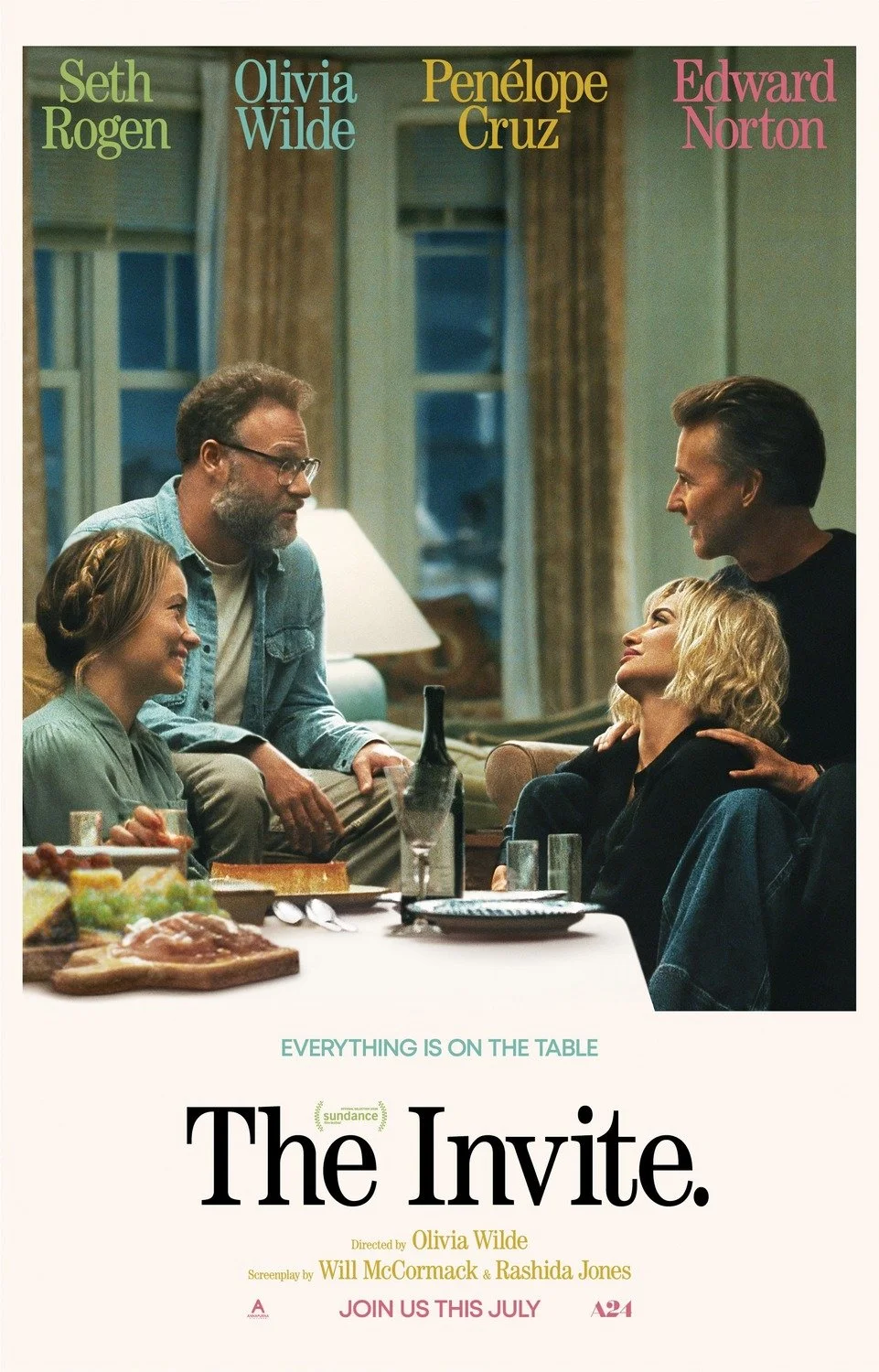
The premise of The Invite is charmingly simple : Joe (Seth Rogen) and Angela (Wilde) are inviting their sexually enthusiastic neighbors Hawk (Edward Norton) and Pina (Penélope Cruz) for dinner to politely tell them that their late night fucking is a little bit much. But they’re also also charmed and fascinated by the vigorousness of their lust. Joe and Angela are also envious of their chemistry and the sturdiness of their bond, which will confront them to the state of their own life together.
The Difference Between Sex and Love
So yeah, The Invite is 107 minutes of a couple dissatisfied with who they are conversing with another couple who are a little too satisfied with their situation. It’s the kind of film that doesn’t make any sense if the endurance run of adulthood hasn’t chipped away at your identity. What makes The Invite interesting is how fascinated Joe and Angela are by Hawk and Pina’s joy. They interpret that joy as evidence of success even though Hawk and Pina are more intimate with failure than they are.
The difference between the two couples is that Hawk and Pina accepted failure in their respective lives and moved on with sex as common ground. It’s a way for them to anchor themselves and feel connected. Their sexual liberation is a source of mutual comfort, but it’s in no way evidence they’re reached a higher plane fo emotional enlightenment. It’s a language they’ve learned to speak together. A way to let go of their former selves and embrace present tense.
As the evening unfolds and the sexual tension, it becomes clear to Pina (who’s conveniently a sex therapist) that Joe and Angela don’t need sex. They need to let go of the current version of themselves. They need to stop pretending that the way they’ve been living their lives works for them.
Joe and Angela’s obliviousness to the seriousness of their predicament makes them relatable even if they are that unbearable couple who aggressively perform their own supposed bliss in front of others. What they see in Hawk and Pina is what they want to have for themselves: connection, joy, peace. They assume sex is a gateway to these feelings, but sex is the most obvious difference between their lives (Joe and Angela haven’t fucked in a year).
But sex is just sex. Joe and Angela are putting the cart before the horse. Hedonistic freedom is not a mechanism for emotional liberation, but rather evidence of it. The models and expectations crack first. The sex comes later.
Joe and Angela are so hung up on being adults, they have never discovered who they were as individuals and that happens a lot more than you think. They have a marriage, a child, a house and a collection of responsibilities that proves they’re functional adults, but they don’t have an idea of themselves outside of the function they perform. And that happens all the time. That’s why The Invite is a quirky, but magnetic little movie. It’s about the tension between who you are and who you think you are.

The Art of Letting Go
Ultimately (and ironically), Hawk and Pina only serve a function in The Invite. It’s a movie about two people who struggled finding a version of themselves they’re comfortable with and these two people are Joe and Angela. But mostly Joe. Seth Rogen makes for a great Captain Miserable who does not accept that he’s settled for a live that is more comfortable than meaningful to him. That he’s settled for something that was handed to him without any struggle or merit.
Joe has everything he’s supposed to want, but he little to make it happen. It's a very privileged adult problem to have, but it’s still a problem. What he’s lost sight of is that it’s not because he didn’t earn his privilege that he cannot built something meaningful out of it. Growing older means the past becomes more important to you with every year, but the present only becomes more important and meaningful. There is less of it to waste ponderign what your life could've been.
In The Invite, he’s put at the crossroads and forced to look ahead. He has to decide if he wants to define himself as the rock musician he failed to become or the father, husband and passionate musician he still has time to be and I find that moving. It’s an important choice to make for yourself.
*
The Invite is going to be appreciated by a certain type of people at a certain point in their lives, but I happen to be one of these people. It’s very much a movie about first world problems and if your thing is — in the parlance of Cormac McCarthy — matters of life and death, The Invite might not be for you. But some movies are good because they’re moving and spectacular, others because they’re relatable. Maybe The Invite won’t inspire you, but if will make you feel seen if you’ve lived a rather normal life.
7.6/10
* Follow me on Instagram , Bluesky and Substack to keep up with new posts *