
Movie Review : Weapons (2025)
One of the childhood nightmares I can still replay in hi-def involved my father wearing my mother’s clothes and walking downstairs in a reverse bridge pose like Linda Blair in The Exorcist. Then he started tickling me with the most serious, courtroom-witness look on his face. I don’t know why that one stuck. No monsters under the bed, no creepy attic whispers. Just someone I loved suddenly hollowed out and used as a toy by something that clearly hated me.
That exact flavor of dread, the kind that redecorates your personal space , came roaring back after watching Zach Cregger’s new film Weapons. This is a horror movie where the monsters don’t smash through the gates of righteousness. They set up shop inside, change the locks, and start forwarding their mail there.
You probably already know the hook thanks to the film’s minimalist but suspiciously revealing marketing campaign: seventeen kids from the same classroom vanish on the same night. Security footage shows them running out of their houses at exactly 2:17 AM. Their teacher, Mrs. Gandy (Julia Garner), is the obvious scapegoat, mostly because she’s a hypersensitive alcoholic and the town’s collective imagination likes its villains with obvious flaws. Only one kid from the class is still around. And he’s not talking.
The Inverting of the American Home
Although Weapons is a buffet of both classic and contemporary terrors: jump scares, grotesque new neighbors, occult symbols tucked into sunny suburban streets. The most unnerving thing in the whole movie is a house. Specifically, the house where Alex Lilly, the lone survivor of the classroom vanishing, lives.
For an elementary school kid, home is supposed to be the life raft that keeps you dry from the outside storm. Weapons flips that raft over, nails it to the ceiling, and covers it in mildew. The Lilly house has its lights permanently off, its windows blocked with newspaper, its floor carpeted with Campbell’s soup cans. Every afternoon after school, Alex disappears into it without a word, like he’s clocking in for a shift no one should have to work.
It reminded me of the all-black house where serial murderer Gretch Gravey lives in Blake Butler’s 300,000,000. In Weapons, whenever suspicion falls on the Lillys, the front door seems to open by itself, inviting the curious inside, if "inviting is the right word for a doorway that swallows you whole. And the deeper the film goes, the more terrifying that house becomes, because it’s not haunted in the usual Boo! sense. It’s parasited, occupied by something that doesn’t belong there and actively trying to stay hidden.
A haunted house trashed by a ghost is one thing. A house turned into a dark, filthy monolith by something that doesn’t care if its residents live or rot? That’s a different breed of terror. It exposes the fragile, often delusional contract childhood operates under: you’re safe at home as long as your parents are stable and no one out there decides to ruin you. Your safety wall is paper thing and it can tear fast.
I was never that close to seeing my dad spiderwalk down the stairs again. But I was never that far, either.
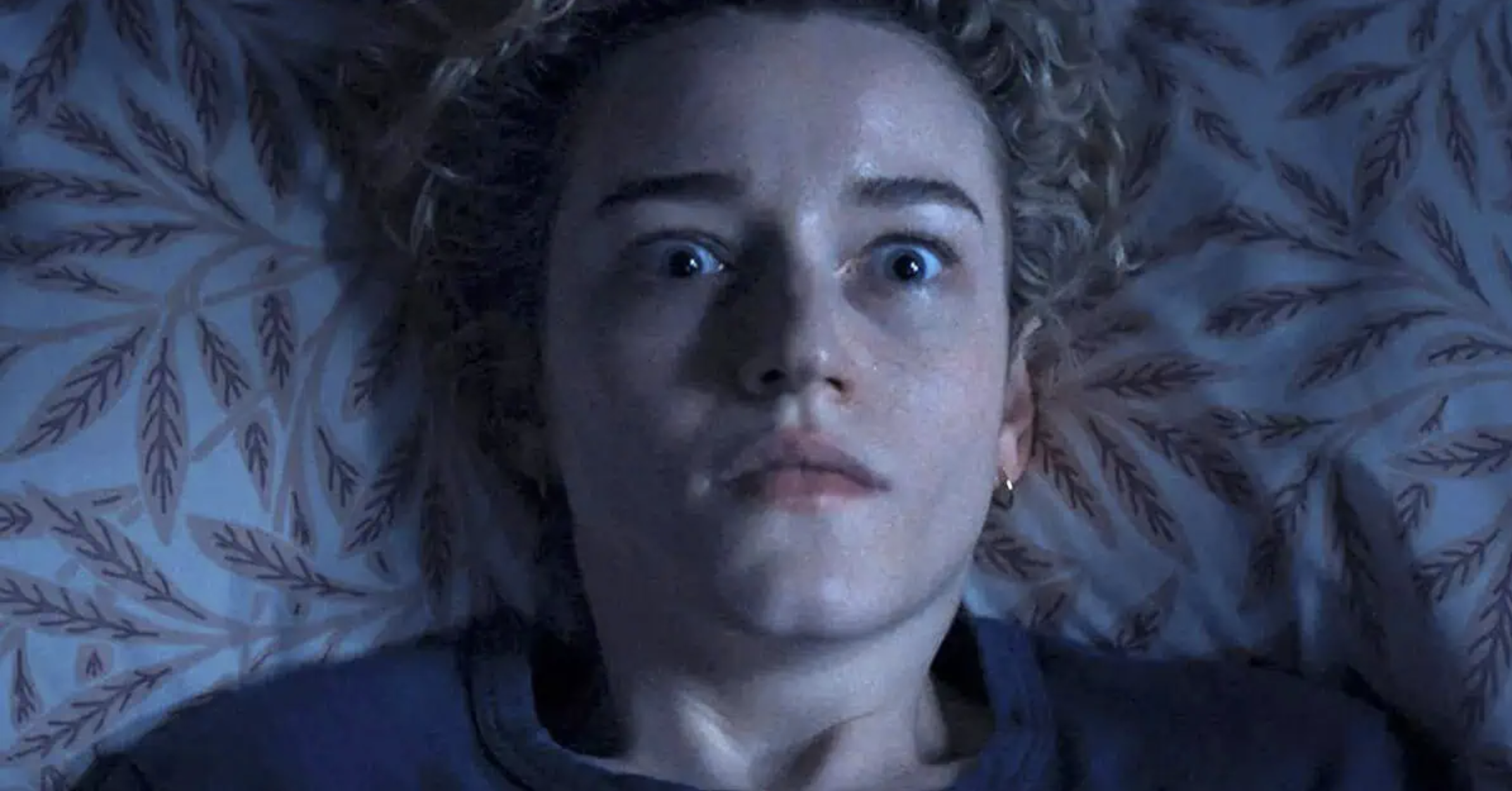
Fragments and Symbolism in Horror
Another fun trick Weapons pulls is telling its story through fragmented points of view. You keep reliving the same one or two days, but each time you’re anchored to a different character. It’s a clever way to keep the plot revealing itself in jagged little bursts, but it also sneaks in one of the film’s central arguments: your quiet life is fragile, and it can vanish because of one person’s decision. Peacefulness isn’t a birthright, it’s a social contract and contracts get torn up all the time.
This idea pays off beautifully in the climax, which might be the most purely satisfying thing I’ve ever seen on a screen. I won’t spoil it, but it runs on a belief system I hold close: trauma changes you in ways you can’t undo, but if you refuse to let it eat you alive, it can turn into a kind of armor.
The closest pop culture parallel I can think of is Randy Orton getting dragged into Bray Wyatt’s swampy nightmare world and emerging unblinking, just long enough to burn the man’s compound to the ground. Or maybe it’s Sarah Connor in Terminator 2, staring down the Terminator in the steel mill: permanently altered, absolutely ready to return fire.
We’re operating on that level of cathartic savagery here. Maybe even beyond.
*
Weapons was a blast. My buddy, walking out of the theatre, said it was the best Stephen King adaptation he’d ever seen, even though Stephen King had nothing to do with it. He’s not wrong. The movie shares King’s obsession with childhood and the awkward violence of coming-of-age, his way of letting hard realism slow-dance with the supernatural. Even the town’s quiet hum feels ripped from Bangor, Maine.
It’s legitimately scary, even though the plot occasionally wanders into absolute wacko territory, because it pokes at a kind of fragility no one wants to think about. Not the fragility of the world. The fragility of you. The idea that your safe little orbit could be cracked open in an instant, and that whatever moves in afterward might never move out.
8.1/10
* Follow me on Instagram and Bluesky to keep up with new posts *