Book Review : Charlene Elsby - Poor Damned Souls (2026)
Horror novels often show a sense of decorum that’s mostly absent from horror movies. Novels live in the mind of their reader and it’s harder to shock someone who controls their own psychological construction. Harder, but not impossible. A novel like Deliver Me, by Elle Nash does it by building something fragile and beautiful before ripping it apart in front of you like a predator in the wild. The visceral immediacy of extreme violence only registers if you’ve first given the reader something worth destroying.
Although I’ve historically championed her work, I wouldn’t describe the fiction of Charlene Elsby as visceral and immediate. She’s about control — turning life-and-death situations into existential math problems. That’s her signature. That’s what makes her disquieting. Or at least, that’s what I thought until I read her upcoming novel Poor Damned Souls, where control and decorum give way to a descent into madness that rivals the most vile and ancillary Italian horror movie you’d prefer to forget.
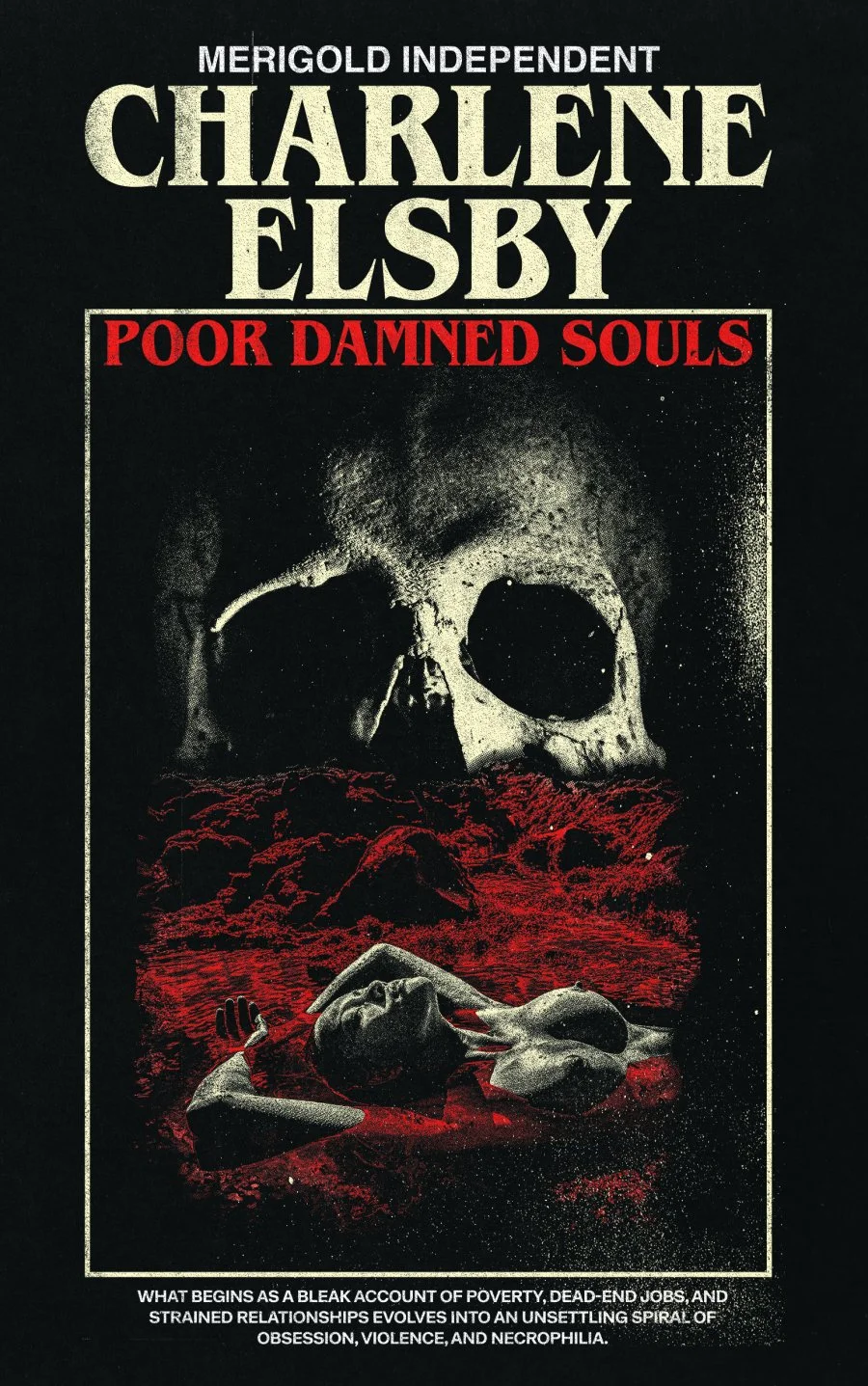
In Poor Damned Souls, Charlene Elsby’s nameless narrator works at a loans business called The Money Store and lives with a weirdo named Scott. They live rough, but they get by until the moment where our narrator starts suspecting that ol' Scott is cheating on her. She will discover that he’s doing something a lot sinister than cheating (it’s even worse than you think) that will put her in front of a Faustian choice: will she stand by her man or will she lose the little she has going for her in the name of doing what’s right?
The Women-On-Women Violence Taboo
Horror has never exactly avoided violence against women, but Poor Damned Souls approaches it from an angle that feels deliberately uncomfortable. Charlene Elsby inhabits the point of view of a woman who witnesses someone she cares about committing that violence. There’s an obvious narrative route this could take: clear condemnation, clean moral lines, a cathartic reckoning. Elsby refuses all of it. She withholds judgment. She lets the moral fog thicken.
And that refusal to immediately declare where we’re supposed to stand is what makes the book so destabilizing.
Taking a stance is never simple when you’re barely scraping by. When your job is cold and alienating, and whatever ability you once had to imagine a future has already been stripped away, risking your current situation. can feel indistinguishable from dying. That’s where Poor Damned Souls separates itself from Charlene Elsby’s earlier work. This new perspective explores a unexpected question: poverty. Financial, but also emotional and cultural poverty.
Violence sits at the forefront of Poor Damned Souls, but it’s only a symptom of something else. The real infection is internal. The narrator operates from a fear she doesn’t fully understand or control. It’s not exactly fear of Scott, or even fear of what might happen if she confronts him. It’s something older and more entrenched, so deeply woven into her identity that it feels indistinguishable from who she is. Her relationship anchors her to the present, and that present — however bleak — offers a kind of invisible protection.
Throughout the novel, her state of existential survival emerges quietly, like a poisonous spider from a crack in the wall and that my friends, is fucking terrifying.
The Crushing Weight of Now
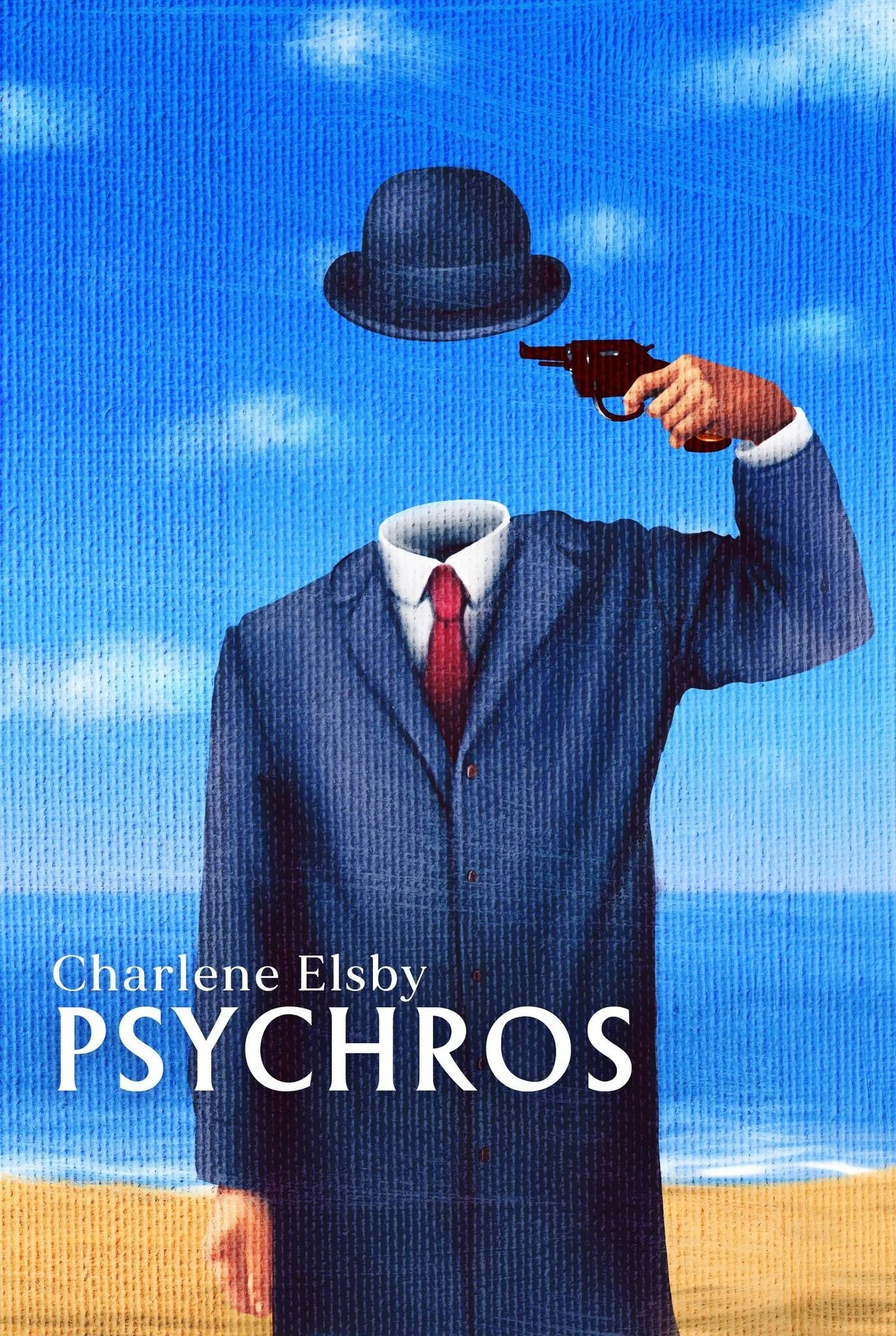
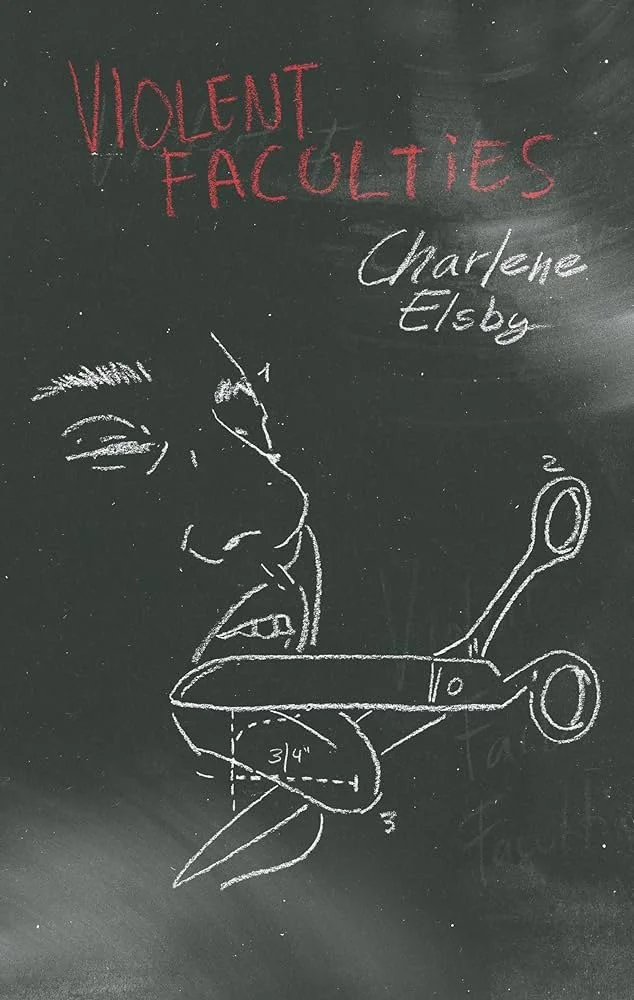
The other breakthrough of Poor Damned Souls is stylistic. It’s in the voice. Charlene Elsby — a philosophy professor by trade, I believe — has often written from a distinctly cerebral, almost Gombrowiczian perspective. In her previous novels, characters committed horrors, but those horrors were filtered through abstraction, circular reasoning, a kind of academic distance.
The protagonist of Poor Damned Souls doesn’t have this layer of protection. Her voice isn’t theoretical; it’s exposed. Raw. Immediate. And because of that, she becomes something Elsby’s earlier characters rarely allowed themselves to be: relatable.
I don’t think that shift is accidental. Had Elsby written this novel in the same cerebral register as before, especially in The Devil Thinks I’m Pretty, it would have felt like a variation on familiar terrain. By stepping outside that academic control mechanism, Charlene Elsby anchors the horror directly in the character’s lived perspective. The result feels almost like body horror for the psyche. A moral mutation in real time if you will. We watch her witness herself becoming someone else, decision by decision, each choice shaped less by free will than by terrible circumstance.
*
I don’t know how she keeps doing it, but Charlene Elsby has raised the bar on herself again. Poor Damned Souls feels like a genuine risk — not just thematically, but structurally — and it pays off. It’s too violent, too psychologically invasive to ever flirt with mainstream success. But that might be its destiny. This is the kind of novel that won’t trend; it will circulate. It will be recommended in private messages, whispered about in obscure Reddit threads, passed along like weird porn in 1998.
Elsby doesn’t compromise. She doesn’t soften the edges to make you comfortable. With Poor Damned Souls, she pushes her work into a new register — one where the horror isn’t observed from a distance, but inhabited. This is coming out next month, from Merigold Independent, but you can pre-order it now.
8.7/10
* Follow me on Instagram , Bluesky and Substack to keep up with new posts *