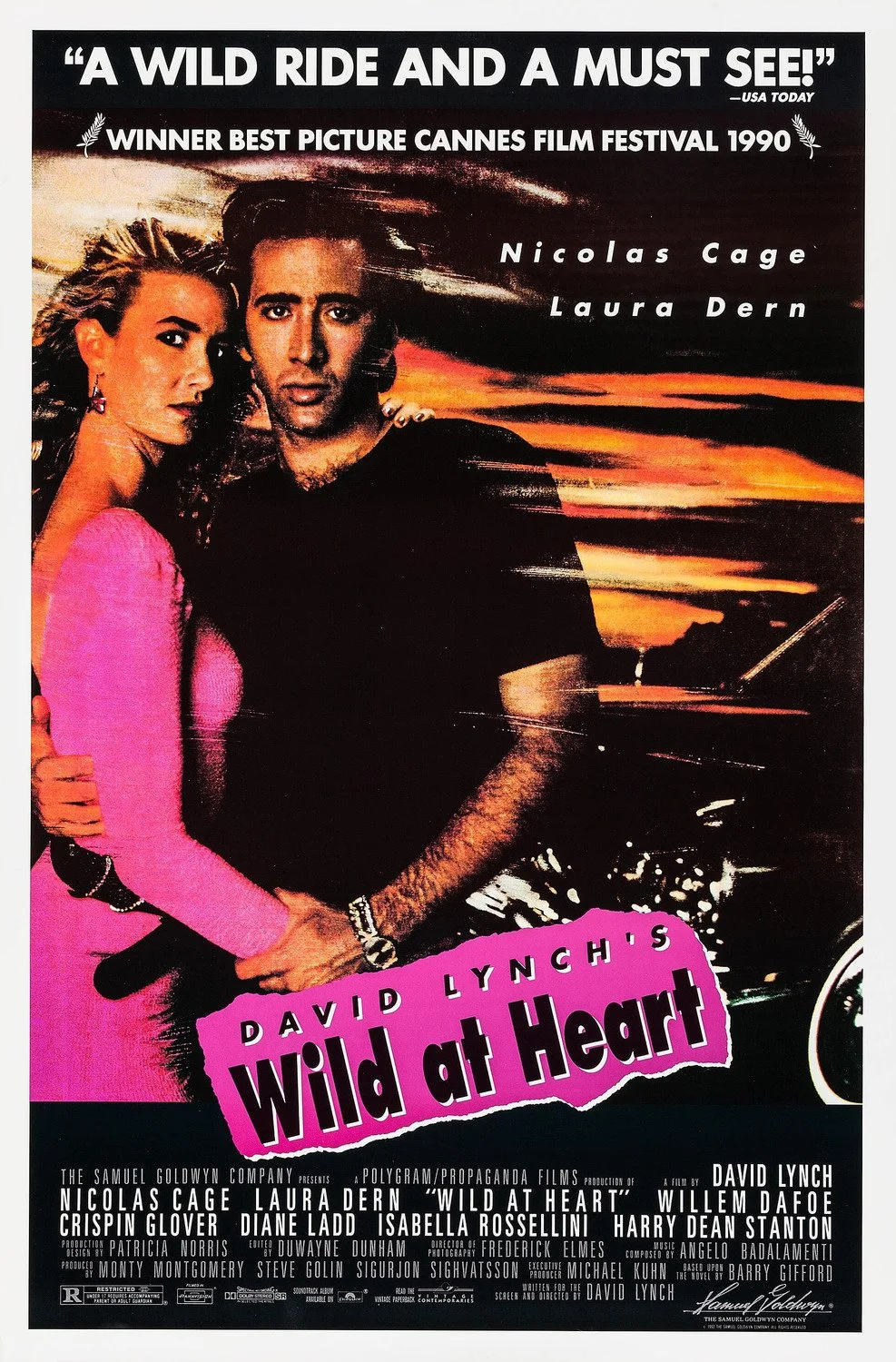
Classic Movie Review : Wild at Heart (1990)
Everything about David Lynch feels different since his passing. Now that he's become a part of film history, there's no shock or bewilderment left to be had. Only work to be viewed again and better appreciated for what it is. No one is ever going to solve the enigma of "Lynchian" because the man himself always refused to, but time and viewings have made it easier to reconcile his blend of conscious and unconscious storytelling. Now is as good a moment as ever to become a David Lynch fan.
There might not be a better place to start than with his 1990 movie Wild at Heart.
Wild at Heart tells the story of Sailor Ripley (a prime Nicolas Cage) and Lula Fortune (Laura Dern), a young All-American couple cursed with an evil, super competitive stepmother (Diane Ladd) who either wants to bang Sailor or to see him die. After Sailor has to kill a hired killer in self-defense, he reunited with Lula as he gets out of prison and the two young lovers hit the road to get as far as possible from Lula's mom. But traveling across America is easier said than done when you’re young, penniless and chased.
Love & Hell
This is David Lynch’s most accessible movie and part of this is because it's based on a Barry Gifford novel. What he adds to the narrative (and he adds a lot) is accessory to a clear, rather classic storyline. It’s a very American story about youthful lovers refusing to quit even if the world is conspiring against it. That conspiration is embodied by another quintessential figure Marietta, the old beauty queen who refuses to age. She sees her daughter’s beauty as competition and something she needs to own.
Marietta is the real and metaphorical devil chasing down Sailor and Lula. A first generation individualist forced into a role she never wanted, unwilling to give up her place in American hierarchy even if time is ushering her out. Her transformation into a primordial evil is symbolized by an awesomely Lynchian scene where she loses control while she’s applying lipstick and ends up painting her entire face red. The barrier between human and demon has collapsed.
Lynch's America in Wild at Heart function as an Ouroboros where no one except Sailor and Lula seems to recognize they belong to something greater than themselves. Everyone's so obsessed with getting something now and for themselves, they don’t notice they’re undermining the very idea they’ve built their myopic, all-devouring individuality on. Sailor serves ironic reminders throughout the film, calling his snakeskin jacket a symbol of his individuality and beliefs in personal freedom.
But Sailor and Lula never lose sight of one another. They almost, but never do — therein lies the beautioful contradiction making Wild at Heart special. They manage to write their own story and celebrate their own individuality and personal freedoms by constantly investing in one another. They don’t have anywhere precise to go or something clear to gain, but that good hearted generosity that comes with being in love adds up to turning Sailor and Lula into more than the sum of their parts.
The Lynch of It
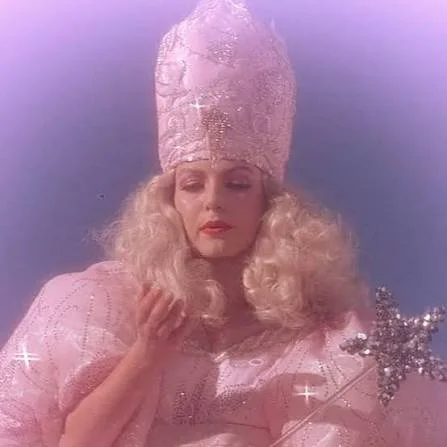
One of the many reasons why people take so much pleasure in watching David Lynch movie is to be knocked off-balance by atypical ideas and his off-beat sense of humor. Wild at Heart has a lot to offer in that regard: a witchcraft thematic overlay that looks entirely symbolic until it isn't, a complete mastery of mosh pit moves by a young Nicolas Cage, an oddly ritualistic, cursed walk-in scene from Willem Defoe’s character Bobby Peru. Literal representations of the film's existential stakes.
Wild at Heart could’ve been made by another director, but it would’ve been nowhere near as fun. David Lynch undercuts the tragedy of Sailor and Lula's predicament by a looming feeling of supernatural that ducks in and out of the frame without ever really committing. The most haunting example being the car accident they stumble upon at night on the highway, acting as a bad omen for what’s to come. It’s one of the great Lynch scenes I’ve seen and it’s only Lynchian aspect is that it serves no literal purpose.
*
Wild at Heart is clearly top half in David Lynch's filmography. It's a simple story, but it’s so richly told that it transcends any stereotype it could possibly purport. It’s a playful and creative take on a classic American story embodied with energy and sass by its distribution. In the parlance of Bill Simmons, there’s a rewatchable quality to it. The odd balance of familiar tropes and eclectic ideas will keep it forever fresh. If you’re not into Lynch yet, it’s your gateway drug of choice.
8.3/10
* Follow me on Instagram , Bluesky and Substack to keep up with new posts *