A Subjective History of Death Doom
This shouldn’t be complicated, which is probably why it always is.
Death doom metal has evolved so little since its semi-accidental emergence in the late eighties that people argued about whether it even exists as a distinct thing up until recent years. It’s routinely confused with funeral doom. An understandable mistake for newcomers and a mostly irrelevant distinction for people already deep enough into the genre to argue about it online. To the initiated, these are just two flavors of the same meal, differentiated less by ingredients than by digestion time.
You could even argue that death doom doesn’t really have a history. If you tracked down the bands retroactively labeled as pioneers, at least half of them would tell you they were playing death metal and that the only reason this conversation exists is because critics needed a term that explained why some records sounded slower, heavier and more terminal than the rest. You could also argue that historically speaking, death doom is death metal that gives itself permission to slow down more often.
It has been maybe ten or fifteen years since musicians are self-consciously starting death doom bands. Call it an internet thing.
So death doom really only has two eras. The first is its chaotic, semi-accidental birth, when bands slowed down because something felt wrong and nobody stopped them. The second begins when a new generation listened back and thought: this wasn’t a flaw, this is the point. That’s the moment death doom became self-aware: when artists stopped apologizing for the slowness, the murk and the refusal to resolve, and decided to make a whole identity out of it.
Let me tell you all about it. This is my subjective, quite personal history of death doom metal.
Killing Death Metal And Then Reviving Its Corpse
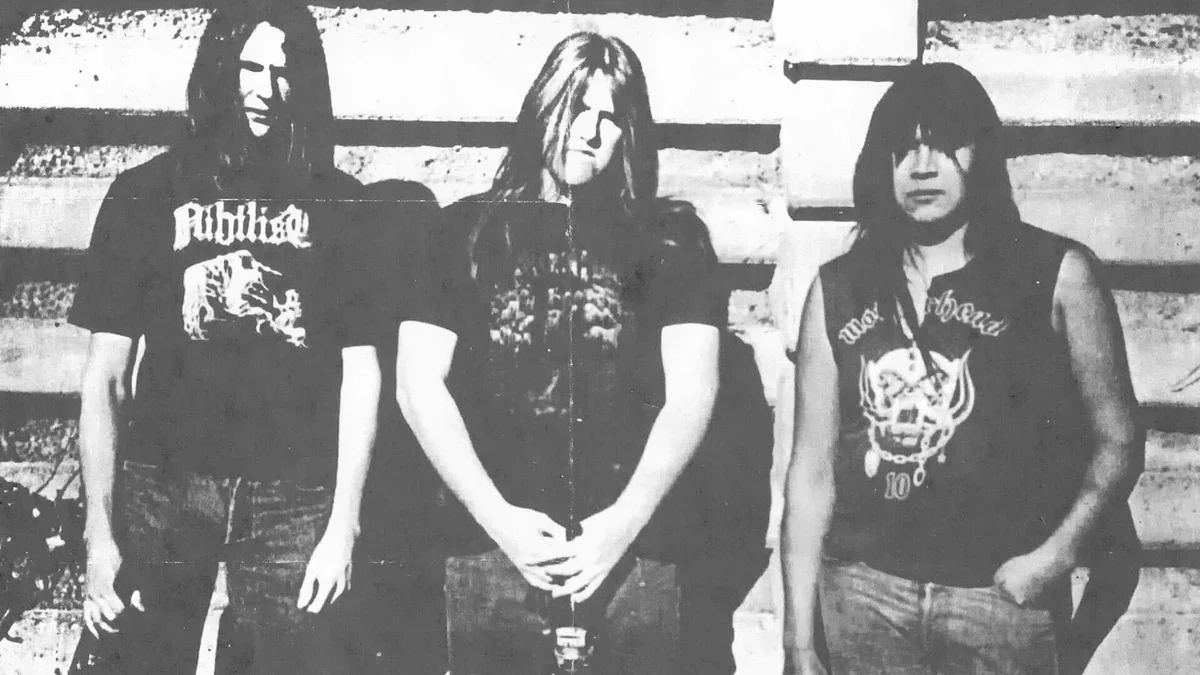
If we’re being honest with ourselves, the first true death doom metal band was probably Autopsy.
As is often the case with metal subgenres, the idea had been circulating for a few years before anyone fully committed to it. Plenty of bands slowed down, got heavier, or flirted with atmosphere, but no one manifested the genre’s core impulse the way Autopsy did on their 1989 debut Severed Survival. It’s a filthy, dripping record, one that prioritizes texture and mood over speed or showy technicality. The riffs don’t push forward so much as seep outward like putrefied remains.
There’s also a clean lineage here. Autopsy frontman Chris Reifert played on Death’s Scream Bloody Gore, and Severed Survival feels like a more obsessive, fully realized exploration of some of that record’s darker instincts: less interested in momentum than in what happens when decay becomes the main event. Now, this is not exactly a slow record. The keyword here is SLOW-ER. I would consider only the last three songs Funeraleality, Destined to Fester and In The Grip of Winter to be proper death doom.
The fatherhood of the genre is sometimes attributed to another American band, Dream Death, on the strength of their 1987 album Journey into Mystery. I’ve never bought that argument (sorry Dream Death). Once you start heading down that road, you’re forced to keep walking backward, and before long the argument collapses into something much bigger than death doom. At that point, the credit would almost have to go to Celtic Frost and their 1985 landmark To Mega Therion.
The irony is that Celtic Frost would eventually become genuine death doom powerhouses themselves with Monotheist, but that realization came much later. In the late eighties, they weren’t playing death doom so much as quietly breaking the rules of extreme metal. Their real contribution wasn’t a blueprint, it was a green light. At a time when everyone else was obsessed with speed, Celtic Frost demonstrated that slowing down could feel heavier, more dangerous, and more unsettling.
Still, historical honesty matters. Back then, Celtic Frost were firmly a black and thrash metal band, not death doom in any meaningful sense. They didn’t invent the genre, but they made the idea of it unavoidable.
If death doom is so often confused with funeral doom, it’s because the two share a common ancestor: Winter. Their 1990 album Into Darkness arrived a year or so after Autopsy’s Severed Survival and took the same basic idea, slowing everything down and committed to it with almost confrontational seriousness. Severed Survival was SLOW-ER, but Into Darkness is legitimately a slow record. Autopsy had the idea, but Winter ran with it and turned it into a thing.
In retrospect, Winter’s contribution would become foundational to funeral doom, but at the time Into Darkness was very much a death doom record, largely because funeral doom didn’t exist yet as a concept anyone recognized. This wasn’t refinement; it was excavation. If Autopsy hinted at a new direction, Winter went down there and decided to stay. They never released a full length album after that, but the echoes of Into Darkness can still be heard today. It created something.
It would be dishonest to discuss the birth of death doom without addressing Incantation. John McEntee would almost certainly describe the band as straightforward death metal and he wouldn’t be wrong. But Incantation effectively established how death doom sounds: mucky, cavernous, primordial, as if the music were being played from inside the earth rather than on top of it.
While they do slow down when it suits them — most famously on the immortal The Ibex Moon — Incantation has never seemed particularly invested in speed as a value, one way or the other. That indifference is the key. By refusing to treat tempo as an identity marker, they’ve remained fiercely original across decades of releases. Incantation isn’t devoted to a genre label so much as a feeling and an aesthetic and death doom has been borrowing from that conviction ever since.
So, What’s The Difference Between Death Doom and Funeral Doom?
There are three meaningful differences between death doom and funeral doom: song structure, tempo, and lyrical focus. The most immediately obvious one is length. Death doom songs are comparatively short. I can’t think of a single death doom track that clears the ten-minute mark, and if they exist, they’re already testing the genre’s outer limits. Funeral doom, by contrast, treats duration as a medium in itself, it can stretch past the hour mark without sounding remotely apologetic about it.
This difference in scale matters. Death doom is less experimental and more controlled. Even at its most oppressive, it’s still about containment rather than immersion. You’re meant to feel filthy afterward, but you don’t want to lie down and take a nap.
Tempo is the other major variable. The fastest a funeral doom song will ever move is roughly the baseline speed of death doom (maybe around 60 BPM?) if we’re pretending precision matters here. Death doom, at least in theory, can still accelerate. It can drift from mid-tempo into something approaching fast, even if that speed always feels strained and hostile rather than energizing.
Funeral doom, on the other hand, lives almost exclusively between mid-tempo and glacial. That limitation isn’t a weakness, it’s the point.
Lyrically, the divide is even clearer. One genre tends to romanticize death, turning it into an object of contemplation or sorrow. The other describes it as graphically, viscerally, and uncomfortably as possible. I’ll let you decide which is which. If you’re reading this far, I’m assuming you’re already smart enough to enjoy the difference.
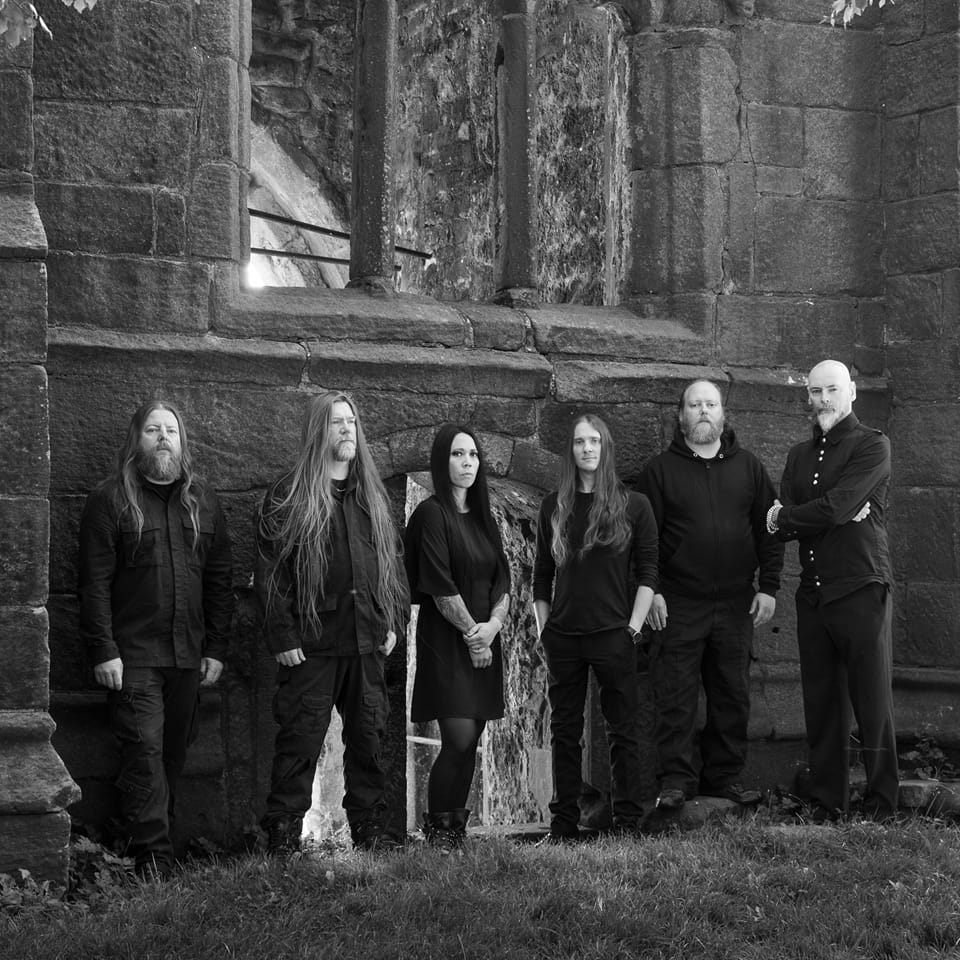
If some bands still feel confusing within this framework, it’s usually because they were working through genuinely confusing years, when both death doom and funeral doom were still negotiating their boundaries in real time. My Dying Bride are a perfect example. Early on, they were clearly reaching toward bands like Carcass and Bolt Thrower only because that was the musical vocabulary available at the time.
As a result, records like As the Flower Withers and Turn Loose the Swans are blunter and heavier than what would follow. The weight comes first. The imagery, the romanticism, and the cultivated sorrow arrive later, once the band (and the genre around them) figured out what those emotions were supposed to sound like.
Towards A Deliberate Death Doom
The nineties were not exactly a golden age for death doom, but they did produce a handful of bands that quietly kept the genre on life support. Thorr’s Hammer (Stephen O’Malley and Greg Anderson again), Disembowelment, and Incantation all functioned as bridges rather than destinations. You could even make a case for early Asphyx, although their real visibility wouldn’t arrive until much later, when they finally locked into a working lineup after nearly two decades of false starts.
That delay matters, because it points directly to the year that does. If you’re looking for a clean dividing line, 2007 is the one. That’s when death doom stops being something bands accidentally preserved and starts becoming something newer bands actively choose. You could reasonably call it the birth year of modern death doom.
In 2007, two bands fully came into their own: the aforementioned Asphyx and Finland’s Hooded Menace, who would quickly become one of the most celebrated names in the genre. More importantly, they were the first bands to plant a flag and say, without irony or apology: this is what we do. Sloooow, heavy, death metal. If that’s a problem, there’s plenty of faster music elsewhere.
By owning that identity so aggressively, they turned a sound into a genre. Not a vibe, not a tendency, but a real category with parameters and boundaries and those limits proved liberating. Once death doom knew what it was allowed to be, a new wave of obliterating creativity followed almost immediately.
Even if I still consider them the dominant voices in death doom today, American bands like Mortiferum, Spectral Voice (Paul Riedl of Blood Incantation’s side project), and Thorn (assuming this one man project still exists) have pushed the genre into deeper, more cavernous territory. Alongside Canada’s Nephilim’s Noose, Finland’s Krypts and countless others, they’ve turned extreme metal into something closer to speleology than songwriting. This is sewer-monster music, for better or worse (mostly for the better).
Sonically, it doesn’t differ all that much from the genre’s forefathers, but the attitude does. This generation sounds settled. They’re no longer testing ideas or stumbling into discoveries. They know exactly who they are and exactly how they want to sound. There’s still room for death doom to explore its more atmospheric extremes (Spectral Wound is already circling that possibility) but the genre has reached a mature phase. Maybe not its final form, but one that’s instantly recognizable now.
Before I leave you, here are five songs that should help make sense of what death doom actually feels like:
Autopsy – Funearality: Arguably the first death doom song ever. It’s wonky, jangling, and drenched in reverb for maximum creepiness. Simple, almost naive in structure, but it laid the foundation for everything that followed. Listen to this and you hear the genre being born.
Winter – Into Darkness: I love how weird and crummy this track is. The murky, suffocating production is death doom distilled, and every note drags you deeper into the void. It’s a powerful template that countless bands would later expand—or sink further into.
Thorr’s Hammer – Dommedagsnatt: Cleaner than the first two, but the mid-tempo guitars are mood incarnate. This is the sound of someone building a cathedral underground: slow, inevitable, and drenched in atmosphere. Other bands would take this blueprint and drag it even deeper.
Spectral Voice – Red Feasts Condensed Into One: This is exactly what I want death doom to sound like: vaporous, ethereal, terrifyingly alive. Listening to it feels like being chased by a spaghetti monster in your dreams—if your dreams were as loud as a cavern. Paul Riedl has nailed the playful, disorienting side of the genre that so many bands forget exists.
Nephilim’s Noose – Cloaked in Chains // The Sanguinary Altar: One of my all-time favorites. I don’t think I’ve heard a death doom band more mean. Every riff, every pause is played with intent, and the atmosphere is so thick it could suffocate. This is death doom at maximum spite—and I love it for that.
* Follow me on Instagram , Bluesky and Substack to keep up with new posts *