Movie Review : The Holdovers (2023)
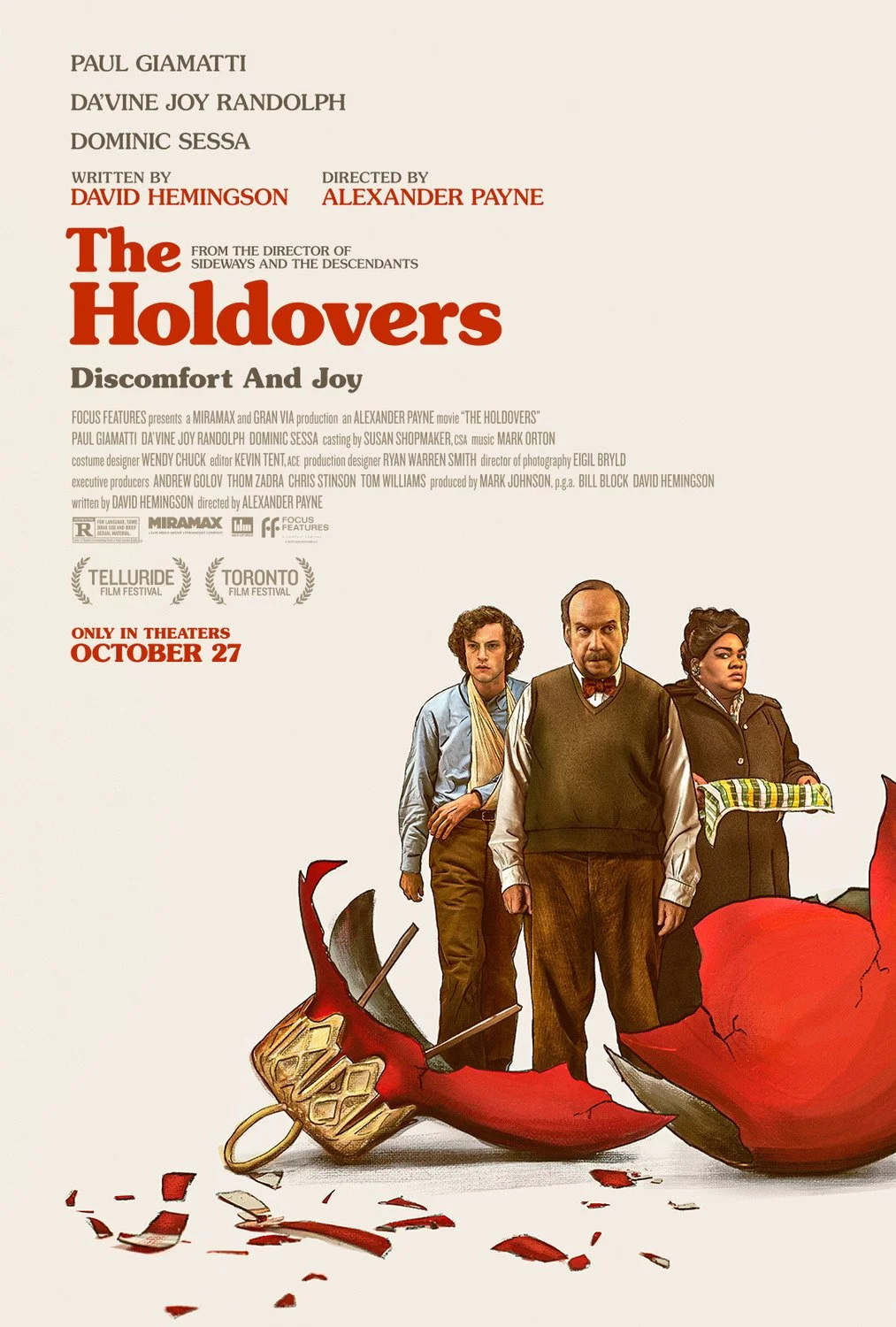
I could’ve lived my entire natural life without paying attention to The Holdovers. On paper, it looks like the kind of movie that politely waits for you to roll your eyes at it: an Alexander Payne period piece about a curmudgeonly teacher, a support staff member from a historically marginalized community, and a brilliant but rebellious student who accidentally form a family of fortune over the Christmas holidays. That premise feels pre-approved by a cigar chomping executive and in many ways, the movie is exactly as emotionally obvious as it sounds.
But here’s the problem with dismissing The Holdovers on instinct: it keeps quietly refusing to be dismissed. Beneath the coziness and the carefully calibrated gruffness, this is also a movie about faith and sacrifice. That part caught me off guard, mostly because I wasn’t prepared for a movie this gentle to ask questions that feel this old, this heavy and this unresolved.
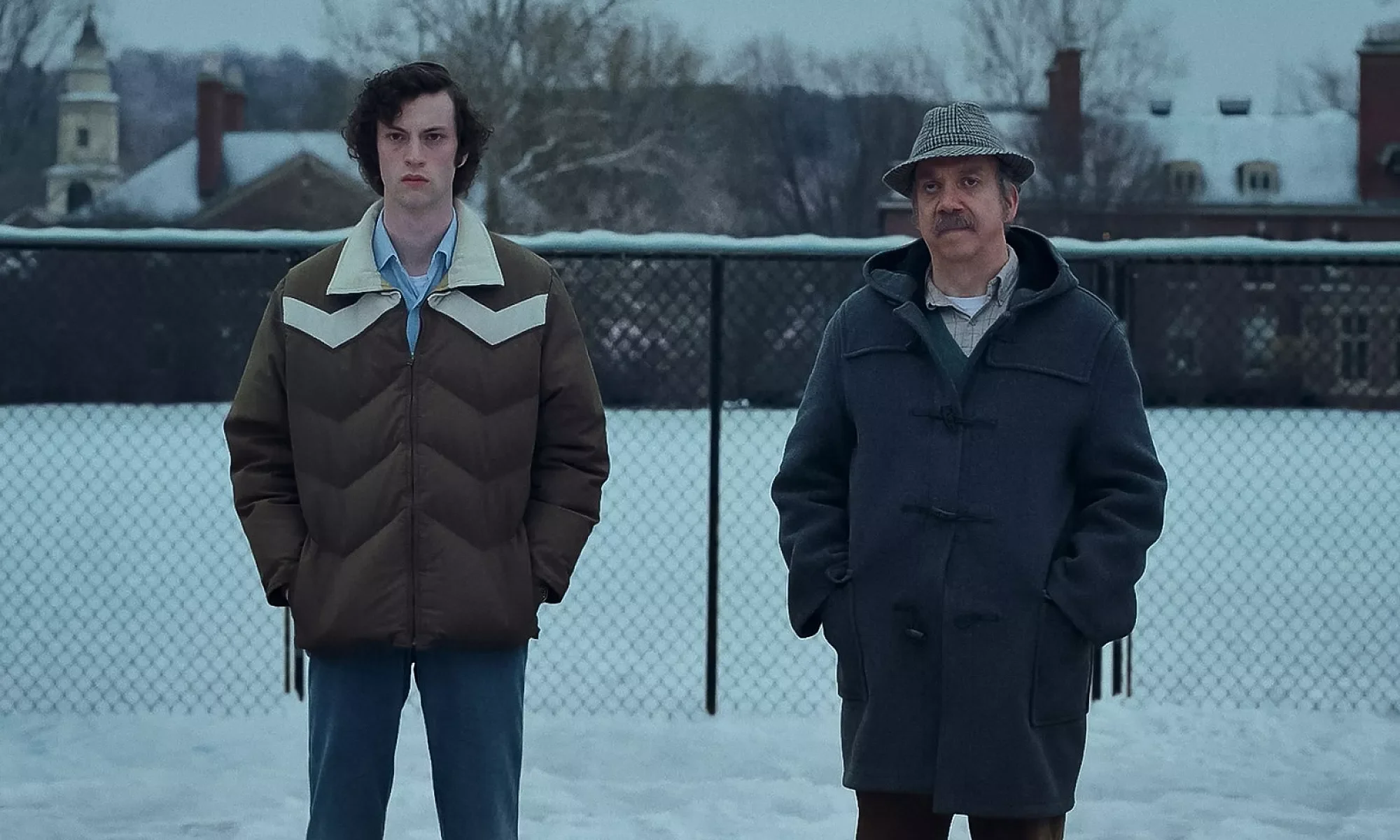
The Holdovers follows Paul Hunham (freakin’ Paul Giamatti), Mary Lamb (Da’Vine Joy Randolph) and young Angus Tully (Dominic Sessa), three people who end up stranded together over the Christmas holidays inside a private New England high school. From a distance, you can already see the shape of the story forming. These people are forced into proximity, they learn things about one another they weren’t planning to learn, friction turns into reluctant understanding and the unspoken goal becomes making sure the kid has a slightly less miserable holiday than the one fate initially assigned him.
What gives this dynamic its weight is that none of them arrive as a stabilizing force. Everyone involved is already wounded in ways that don’t conveniently line up or cancel each other out. No one is getting radically transformed like they were visited by three ghosts overnight. They’re just holding one another in place long enough to get through the holidays and confront their own demons. I know it sounds corny, but the movie earns the right to go there. Bear with me.
A Paul Giamatti Party
I suspect the secret glue that separates The Holdovers from every pseudo-realistic, feel-good Christmas movie is the decision to cast Paul Giamatti as Professor Hunham. No one else could have pulled this off in quite the same way. Giamatti is oddly relatable and unmistakably peculiar-looking and that combination projects a kind of vulnerability no more conventionally handsome actor could access without seeming performative. You don’t watch him and think this man will eventually be redeemed, you think this is what happens when life never quite course-corrects.
Hunham is an unmarried, unpopular man with limited social gravitas who has one thing left going for him: his unwavering commitment to the values of the institution he pledged his life to. That rigidity isn’t framed as strength or weakness so much as survival. Giamatti makes Hunham feel like someone who has replaced intimacy with principle, not out of ideology, but because principles don’t leave you, humiliate you, or stop returning your calls. They depend only on your commitment to them.
It’s this fragility that makes Hunham so compelling, because to the students and even to the colleague who casually dumps the responsibility of overseeing the holdovers on him, Hunham isn’t really a person. He’s a stand-in for Barton Academy itself. An unwavering set of principles without a visible self attached to them. The function is the man, and for a long time that function is the only thing that allows him to be seen, tolerated, and moderately respected.
Once that function temporarily disappears, the real Paul Hunham has no place left to hide. What emerges isn’t a secret saint or a misunderstood genius, but something far more human: a lonely, wounded man who has largely given up on existing outside of his job. In Angus Tully, he’s given a narrow, unexpected chance to matter again. Not as an authority figure or a moral enforcer, but as someone whose presence might actually be important and make a difference.
The Part About Faith & Sacrifice
I cried like a heartbroken schoolgirl at the end of The Holdovers, which surprised me. I’m not much of a crier to begin with, but I don’t think this is a movie that made most people cry, at least, not like that. I’ve thought about it a lot since, and I think it has everything to do with Professor Hunham choosing to do right by someone who isn’t his family.
Cinema is overflowing with stories about fathers sacrificing themselves for their sons or mother figures for their real or metaphorical children. But you almost never see a lonely, middle-aged man willingly bite the bullet for someone he barely knows, with no promise of legacy, gratitude, or redemption waiting on the other side. Hunham’s sacrifice isn’t mythic or heroic; it’s procedural, private, and costly. It’s the kind of moral decision that doesn’t generate applause, just consequences.
And that’s where the faith comes in. Hunham isn’t acting out of optimism or belief in a better future. He’s acting because he still believes, however stubbornly, that doing the right thing matters even when no one is watching and nothing improves as a result. Even when he’s acting outside the boundaries of his job, his principles remain. That kind of faith feels almost extinct in movies and encountering it unexpectedly hit me harder than I was prepared for. There’s a beautiful purity in his selflessness.
*
You probably won’t cry the way I did while watching The Holdovers. That’s fine. It likely means you’ve been emotionally secure enough to always have something solid to anchor yourself to. But if you’ve ever felt unexpectedly moved by the plight of a quasi-stranger without fully understanding how or why, if you’ve ever surprised yourself by caring, The Holdovers has a way of making you feel seen.
It might not feel good. But it will feel like something real.
8.1/10
* Follow me on Instagram , Bluesky and Substack to keep up with new posts *