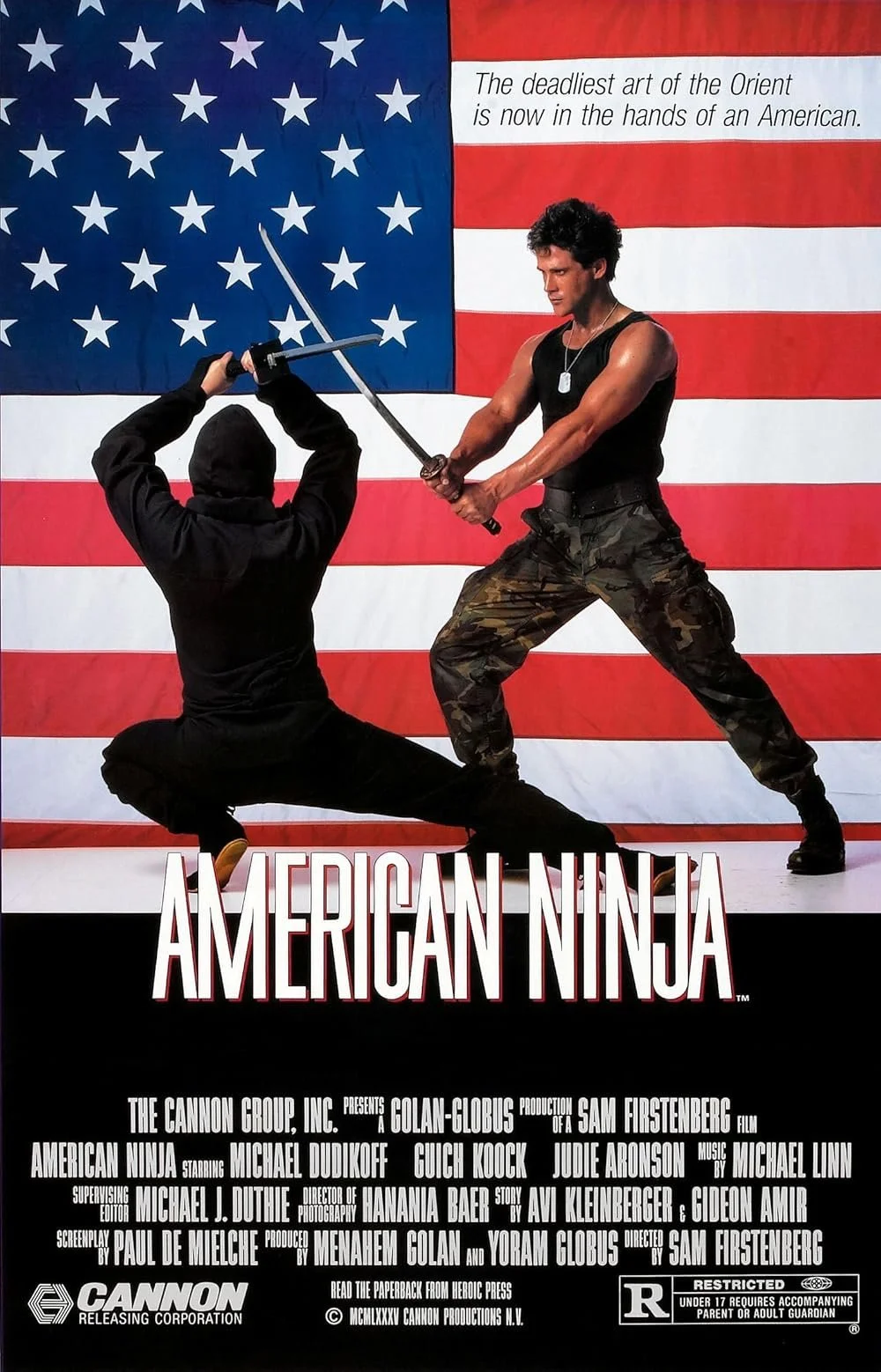
Movie Review : American Ninja (1985)
The ancient and mysterious art of ninjitsu was effectively invalidated in 1993, the moment Frank Dux—the self-proclaimed secret assassin whose "life story" inspired Bloodsport—got his ass kicked by Zane Frazier, a hulking karate black belt best remembered as a human punching bag in the early UFC. That single beatdown punctured a decade of cinematic mysticism. Before mixed martial arts turned toughness into a measurable statistic, ninjas lived rent-free in the minds of anyone even remotely interested in hand-to-hand combat.
A movie like American Ninja (and its unlikely three sequels) could only exist in that brief, delusional era when everything was sturdier, purer, and somehow better if you slapped the word "American" in front of it. But it still exists in a world where it has become the Occidental pendant of Chinese communist propaganda, except ideology is inverted, the punches are slower and the hero’s haircut is a minor act of domestic terrorism. The eighties were super weird. We just weren’t advanced enough to understand how much.
American Ninja tells the story of Joe Armstrong (played by all-American action figure Michael Dudikoff), a young man with a mysterious past and the personality depth of a G.I. Joe pamphlet. After being conscripted into the U.S. Army and stationed in the Philippines, Joe’s convoy is ambushed by… wait for it, Filipino ninjas. Yes, apparently that’s a thing over there. These local assassins moonlight as hired guns for a black-market kingpin named Ortega (Don Stewart), a man who somehow owns an entire island and, for reasons never fully explained, the souls of every U.S. military officer stationed on it.
Although he's amnesiac, Joe feels morally compelled to roundhouse-kick his way through the problem. Because he's not just a ninja, he’s an American ninja. And in the logic of 1980s cinema, that’s enough to justify absolutely anything.
Good? Bad? The Guy With The Gun Wasn't There
There isn't a lot to American Ninja. Its screenplay is a dollar menu of narrative depth. It's basically about a mildly athletic American man being chased around, but never really hurt by a legion of portly, masked Filipino men like they're reenacting a Tom & Jerry cartoon. On paper, these guys are trained in the same deadly arts, but since Joe is bigger, stronger, white and ostensibly more American than anyone of them, he doesn't even take a second to look threatened.
Watching American Ninja today feels inherently goofy, mostly because realism has become a required feature of modern storytelling or at least the simulation of it. Every hero now needs a trauma arc, a near-death experience, or some deep-seated daddy issues to justify why they’re good at punching people. But in American Ninja, the message is refreshingly uncomplicated: Americans are just better. Full stop. No subtext, no nuance, no internal monologue, just innate superiority wrapped in a sleeveless T-shirt.
That brand of exceptionalism still lingers today, but it’s been reengineered through faith, fear, and algorithmic anxiety. What makes Reagan-era American exceptionalism so entertaining retrospectively is that it didn’t feel motivated at all. Back then, it was just common sense that America was better. The idea that they would triumph in lethal conflict against everyone they’d encounter who didn’t happen to speak English was sold to adults in the same aggressive way violent toys were sold to kids.
That's why Joe doesn't even bother pulling a gun like any normal solider would do. Why would he waste bullets when he could take care of everything himself and get a good workout at the same time? The eighties, ladies and gentlemen. They were weird.
Badass On a Shoestring
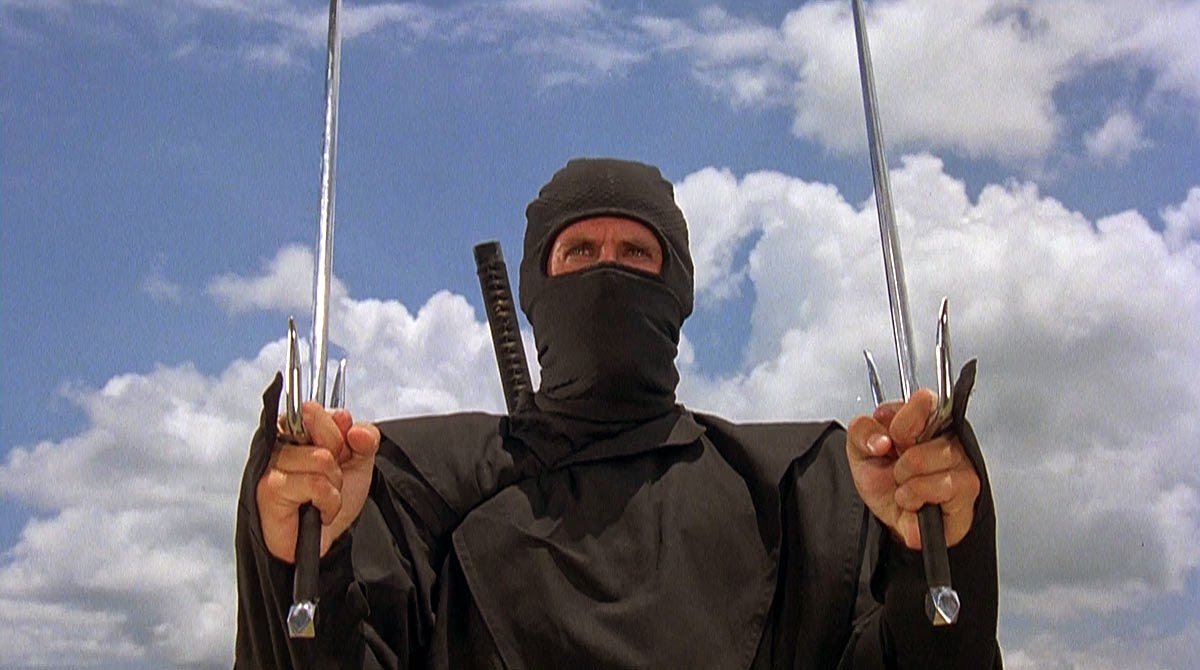
One of the more wholesome and unintentionally charming things about American Ninja is how visibly unqualified everyone is to perform their own stunts. No one here is a super athlete. There’s no CGI, no wire work, no hyper-trained ex-gymnast-turned-actor. What you get instead are regular humans performing physically demanding feats with the kind of earnest panic you only see in regional theater sword fights. You can practically feel the actors using 100 percent of their available horsepower just to survive the take.
I’m sure it all looked credible in 1985, back when the average viewer didn’t have access to YouTube clips of actual martial artists folding each other in half. But now that we do, it has the opposite effect,it makes the movie better by making it worse. Every awkward kick and mistimed flip reminds you how delightfully human this all is. The clumsiness doesn’t ruin the fantasy; it exposes it, like a magic trick performed by someone who keeps dropping the cards.
It’s endearingly thin, bizarrely committed, and feels like an idea hatched by someone who did a bump of cocaine and said, "What if Rambo went to karate camp?" It’s pointless to reject or revolt against a clumsy, ignorant past. Cultural stupidity isn’t a moral failure, it’s just evidence of how people used to dream. The only healthy response is affectionate acceptance. You look at American Ninja and think, yeah, sure, grandpa, you totally punched out a hundred dudes during Desert Storm.
Then you pat him on the shoulder, finish your beer, and let him fall asleep on the couch. Because some myths don’t need to be corrected: they just need to be loved for how wrong they were willing to be.
*
American Ninja is quintessentially eighties, and not in a way that implies a hypothetical iconic nature. It’s not a good movie. What makes it unforgettable is its blind conviction, its absolute faith in itself. You can feel the invisible presence of some coked-up Cannon Films executive who’d chugged the Reagan Kool-Aid and showed up to work wearing American flag gym pants, shouting, "this is Rocky with swords!" And somehow, everyone believed him.
Because of the internet and the endless, suffocating access to context that comes with it, a moment like this can never happen again. There will never again be a time when mass culture is this insulated, this confident in its own nonsense. American Ninja is a fossil from a parallel universe where sincerity and delusion were the same thing. The eighties weren’t just weird, they were unknowingly avant-garde about it and that's why they should still be celebrated today.
7.4/10
* Follow me on Instagram and Bluesky to keep up with new posts *