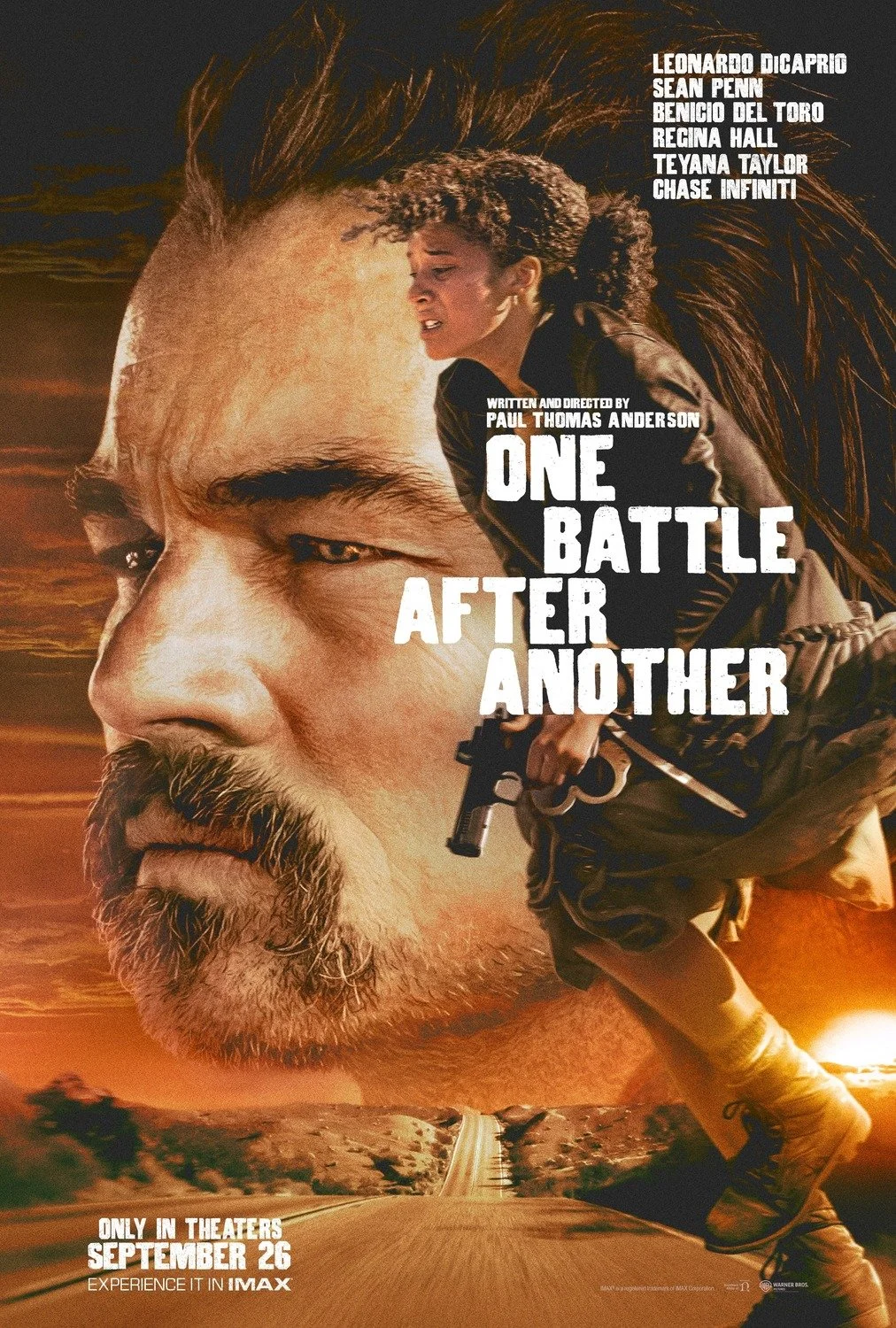
Movie Review : One Battle After Another (2025)
We live in prosperous times for art that claims to be political. As the world fractures into increasingly specific tribes (people who identify as centrists but only ironically, people who boycott Bud Light because of one commercial aimed at another demographic) the political dimension of any movie now feels like an act of moral participation. It’s no longer pompous or self-serious to make a film about ideology; it’s almost an obligation. You’re not supposed to like or dislike it. You’re supposed to have a position on it.
Paul Thomas Anderson’s new movie One Battle After Another is inherently political, probably his most overtly so, but not in the way you think. It’s a story with a leftist hero, told entirely through the lens of a far-right paranoid fantasy. That makes it uncomfortable for every party involved, but in a good way.
One Battle After Another tells the story of a far-left terrorist group called the French 75, more precisely two of its leaders: the ultrasexy and charismatic Perfidia Beverly Hills (the ultrasexy and charismatic Teyana Taylor basically playing herself) and her average, inexplicably white boyfriend Pat Calhoun (Leonardo Di Caprio) who rip through the US like Bonnie & Clyde, romantically trying to change the world by blowing stuff up. Their crusade comes to an end when Perfidia is arrested and turns informant to avoid hard time.
Everyone goes into hiding, Pat and their daughter Willa (Chase Infiniti) live a more or less insignificant following sixteen years until the past resurfaces because of one important detail: Willa is definitely Perfidia's daughter, but she might not be Pat's!
The Greatest Ideological Joke Ever Told
My summary might sound convoluted and abstract, but here’s the only part of One Battle After Another that actually matters: it’s a movie about a white supremacist with a Black woman fetish who has a baby with the most far-left woman imaginable. That premise alone is both horrifying and hysterical. The political spectrum would collapse in on itself, but it’s also objectively funny. Not because of the subject matter, but because no one on Earth would know how to emotionally process that if it happened in real life.
It’s the kind of situation that would break Twitter before breakfast.
Luckily, Anderson’s film exists at a comfortable remove from reality, a world that seems to happen only in barroom conspiracy theories and QAnon group chats. That’s precisely what makes it work. The film takes place in a fever dream version of America where every ideology is real but no one’s quite sure what they believe anymore. That’s where One Battle After Another becomes pretty smart: it traces the limits of ideology. It falls apart once you have people to care about.
Even for white supremacist Stephen Lockjaw (Sean Penn), the stakes eventually become weirdly personal. His target, Willa, stops being a racial aberration and becomes something more symbolic — a glitch in his own ideology. Ending her life isn’t about racial purity so much as narrative convenience; she’s an obstacle to the self-myth he’s trying to sustain. To Lockjaw, she’s not a person, she’s the consequence of unregulated desire.
The brilliance of Anderson’s approach is that Lockjaw doesn’t even seem that interested in racism as an ideology. What he really wants is entry into the Christmas Adventurers Club (don’t ask, it’s a punchline so perfectly Pynchon it feels like it should come with a footnote). His real problem isn’t race, it’s logistics. Leftism, after all, is about caring for other people, and there are suddenly a lot of people standing between him and the thing he wants most.
It's hilarious, but only if you have a sense of humour about your own politics, making One Battle After Another is somewhat of a litmus test.
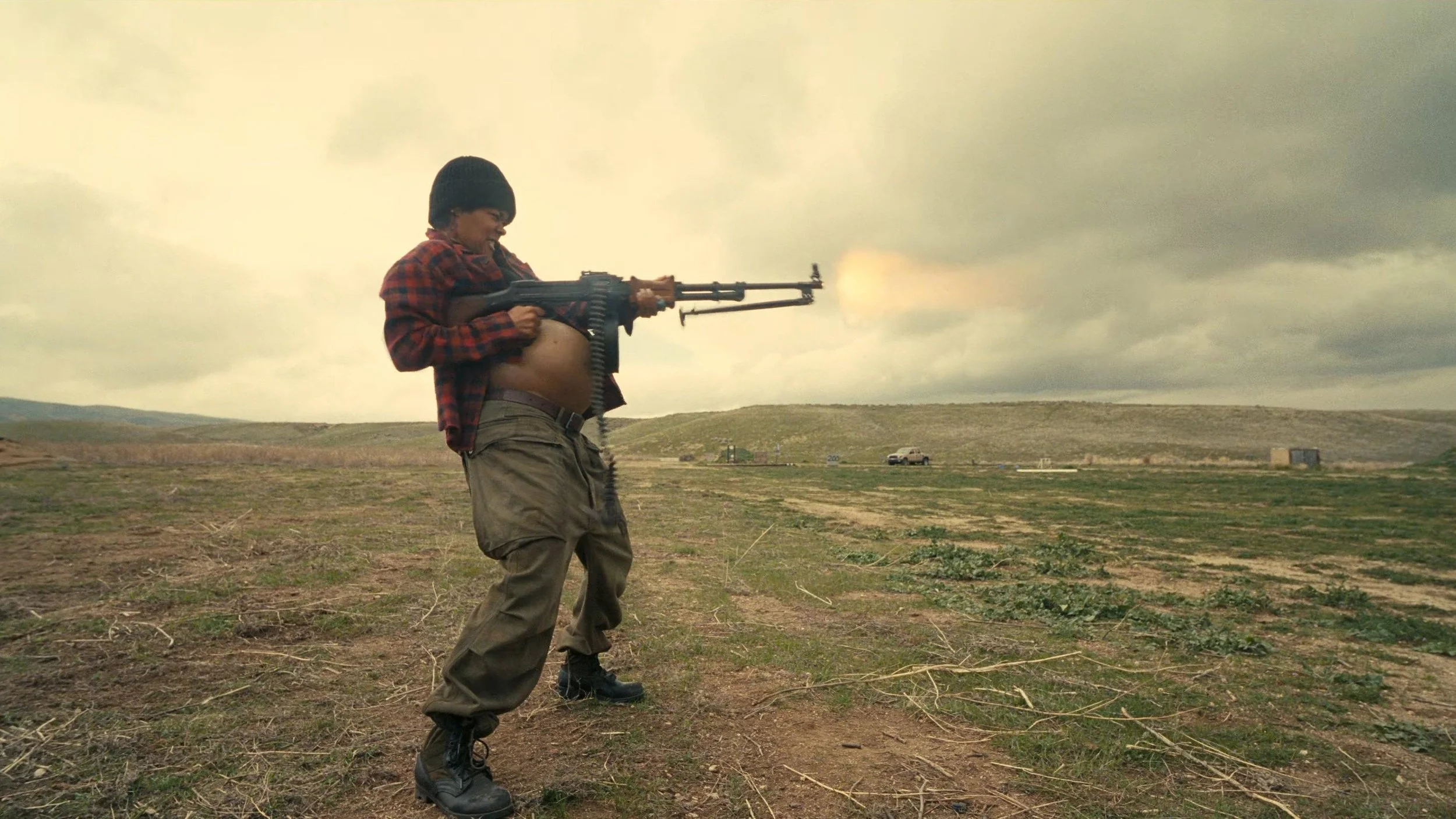
The Movie Is Also Great
There’s plenty of valid criticism aimed at One Battle After Another for being downright creepy about Black women’s bodies. I keep wondering what it could’ve done differently, and the answer feels almost too simple: even though Teyana Taylor is great as Perfidia, the absurdity of the conflict would’ve landed harder if the role had gone to a less spectacular (and less sexualized) performer. If Viola Davis had played Perfidia, the erotic tension would’ve existed entirely in Colonel Lockjaw’s head, which is where it belongs.
The ideological joke would’ve been sharper, too. But then again, I’m not sure DiCaprio would’ve signed on if he had to love an age-appropriate woman on screen
From a technical standpoint, One Battle After Another is almost unassailable, aside from the occasional whiff of self-importance that’s basically part of Anderson’s DNA at this point. The scenes stretch long and taut, building tension like a man who’s convinced patience is a political act. There’s a stunning escape sequence halfway through, where Pat reconnects with his former self while fleeing alongside his daughter’s karate teache Sergio (a slick, unnervingly chill Benicio Del Toro). It’s one of those rare set pieces that leaves you breathless while also making you appreciate the boring virtues of political stability.
Leave it to Paul Thomas Anderson to make the technical precision of his filmmaking feel like a philosophical argument. The camera moves like it’s negotiating peace treaties, slow, deliberate, and convinced that control itself might be the final form of rebellion.
*
One Battle After Another isn’t a perfect film. It’s not even close to being my favorite PTA (that title still belongs to The Master, undisputed heavyweight champ of beautiful cinematic weirdness). But thank Baphomet we still have a director in 2025 willing to make something this strange, this funny, and this politically unclassifiable even if it's so overtly political. Thank Baphomet we have someone still interested in translating Thomas Pynchon’s warped universes into actual moving images.
Even if the first act occasionally drifts into creepiness, One Battle After Another succeeds in the rarest way a "political" movie can: it feels both entertaining and profound precisely because it isn’t trying to mirror our divisions. It’s just riffing on them, like a jazz band playing conspiracy theories.
8.2/10
* Follow me on Instagram and Bluesky to keep up with new posts *