Movie Review : Pontypool (2008)
In 2008, zombies weren’t yet the cultural commodity they’d become two years later when The Walking Dead turned them into soulless rock stars. They were basically the grunge revolution to Kate Beckinsale’s early-00s glam-metal vampires in Underworld: scruffy, unglamorous, and carrying the kind of emotional truth you usually try to ignore. You could already sense that people were connecting to the modern angst of seeing yourself hollowed out and forced to keep going or the existential dread of waiting patiently for your turn to be consumed.
Bruce McDonald’s Pontypool is about that waiting. But it’s also about language. How meaning becomes slippery under stress and how radio feels like this strangely intimate anachronism where communication is both the lifeline and the threat. In Pontypool, talking is dangerous not because you might say the wrong thing, but because you might say something completely ordinary and trigger the end of yourself anyway.
It’s a zombie movie where the infection isn’t violence but understanding, where the act of listening too closely becomes the first step toward losing who you are and this somehow doesn't feel anachronistic at all.
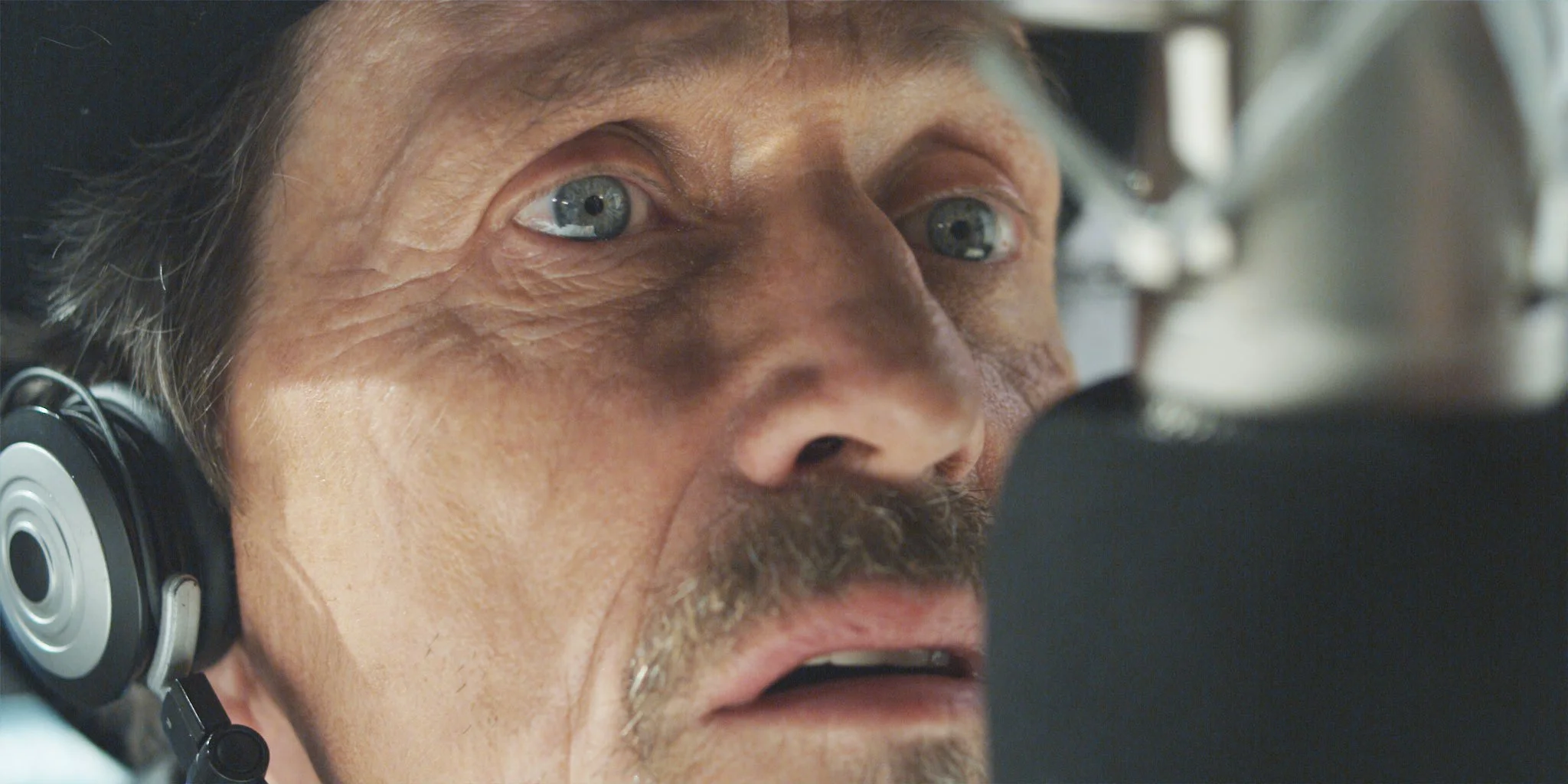
Pontypool follows Grant Mazzie (Stephen McHattie), an aging all-star radio host now marooned in a tiny Ontario station, basically the broadcast equivalent of exile for someone whose ego still thinks it’s playing Madison Square Garden. One bleak Canadian morning (because all our existential crises come with a snowstorm), he shows up for his early shift with only two people to witness the slow death of his career: his tech assistant Laurel-Ann (Georgina Reilly) and Sydney (Lisa Houle), the manager who treats Grant like a malfunctioning appliance she’s learned how to operate.
Then the calls start. Reports of a riot outside a local doctor’s office: polite panic, confused screaming, the kind of chaos no one is trained to translate. And somewhere in the static comes an even stranger warning: stop speaking English on air. An impossible directive for a radio host, but suddenly plausible in a world where words might be the very thing tearing people apart.
Zombies: A Conceptual Curse
Pontypool is a strange movie to revisit in a post-Covid world, because it accidentally predicted our collective inability to behave like rational mammals in the presence of invisible danger. And I can’t help but think Bruce McDonald and Tony Burgess would’ve made something very different if they’d lived through the era of improvised mask science and people livestreaming themselves coughing defiantly in Walmart. The film’s core idea, that certain words can trigger a kind of instantaneous psychological collapse, felt like speculative horror in 2008. Now it reads like anthropology.
Because the way infection works in Pontypool is unsettlingly familiar. A word gets stuck in your brain. It loops. It expands. It mutates. It turns you into a mindless, erratic beast who can’t stop repeating the thing that broke you. Remind you of anything? A neighbor foaming at the mouth about personal freedom while actively endangering the block? Someone ready to fight to the death for the right to hit Applebee’s on Friday because a stranger on Facebook told them that tyranny is about your right to mozzarella sticks?
The movie imagines language as the purest form of contagion but watching it now, it feels more like a prequel to the last five years, when misinformation became the world’s most successful biological weapon simply because people challenged the very notion of meaning.
In Pontypool, people infected by the language virus don’t become poetic or unhinged in the way our modern knights of the algorithm do. They don’t invent their own narratives about microwaves spying on them or the government replacing Doritos with "socialist corn triangles". They simply lose the ability to make meaning at all. Words detach from the concepts they’re supposed to represent, and the result isn’t madness, it’s vacancy. A total semantic brownout.
What the movie gets right, perhaps accidentally, is how fragile that shared understanding really is. Meaning isn’t personal; it’s communal scaffolding. Society functions because we’ve all agreed a red light means stop, not "consider accelerating to assert dominance". Signs that say "DO NOT ENTER, YOU WILL DIE" only work if everyone involved accepts the definition of "die”as something final and bad. Once that consensus starts slipping (even a little) you’re not living in a culture anymore. You’re living in traffic.
Radio Is Eerie As Shit
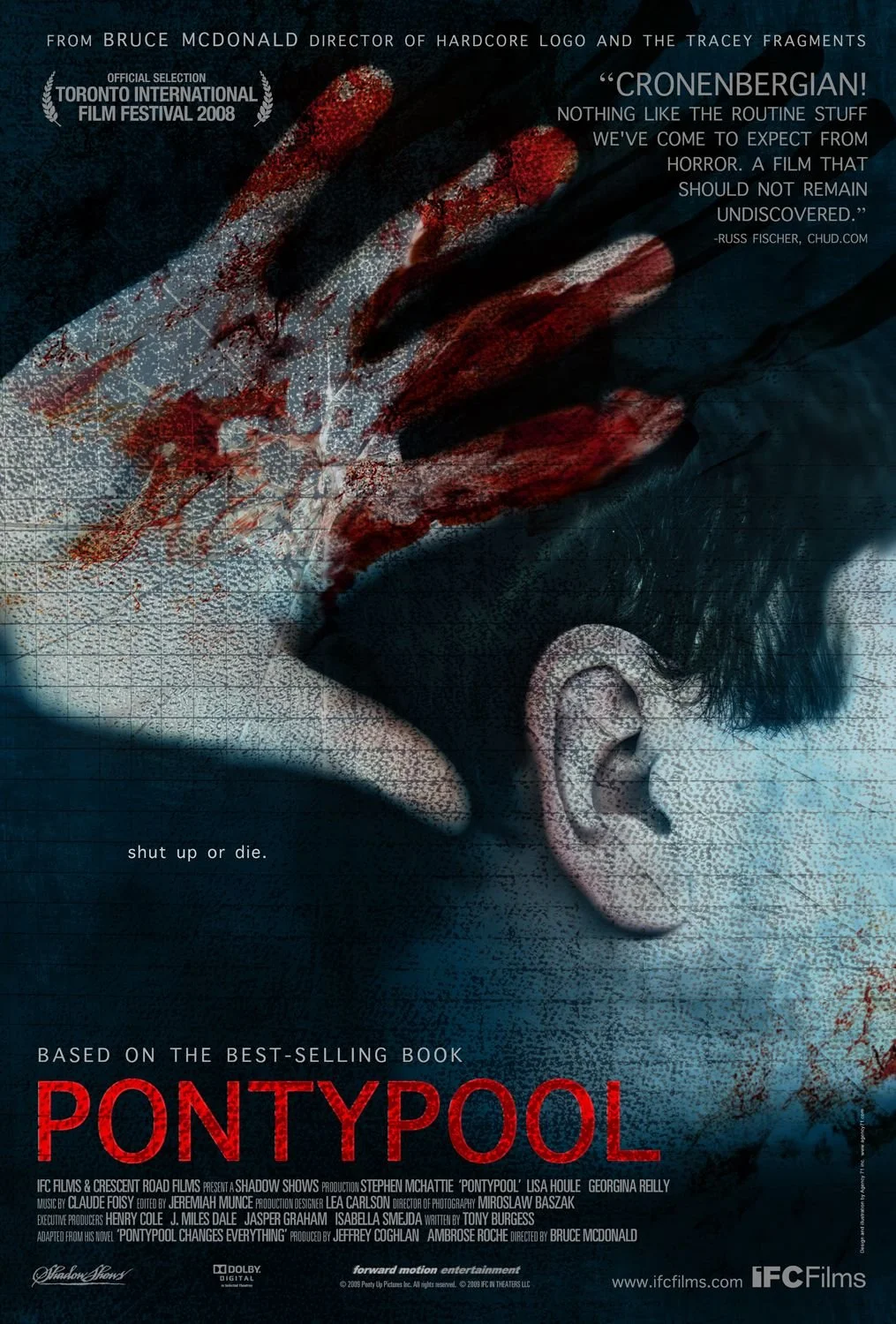
Another reason Pontypool works is because you barely see any zombies. Until the inevitable moment when they finally breach the station—sorry for spoiling a seventeen-year-old film whose trajectory is basically stamped on the poster—you only ever hear them. And somehow, after twenty years of an all-you-can-eat cultural buffet of exposed rib cages and artisanal gore, hearing secondhand reports of civilization dissolving (even in a tiny Ontario town) makes the whole thing eerie again.
It’s horror by proxy, dread routed through speakers designed for school cancellations and lost-dog announcements and that's kind of my thing.
There’s an aesthetic trick buried in there, and it hits harder than you expect: the contrast between Grant Mazzy’s smooth, professional studio voice and the static-laced panic of his unseen reporter Ken Loney (Rick Roberts) turns the radio station into an almost extraterrestrial bubble floating in the middle of a whiteout. It feels geographically real but psychologically detached, like horror happening in a place physics can’t quite reach. I don’t know if McDonald was consciously channeling The Thing, but the claustrophobia is strikingly similar: isolated people, bad weather, and the creeping suspicion that the real monster is already in the room, practicing its lines.
And because Pontypool is, at its core, a movie about sound, it leans into one of horror’s oldest psychological hacks: the noise you can hear but can’t identify will always be scarier than whatever it turns out to be. Your brain fills in the blanks with the worst-case scenario available in your personal library of existential fears. Let’s say, a giant, carnivorous spider. That’s meaning again: private, unstable, involuntary meaning. The film doesn’t just acknowledge this; it weaponizes it. It knows you will project something terrible into the static long before the narrative confirms anything.
But I’d totally be scared to death of a giant carnivorous spider. I’m so afraid of spiders I’ve never tried acid: not because I’m worried about ego death or cosmic revelation, but because I’m terrified I’d hallucinate eight legs tapping politely on my shoulder. Pontypool understands that fear is always autobiographical. The monster is never just the monster; it’s whatever your mind smuggles into the darkness before the story has a chance to correct you.
Even if you kind of know already what’s out there, Pontypool's interest is that it lets is out there for Grant to interpret and narrate for us.
*
Although it has a strange ending that would probably have made Jacques Derrida furiously jack off (had he not died four years prior) Pontypool still stands as a remarkably original thinker. It zooms in on classic horror tropes not to reinvent them, but to dissect their mechanics, to show how and why they work. Zombies long ago stopped being scary (they’re simultaneously alien and inevitable) but the suffocating dread of disappearing into the collapse of communication?
That remains potent. Maybe even more potent today than it did back in 2008.
7.8/10
* Follow me on Instagram and Bluesky to keep up with new posts *