Movie Review : Dracula (2025)
There have been exactly 117 film adaptations of Dracula since 1897 and that number quietly balloons if you include the various versions of Nosferatu that exist mostly because early filmmakers discovered copyright law the same way teenagers discover hangovers. At this point in the history of the character, nobody sinks millions of dollars into retelling the same vampire story for the 118th time unless they believe they’ve cracked some emotional angle nobody else has noticed.
Which is why Luc Besson’s take is a little strange. Of all the possible ways to interpret ol’ Vlad:monster, aristocratic parasite, immortal creep lurking outside Victorian bedrooms, the one that never really occurred to me was misunderstood tragic hero.
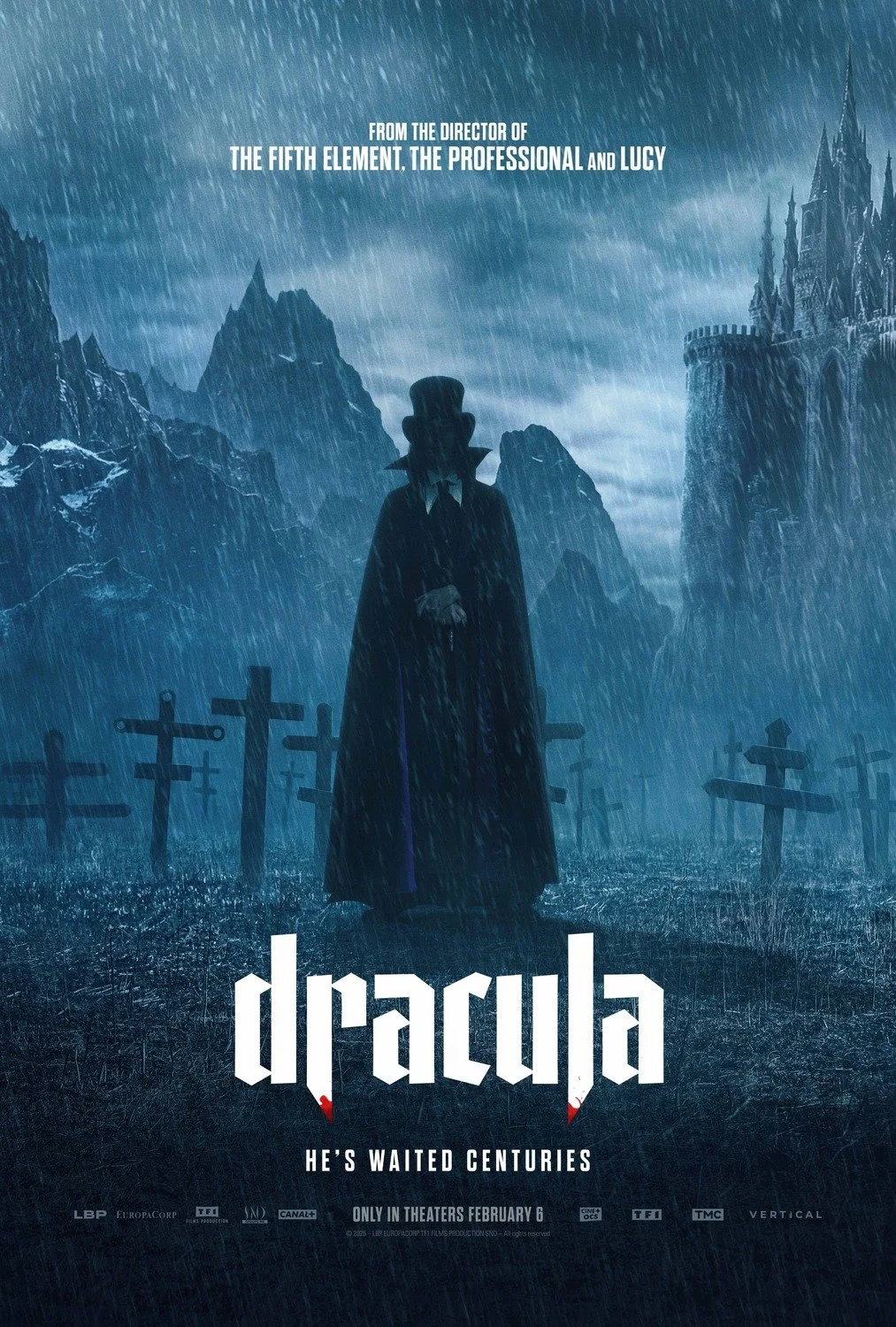
Luc Besson reframes Vlad the Impaler (Caleb Landry Jones) a handsome prince and devoted husband whose life collapses when the infidels capture his wife Elisabeta (Zoë Bleu) and murder her in a scene featuring a confusing number of bear traps. Grief pushes Vlad toward the sort of decision that feels spiritually impulsive but narratively inevitable and quite metal: he murders the Pope, renounces God, and becomes the vampire we know from Dracula.
The curse condemns him to wander the Earth forever, feeding on human blood while searching for the reincarnation of his lost wife which, in a development that will surprise absolutely no one who has ever seen a Dracula movie, he eventually kind of finds.
The Limits of Morals Relativism
The strange thing about Luc Besson’s take is how aggressively it rewires a story that has been narratively efficient for more than a century. Dracula works because its moral geometry is simple: Dracula is evil, Mina is innocent, and the entire story exists to restore that balance. Besson seems uninterested in that arrangement. In his version, Mina and Elisabeta essentially blur into the same person, which creates a strange narrative side effect where Mina suddenly becomes flooded with memories of a life she technically never lived.
Maybe Dracula is imposing these memories onto her like an evil projectionist. Maybe the movie just needs them to be real so the love story makes sense, I don’t know. Luc Besson never makes it quite clear. What he's really doing is bending the mythology until Dracula stops feeling like a predator and starts feeling like a widower with extremely destructive coping mechanisms. A contrarian point of view is interesting, but Besson downplays the blood-sucking-sex-demon-of-the-night part to a point it’s only weird.
I understand he wants to reconnects with his first love, which is probably the only romantic concept powerful enough to justify a man wandering the Earth for centuries. First love hits differently. It convinces you that every failed relationship afterward was just rehearsal, that some invisible cosmic GPS has always been steering your heart toward the one person it was meant to find.
But that’s not really what’s happening here. Vlad isn’t reconnecting with his first love. What he’s actually doing (at least semi-canonically) is dragging a completely new woman into his curse so that he can complete the emotional arc he never got to finish. In narrative terms this plays like tragic devotion. In practical terms it’s still the behavior of an abusive partner who needs someone else to share his damnation.
This is clearly meant to be a morally relativist take on Dracula, but it never fully commits to the idea. The film only does half the work required to reframe the character. Vlad’s transformation into a monster enslaved to his urges is rushed past, usually chalked up to vague frustration with God or the general incomprehension of ordinary humans. There’s even a visually striking but narratively absurd scene where Vlad curses an entire convent of nuns just to underline how much he hates God. It’s the kind of moment that suggests centuries of simmering blasphemous rage.
But then the movie immediately forgets about it. Vlad spends four hundred years as that guy, yet the film treats it like a brief emotional phase instead of the defining feature of his existence.
The Part That’s Visually Silly
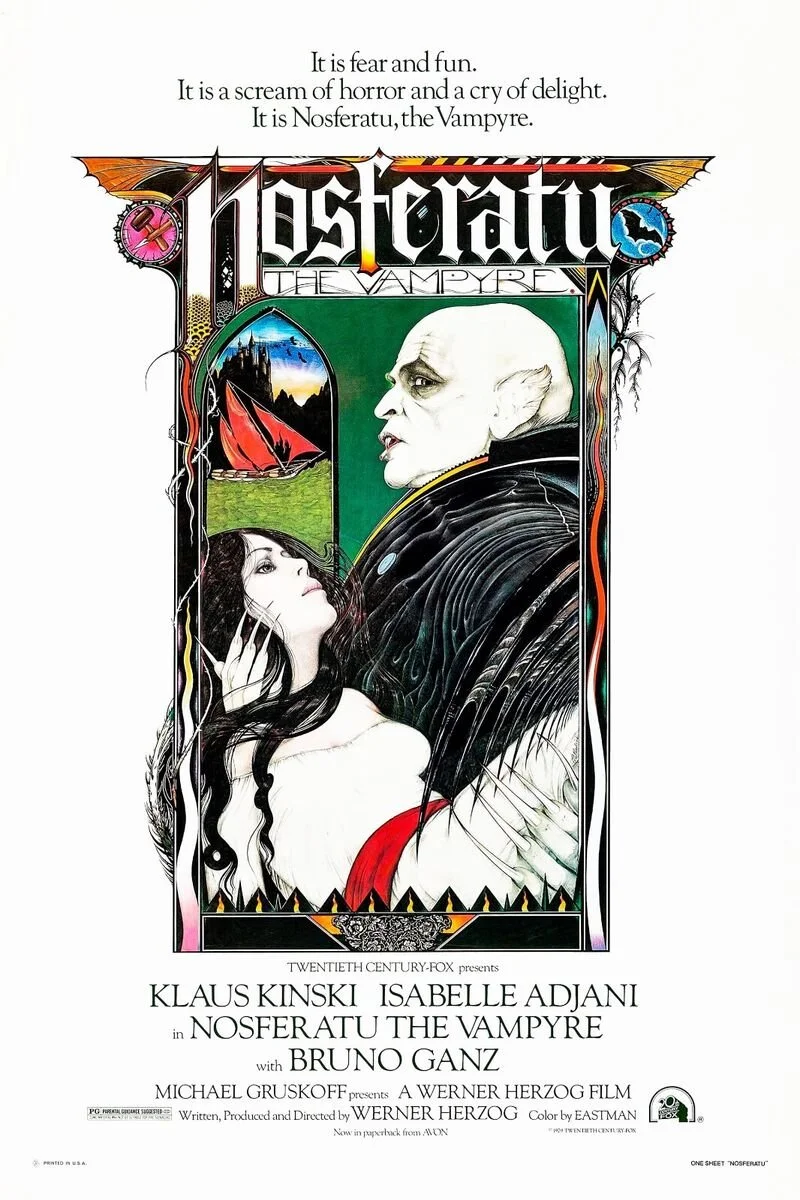
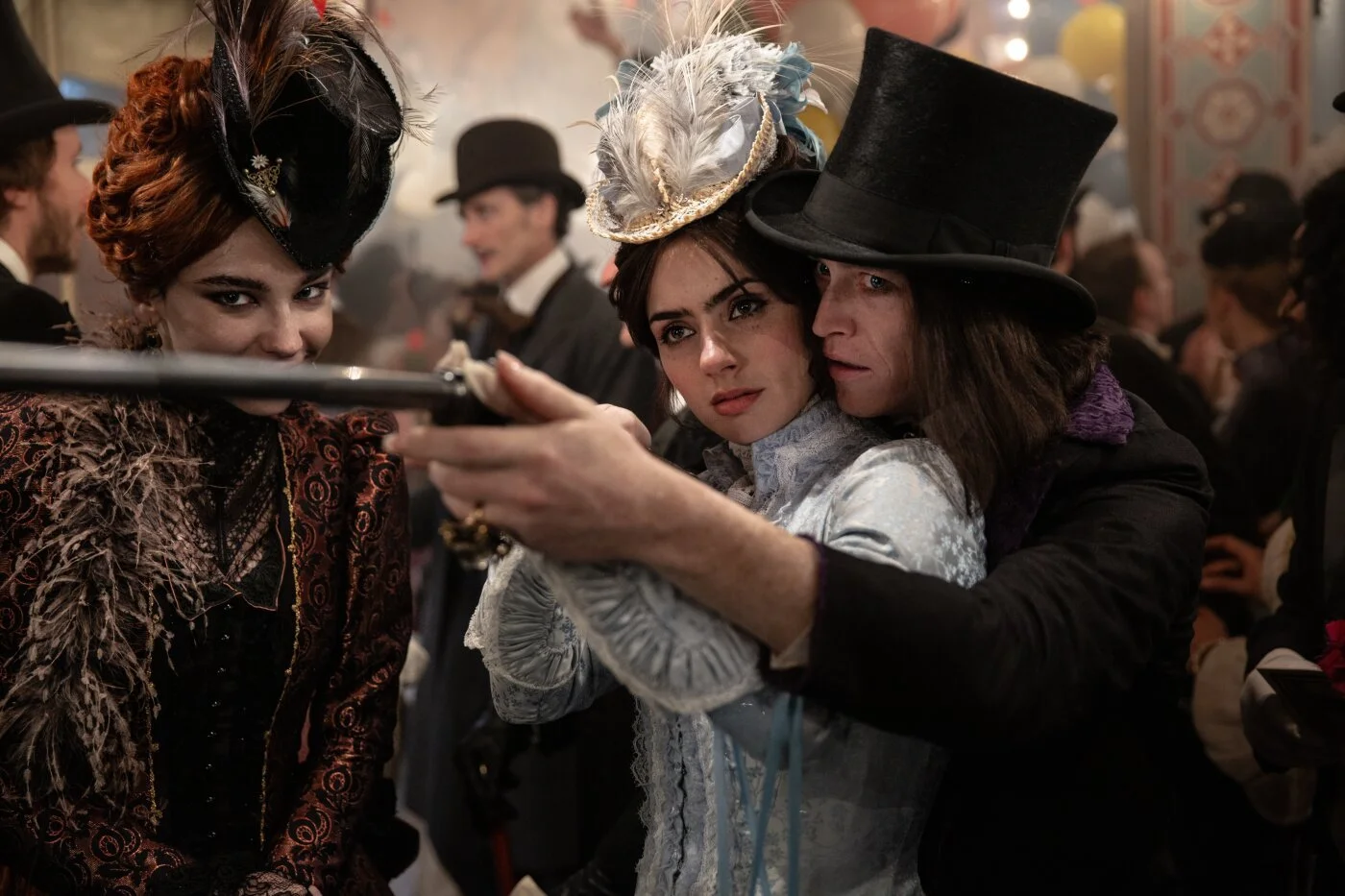
Another aspect of Dracula that doesn't work is that it doesn't have much to offer visually. How can you justify that a movie made in 2025 comes off as less impressive than Francis Ford Coppola's CGI-free version from 1992? You can’t. Werner Herzog solved the problem decades ago with Nosferatu the Vampyre by stripping the myth down to something quiet, eerie, and folkloric. It was restrained, but it fully believed in its own restraint.
Luc Besson’s Dracula never seems sure what it wants to look like. It doesn’t commit to the tragic humanity the film keeps insisting upon, but it also never embraces the eerie folklore that made the character haunting in the first place. The result is a movie that sits awkwardly in the middle of the road, which is probably the least interesting place a vampire story can live.
I’m about to say something slightly cruel, but parts of this movie occasionally look like a television film from 1997. That doesn’t mean there aren’t flashes of imagination. Setting the medieval sequences in broad daylight is a clever idea, if only because it contrasts nicely with the nocturnal monster Vlad will eventually become.
The problem is that the film is constantly brushing against the massive visual vocabulary that Dracula movies already possess and never quite finding a way to exist beside it. Francis Ford Coppola built an entire baroque nightmare in Bram Stoker's Dracula and filmmakers from Werner Herzog to Robert Eggers have shown that you can either reinvent the myth or strip it down to something eerily folkloric. Luc Besson’s Dracula does neither.
It rewrites major pieces of the story without ever discovering what it wants to look like. The end result feels oddly indecisive, like a movie that knew it didn’t want to be Eggers' Nosferatu but never figured out what the alternative was supposed to be.
*
Luc Besson's Dracula ends up living in the worst possible place a movie can exist. It’s not so-bad-it’s-good. It’s not even spectacularly bad. It just sits there in that strange "bro, what are you even doing?" territory where every creative choice feels slightly off but never outrageous enough to become entertaining.
The film keeps insisting that Dracula should be understood as a courageous, misunderstood, star-crossed lover. But that was never the point of the character. Dracula has survived for more than a century because Dracula is terrifying: a blood-sucking predator who moves through the night like a rumor of death. Turning that into a secondary detail so the movie can focus on Vlad’s emotional turmoil doesn’t deepen the myth.
It just makes the monster smaller.
4.5/10
* Follow me on Instagram , Bluesky and Substack to keep up with new posts *