
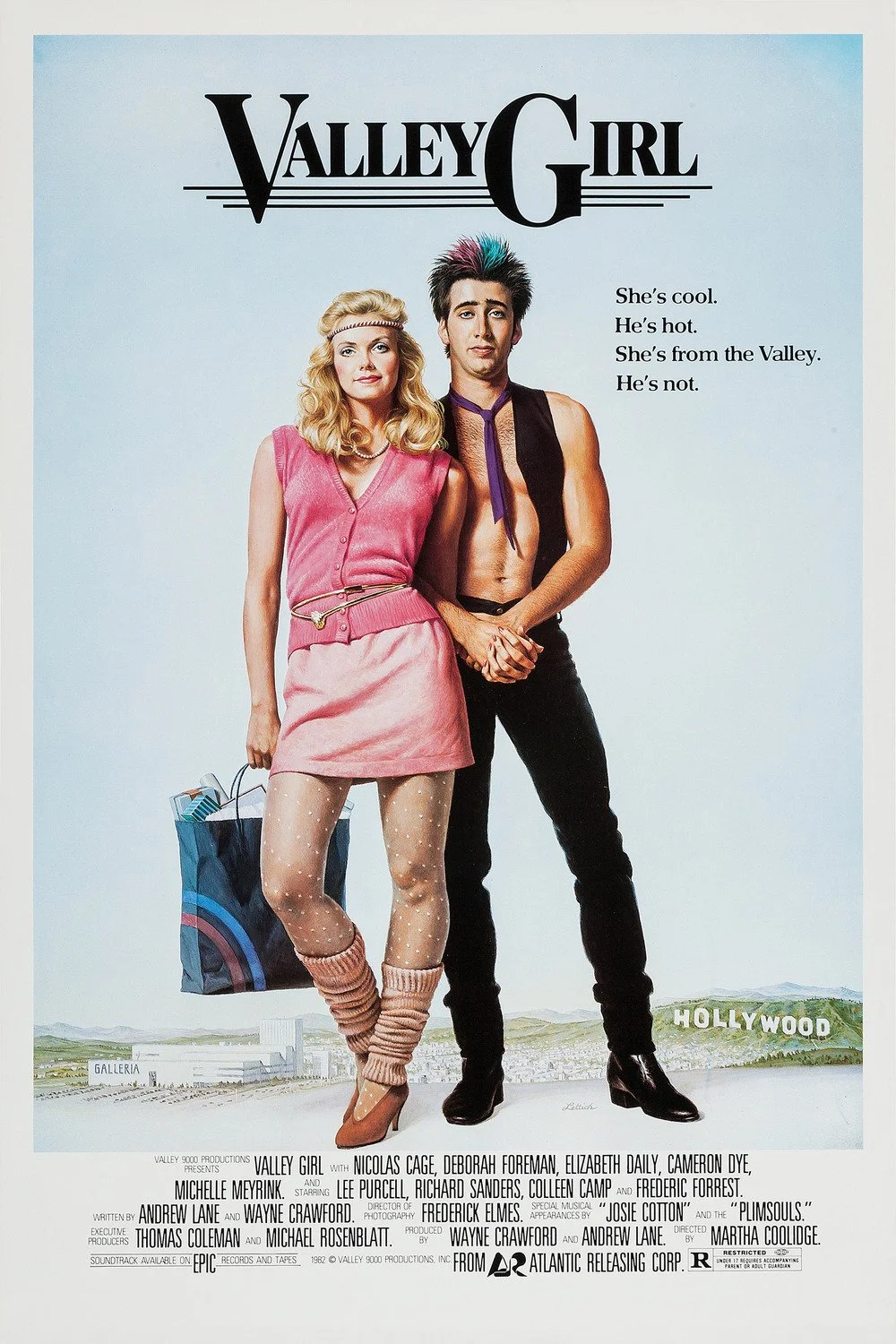
Movie Review : Valley Girl (1983)
Teenage years are secretly the worst. Even the most basic forms of adversity hurt because they’re happening to you for the first time, and every adult in your life tells you to shut up about it. That’s why teenagers are so gifted at creating drama out of non-dramatic situations. You’re living through an objectively low-stakes moment of your life that feels crucial because you have nothing else to care about yet. Adolescence ends up being meaningful to almost every well-adjusted person for that exact reason.
Early-era Nicolas Cage movie Valley Girl explores this nostalgic contradiction that makes adolescence silly, life-affirming and intoxicating at the same time.
Valley Girl tells the story of Julie (Deborah Foreman), a popular San Fernando Valley teenager living inside the complete starter kit of Reagan-era adolescent comfort: parties, gossip, mall-coded friendships and a conventionally handsome boyfriend named Tommy (Michael Bowen). She’s following the script well enough until she meets Randy (Cage), a romantic punk from Hollywood speaking to her in a foreign emotional language.
Julie falls hard for him, partly because he’s exciting and partly because he gives her a way to imagine herself outside the life everyone has already chosen for her. This creates the movie’s central tension: familiarity against desire, social comfort against emotional curiosity, the boyfriend everybody understands against the boy who's very existence breaks the central exceptionnalist illusion that defines her shallow group of friends.
The Art of Being (Accidentally?) Feminist
One of the defining characteristics of Valley Girl is its almost total absence of real conflict. Julie is bored with her jock boyfriend, falls for an artsy townie and slowly becomes a more complicated person at the cost of drifting away from her friends. That’s it. Nobody is trying to destroy her life. Nobody has to win a tournament. Nobody needs to learn the true meaning of prom. She just realizes, with the quiet horror unique to teenagers, that the life she has been performing no longer fits.
That’s what makes her arc so weirdly reasonable. Valley Girl would be much more boring if it were structured around a rivalry between Randy and Tommy, but it isn’t. They mostly avoid each other for 99 minutes, because the movie understands something deceptively adult about teenage life: the person you’re really fighting is usually the version of yourself everyone else recognizes. The central conflict of Valley Girl is not between Randy and Tommy. It’s between teenage Julie and young adult Julie.
What makes Randy such a great love interest, beyond the obvious fact that he’s played by pre-superstardom Nicolas Cage, is that he’s seducing Julie ethically. This sounds like a terrible phrase invented by a graduate seminar nobody wanted to attend, but it’s true. Randy isn’t trying to impose his sexuality on her, physically or symbolically. He’s not peacocking through the movie like Tommy, confusing possessivity with charisma. He’s simply the most interesting and considerate person in the room whenever Julie happens to be in it.
That makes Valley Girl feel much stranger and more generous than its premise suggests. For a 1983 teen romance, it is weirdly uninterested in treating Julie as a trophy to be won or a moral lesson to be punished. Randy’s appeal is not that he conquers her, but that he gives her space to become curious about herself. I have no idea how intentional this was, but watching it in 2026 feels almost surreal. Accidental feminism perhaps, but feminist storytelling done correctly nonetheless.
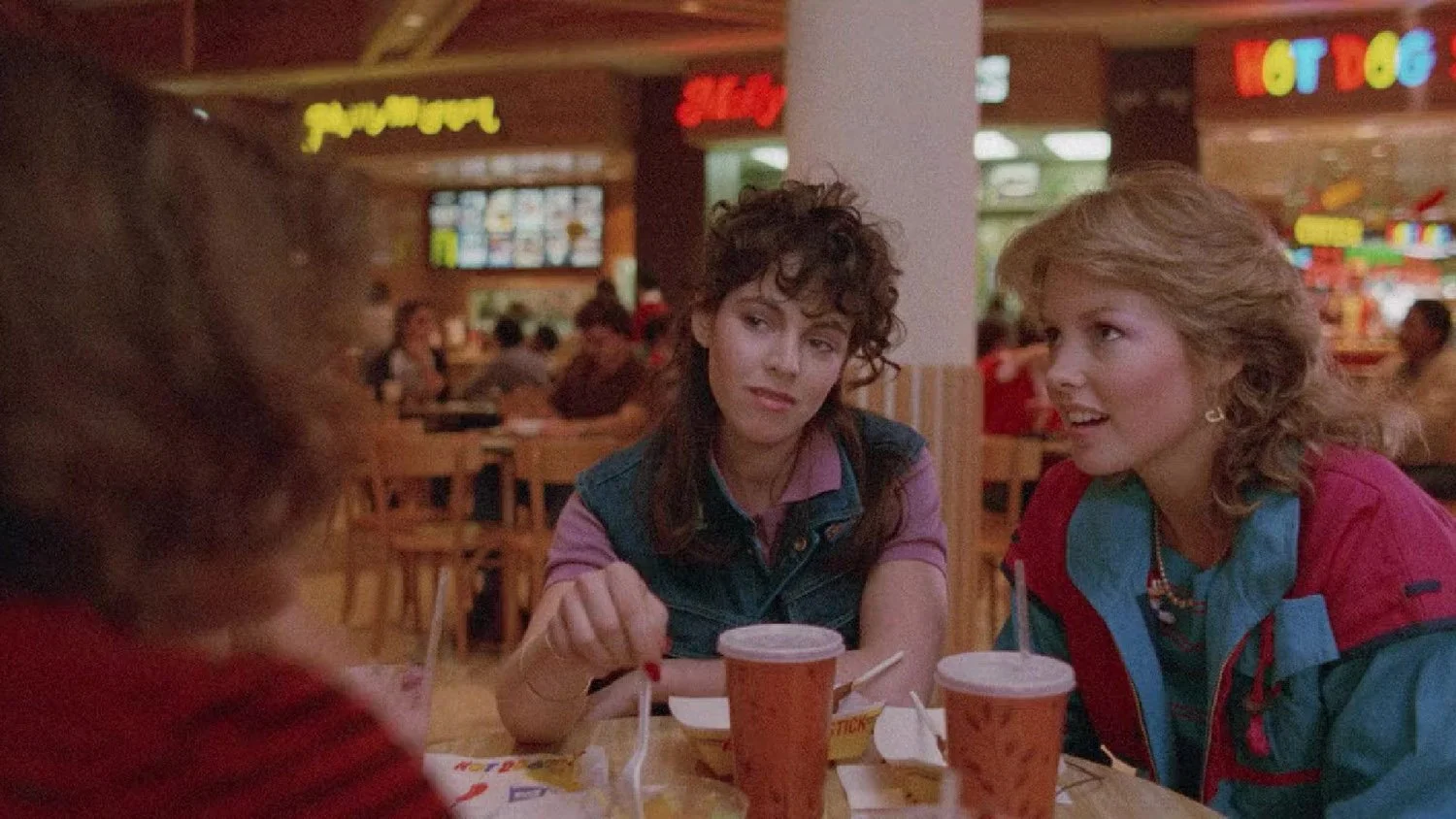
Although, Of Course, You End Up Becoming Yourself
Emancipation is an underrated theme in movies, maybe because it’s usually flattened into rebellion against some obvious authority figure. What makes Julie’s emancipation interesting is that she isn’t really breaking free from her parents, and only barely breaking free from toxic friendships. What she escapes in Valley Girl is a set of cultural expectations so normalized that nobody has to enforce them.
No one physically forces Julie to live a certain kind of life, date a certain kind of boy or become a certain kind of woman. But where she’s from, what class she belongs to and the cruel rigidity of high school social life have already narrowed her imagination. Meeting a boy like Randy is almost impossible in that world, not because he’s dangerous, but because he exists outside its approved emotional vocabulary. Julie understands that. This is why she doesn’t want to waste him.
That’s why Valley Girl feels oddly uneasy despite being such a bubblegum movie. There’s no clear antagonist because the threat isn’t a person. It’s inertia. It’s the possibility that Julie might go back to being the person everyone already understands because that would be easier for everybody except her. And that’s the ugliest, most grey and brown truth that young adults have to learn to swerve around for their entire lives.
The romance between Julie and Randy works because they really do feel like two people from different planets trying to breathe the same air. The miracle is not that they fall in love. Teenagers do that all the time, often for terrible reasons. The miracle is that Valley Girl treats that love as a brief act of self-recognition. For Julie, Randy is not just a boy. He’s proof that the world is bigger than the Valley and that wanting more from your life doesn’t automatically make you ungrateful.
*
Valley Girl is a strange and deceptively profound movie, but it’s also gloriously unself-conscious in the way any self-respecting forgotten eighties treasure should be. It’s a simple story about two people who meet at the exact moment in their lives where meeting each other should have been impossible.
Do Julie and Randy turn this into more of a problem than it needs to be? Of course they do. That’s why it’s a movie. If they met at twenty-five, they’d go on three dates, move in together too quickly and ruin each other’s credit scores like adults. But teenagers don’t have access to adult mistakes yet. All they have are feelings too large for their circumstances, which is why they’re unreasonable, exhausting and occasionally the most interesting people on earth.
7.6/10
* Follow me on Instagram , Bluesky and Substack to keep up with new posts *