Album Review : Converge - Hum of Hurt (2026)
There are basically two kinds of successful bands. There are bands that discover what people want from them and spend the rest of their career delivering increasingly professional versions of that same thing. These bands become popular, which is not an insult. Popularity is hard. Then there are bands that discover what works and immediately start wondering what else it could become. Those bands become influential, which is also not always a compliment. Influence is how great ideas can become terrible scenes.
Converge are one of the few heavy bands to somehow become both. For thirty years, they have made music that feels instantly identifiable without ever sounding comfortable inside its own identity. They are metallic hardcore legends, extreme metal reference points and one of the last bands alive who obstinately refuse to enter their legacy era. They have released the lean and mean Love is Not Enough in February that felt as alive and burning as anything they’ve ever done, but it was only half of this new chapter.
They have released another new record called Hum of Hurt and it is the furthest thing from a sequel.
Hum of Hurt features ten songs in thirty-three minutes and somehow contains some of Converge’s most accessible music yet, which is a strange thing to write about a band that has spent three decades making catharsis sound like a bulldozer charging through a math class. It is still brooding and acrobatic in the specific way only Converge can be, but it is slower, less overcharged, and more willing to let emotion do the damage.
This is not Converge sanding down their edges as much as learning which edges still cut deepest. The songs are less chaotic, but they breathe better. They give Bannon’s voice, the riffs, and the negative space around them more room to create pressure. Hum of Hurt is unmistakably Converge, but it feels like another new page in their permanently mutating creative vision: more open, more haunted, and somehow just as urgent.
The opener Slip the Noose sets the emotional coordinates for what follows. Kurt Ballou juggles simple, but contrasting riffs that don’t just support Jacob Bannon’s performance so much as sketch the room he is about to suffer inside. It is a song about the existential perils of fatherhood (not exactly my department) but the cinematic anxiety carried by the music is contagious.
Ballou’s creativity is once again front and center on Doom in Bloom where his riffs feel both powerful and strangely visual. Bannon sings over drums in the verses, letting the song gather itself before detonating into those thunderous choruses. It is vibrant metallic hardcore with an odd tinge of melody, the kind that does not soften Converge so much as make the pressure easier to locate. The power comes from the simplicity.
It Only Gets Worse is closer to your typical explosive Converge cut, to the extent that anything Converge does can be called typical without sounding insane. It could have easily lived on Love Is Not Enough. The bulky, dissonant hardcore riffs communicate the apocalyptic claustrophobia Bannon is singing about with electric intent.
The mood of Hum of Hurt shifts into something more sludge-oriented with Detonator. Once again, the song rides on the eeriness of Ballou’s riffs, the percussive logic of the songwriting and Bannon’s clean almost stripped-back vocal performance. It is uncomfortable in the specific way a near-death experience is uncomfortable: not because everything is exploding, but because you get to experience life and death with overpowering clarity.
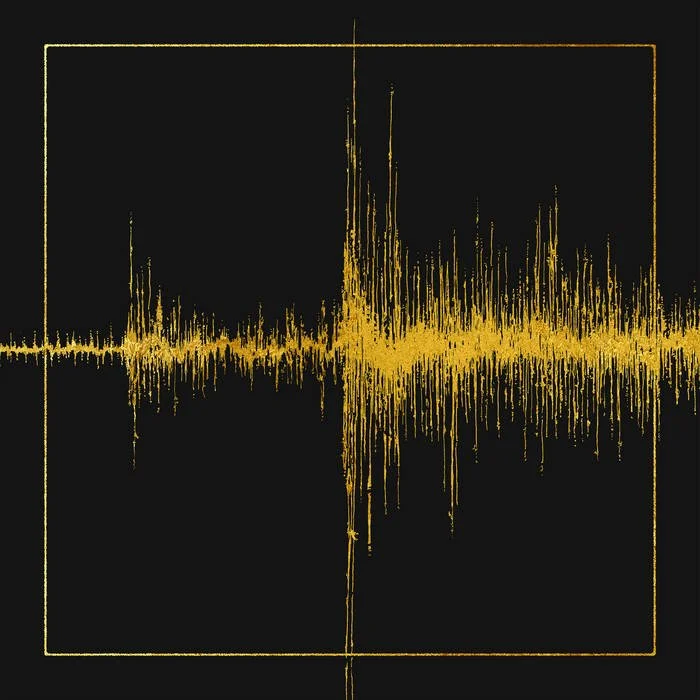
The other standout moments on Hum of Hurt include the more traditionally furious It’s Not Up to Us, a song that stretches and contracts like the seismographic lines on the album cover. It lurches between tension and release with a nervous energy that feels almost geological in the way it vibrates and explodes.
Then there is the lengthy Dream Debris, built around a throbbing Nate Newton bassline and one of Jacob Bannon’s most ghoulish performances on the record. The song feels haunted from the outset, but its greatest strength is patience. It lingers, broods and steadily accumulates pressure until the whole thing finally collapses into a messy, glorious climax. Few moments on Hum of Hurt better capture the album's fascination with dread as a slow-building force rather than a sudden impact.
Not that the other half of Hum of Hurt is unlistenable or anything. I quite like the anthemic closer Nothing’s Over, which dabbles in the album’s sludge tendencies before exploding into those glorious, cathartic choruses Converge can still make feel like a private emergency. The issue is that the record’s intent starts to distill a little too clearly over its relatively short runtime. The songs are well built, but they hit enough of the same emotional beats that the catharsis begins to produce diminishing returns, which is a problem when catharsis is the primary service being offered.
Personally, I could have used an eight-song version without I Won’t Let You Go and the interlude It Used to Matter. Hum of Hurt gets off the ground quickly, but it hovers in the same emotional airspace long enough for some of its impact to blur. It never crashes, exactly. It just spends a little too much time circling the runway after already proving it knows how to fly.
*
With that said, I enjoyed Hum of Hurt. Less than Love Is Not Enough, sure, but being the less immediately thrilling of two Converge albums released in the same year is not exactly a human rights violation. Most bands would kill to have this be their secondary statement.
What remains impressive is Converge’s almost uncanny ability to expand their creative paradigm without making a big theatrical announcement about it. They do not reinvent themselves so much as quietly discover new rooms inside the house they already built, then start testing the acoustics. Hum of Hurt is cleaner, slower and more emotionally exposed than expected and even when its catharsis starts producing diminishing returns, it still sounds like a band finding fresh pressure points inside a language they helped invent.
I’m probably going to add songs from this record to existing playlists without revisiting it as obsessively as their best albums, but that is not the same thing as dismissal. Hum of Hurt is solid, thoughtful, sometimes thrilling Converge. And Converge are nothing if not that: solid even when they are trying to fall apart.
7.5/10
* Follow me on Instagram , Bluesky and Substack to keep up with new posts *