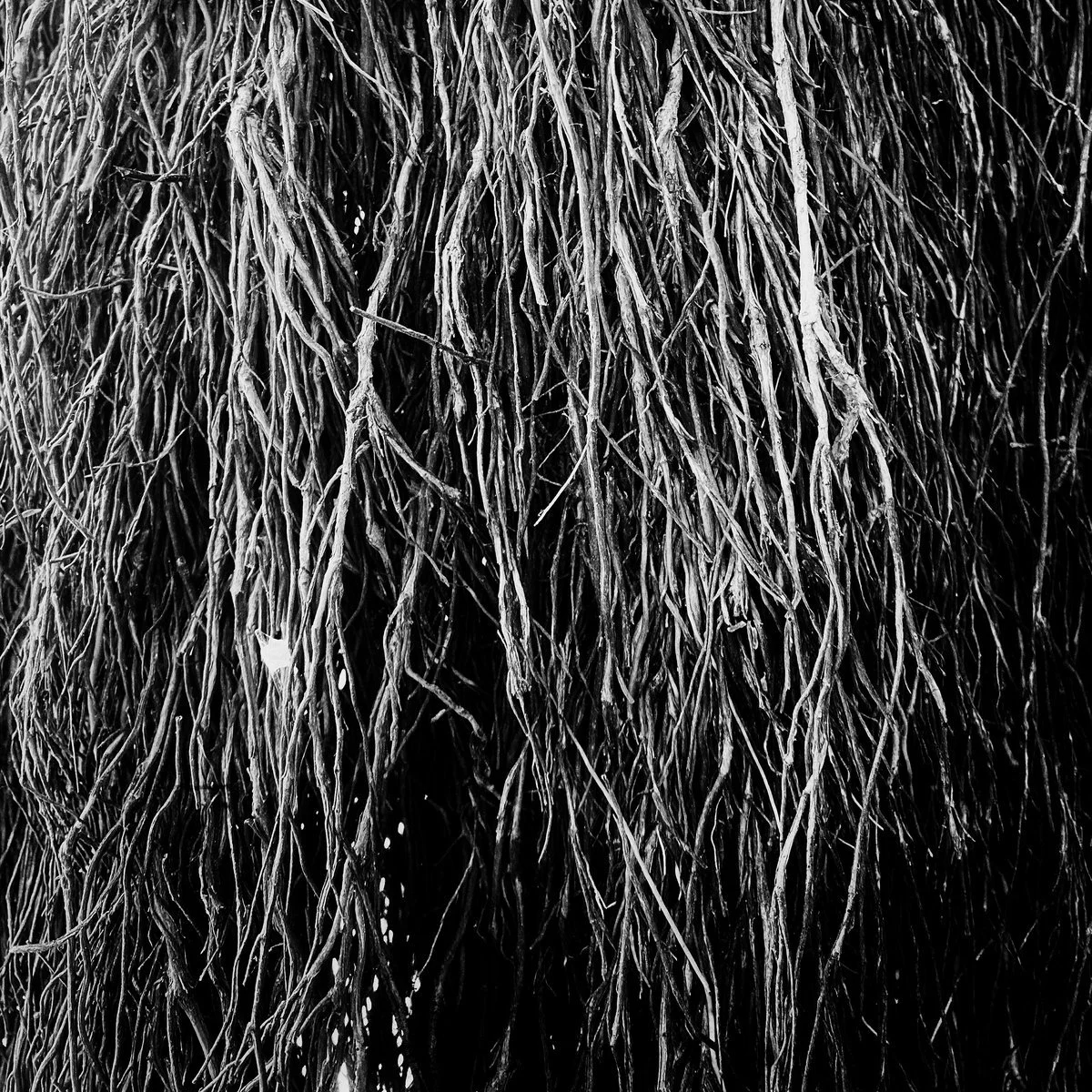
Album Review : Merzbow, Iggor Cavalera & Eraldo Bernocchi - Nocturnal Rainforest (2025)
Merzbow is one of these musicians who’s more talked about than listened to and he's not talked about that much. As the forefather of harsh noise, he’s synonymous with a kind of sonic terrorism that feels less like music and more like a test of character. Albums like Pulse Demon or the infamous 50-CD Merzbox aren’t so much records as they are endurance trials — cement blocks dropped onto the collective psyche of adventurous listeners, daring them to flinch.
I’m not here to argue that Merzbow is secretly misunderstood. He’s not. He sounds exactly like you’re afraid he does.
But over the past couple of years, something interesting has happened. Merzbow hasn’t gone soft (let’s not get carried away) but he’s drifted sideways, exploring sound beyond the usual scorched-earth parameters of harsh noise. Nocturnal Forest, his collaboration with Iggor Cavalera (yes, that Iggor Cavalera, now seemingly on a first-name basis with every noise experimentalist on Earth) and Italian sound designer Eraldo Bernocchi, is supposedly inspired by the sounds of the forest. Which sounds like a joke until you hear it and realize it isn’t.
This record doesn’t abandon chaos so much as it gives it a surrounding ecosystem. There’s space here, depth, a strange sense of balance between violence and atmosphere. Nocturnal Forest feels panoramic, immersive and, against all expectations, cosmically right, like nature reclaiming a genre that was never supposed to grow anything at all.
Nocturnal Forest is split into two pieces and clocks in at just under thirty-three minutes, which feels like exactly the right amount of time to be lost without needing a rescue party. It’s hard to tell where one collaborator ends and another begins: who’s shaping the rhythm, who’s bending the texture, who’s actively trying to unnerve you, but the whole thing unmistakably feels like a Merzbow record. It’s loud, confrontational, and slightly out of control, the way his best work always is.
This isn’t “relaxing” music in any recognizable wellness-app sense of the word, but it is music you can disappear into without the usual sensation of being dragged screaming into hell. There’s immersion here without damnation. That matters, because for the past couple of years Masami Akita has been circling something less infernal, still abrasive, still hostile, but no longer obsessed with the idea that listening should be physically painful.
The first half of the record, Swietenia Macrophylla (which is a plant!), literally opens with crickets, which feels like a wink-wink joke and a quiet pact between the three collaborators and the listener. This rainforest will not be boring at night. Within a minute, the chirping is swallowed by electronic drones of varying pitch and intensity, stacking on top of one another until the soundfield starts to buckle under its own weight.
It’s chaotic, but it doesn’t feel random. There’s a conversation happening here, you’re just not invited to understand it. Before long, it stops sounding anything like a forest at all and instead becomes what a forest might feel like if you close your eyes and stay there long enough to dissolve into it, surrendering scale, direction, and eventually yourself.
If you listen closely, you can pick out Iggor Cavalera’s drumming, along with field recordings (the sound of water flowing, most notably) that must belong to Eraldo Bernocchi's contribution. But these elements don’t exist on top of the music so much as inside it, suspended within a kind of primordial chaos that only our favorite Japanese sound sorcerer seems capable of conjuring with this much authority.
The game I end up playing with Swietenia Macrophylla is trying to impose order on the noise, to reverse-engineer the sounds and imagine what natural source they might have come from. It’s a losing battle. Every listen rearranges the answers, if it gives you any at all. And yet that self-defeating exercise is exactly what makes Nocturnal Forest oddly relaxing to me: the comfort of surrendering analysis, of letting the brain stay busy without ever needing to arrive anywhere.
Ceiba Pentandra (another plant, according to Google) leaves more room for what you might reasonably expect a forest to sound like, at least at first. Crickets (once again the true canvas of this record) share space with owls and faint synth tones, lingering for nearly four minutes like a scene-setting shot that dares you to relax. It’s patient, almost pastoral by Merzbow standards.
Then the ground starts to move. Instead of detonating immediately, the track gradually tilts into a volcanic harsh noise sequence that overwhelms the soundscape and erases any remaining sense of life. Where Swietenia Macrophylla announces its intensity upfront, Ceiba Pentandra earns it the hard way, building pressure until chaos feels less like an intrusion than an inevitability.
There’s a sense of tragedy and inevitability to this piece, like watching a landscape get slowly swallowed by a natural disaster you know can’t be stopped. The contrast between the fragility of the synths and field recordings and the sheer, overwhelming force of Merzbow’s harsh noise creates a feeling of devastation that’s both gut-wrenching and strangely hopeful, an ending quickly followed by a new beginning.
On Ceiba Pentandra, this trio of sound adventurers manages to capture the full cycle of nature: something vast, impersonal, and self-regulating. It feels bigger than you, indifferent to your feelings, and entirely unconcerned with whether you’re ready for what comes next.
*
The point of listening to Merzbow has always been to push yourself into a kind of listening fatigue where resistance gives way to surrender. Nocturnal Forest gets you there while also evoking a powerful sense of place. The boundless feeling of being untethered from civilization, alone with the night and whatever else happens to be alive in it.
It’s a primal, cosmic listen, one I’ve kept returning to since it came out because it manages to be easy and difficult at the same time. This is a sonic workout that will defeat you, but in doing so it kicks your brain into a heightened state of awareness. And maybe that’s the highest achievement Merzbow’s harsh noise can aspire to: not destruction for its own sake, but the clarity that comes after you stop fighting it.
8.3/10
* Follow me on Instagram , Bluesky and Substack to keep up with new posts *