Album Review : Sunn O))) (2026)
It’s easy to have an opinion about Sunn O))) because Sunn O))) barely resemble something you’re supposed to have a normal opinion about. Stephen O’Malley and Greg Anderson have spent more than twenty-five years pursuing essentially one idea with the dedication of monks and the volume of a jet engine. You either love their guitar-driven drone, hate it or decide it’s not music before ever giving it an earnest listen.
But the trouble with anything this conceptual and unapologetic is that dismissing it from a distance means missing the entire point. Sunn O))) have never been interested in giving you different songs so much as discovering how many different realities can exist inside one sustained sound. Their new self-titled record remains faithful to that obsessive mission: finding out what the guitar can become when it’s purposefully not doing what a guitar is supposed to do.
The self-titled record contains six tracks and a frankly hostile seventy-nine minutes of drone. It’s a renewal of vows to monolithic savagery: Sunn O))) recommitting themselves to the idea that a guitar chord can become a song and an idea if you play it loudly enough and refuse to let it die.
The result may prove challenging even for longtime fans. This is a ferocious exploration of density, texture and the strange sensation of sound physically shifting its weight around you. Conventional structure and songwriting are mostly irrelevant. The movement happens inside the noise: frequencies expand, tones decay and enormous blocks of distortion slowly change shape.
Sunn O)))’s philosophy has always been fluid beneath its apparently immovable surface, but this record pushes them further from metal than ever before. It doesn’t use noise to make metal heavier. It uses the residual language of metal to make noise feel colossal.
Opener XXANN is the most dynamic composition on the record, although “dynamic” remains a relative term when discussing Sunn O))). Shrieking guitars scrape against samples of falling rain, creating a shambolic, collapsing beauty as the track explores the different ways distortion can bend, obscure and eventually consume sound.
None of this is surprising, exactly and it certainly isn’t trying to get your attention through conventional cleverness. XXANN is the audio equivalent of staring at a wall for too long. The wall doesn’t change, but eventually your perception does. Shapes emerge. Patterns become significant. Your mind begins projecting movement and meaning onto something that appears completely static. You could listen to XXANN for an entire day and never quite hear the same thing twice — not because the song keeps changing, but because you do.
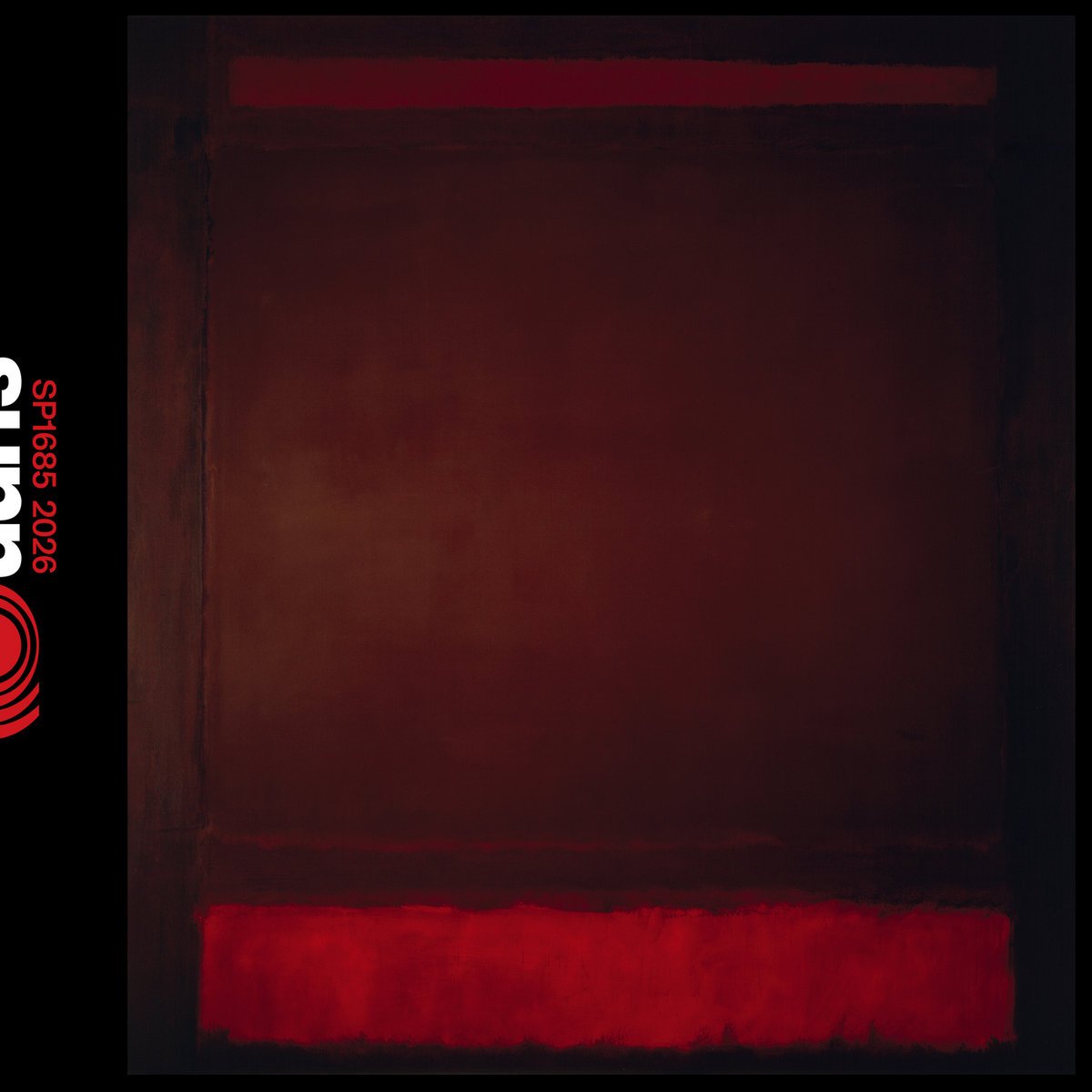
Does Anyone Hear Like Venom? is a more barren, monochromatic proposition, built from thick, rumbling guitars and vibrato stretched past expression and into abstraction. O’Malley and Anderson chose a Mark Rothko painting for the album cover and listening to this track makes the decision feel almost inevitable. The music confronts you as a single block of color: seemingly simple, emotionally severe and much less stable than it first appears.
The point isn’t nuance in the conventional sense. It’s the blunt force of the argument — the way O’Malley and Anderson keep adding layers of rumble until mass becomes mania. They crank the intensity like demented house painters applying the same color over and over, long after the wall has been fully covered. From across the room, you see only one shade. Move closer and you begin to notice the violence of the brushstrokes.
The fourteen-minute Butch’s Guns is leaner and more elastic than the two tracks preceding it. Individual guitar riffs stretch across several seconds, sagging under their own weight before dissolving into the surrounding drone. There’s a lingering exhaustion to the track, like a night that refuses to end even though everything worth doing has already happened.
The eighteen-minute scorcher Mindrolling brings back the falling-rain samples before sinking into perhaps the most opaque composition on the record. This is also where Sunn O)))’s central idea begins to feel redundant. The sound remains enormous, but it no longer feels as crushing or as intricately unstable. Instead of revealing new details through repetition, Mindrolling mostly repeats the conditions that allowed those earlier revelations to occur.
At a certain point, staring at the wall stops producing visions. You’re just staring at the wall again.
Everett Moses is the most purely enjoyable track on the record, alongside Does Anyone Hear Like Venom? It never settles into a stable shape and never allows the listener to become comfortable, despite stretching beyond ten minutes. Something keeps squirming beneath the distortion, giving the song a nervous, almost biological sense of movement.
There’s also an occult edge to Everett Moses that separates it from the album’s more austere atmosphere. It feels like one of Rothko’s paintings suddenly coming alive, which would be transcendent for approximately three seconds before becoming profoundly terrifying. The colors begin shifting. The canvas starts breathing in a David Cronenberg kind of way. Whatever was trapped inside the abstraction has noticed you looking at it. It’s exciting.
Closer Glory Black is the most rock ’n’ roll song on the record, provided you accept that Chuck Berry is somewhere near the beginning of the evolutionary chain that eventually produced Sunn O))). It moves faster, occasionally resembles 4/4 and claws forward with an obsessive momentum that can’t quite call a groove, but almost.
A wonderfully creepy piano interlude splits the track in half, allowing the pressure to dissipate before the guitars resume their ascent. But this isn’t a liberating climb toward daylight. Glory Black sounds like reaching the summit only to discover that night has followed you up the mountain. As the title implies, this is not darkness presented as tragedy. It is darkness presented as triumph. The album has spent seventy-nine minutes gradually closing off every available source of light, and Glory Black is the moment Sunn O))) finally stop resisting and celebrate the view.
*
I’ll concede that Sunn O)))’s self-titled album is exhausting. But Sunn O))) have always been exhausting by design and there’s no moral obligation to experience all seventy-nine minutes in one heroic sitting. You’re allowed to skip a track. You’re allowed to stop halfway through. This is impressionistic music, not assigned reading.
Sunn O))) are less interested in commanding your full attention than in altering the oxygen molecules around you. Their music is meant to expand, intensify and contaminate whatever mood already exists in the room and this record does exactly that. It isn’t as busy or as straightforwardly experimental as some of their previous work, but it lurches and wobbles in a way few Sunn O))) records have before, perhaps with the exception of the iconic Monoliths & Dimensions.
7.8/10
* Follow me on Instagram , Bluesky and Substack to keep up with new posts *