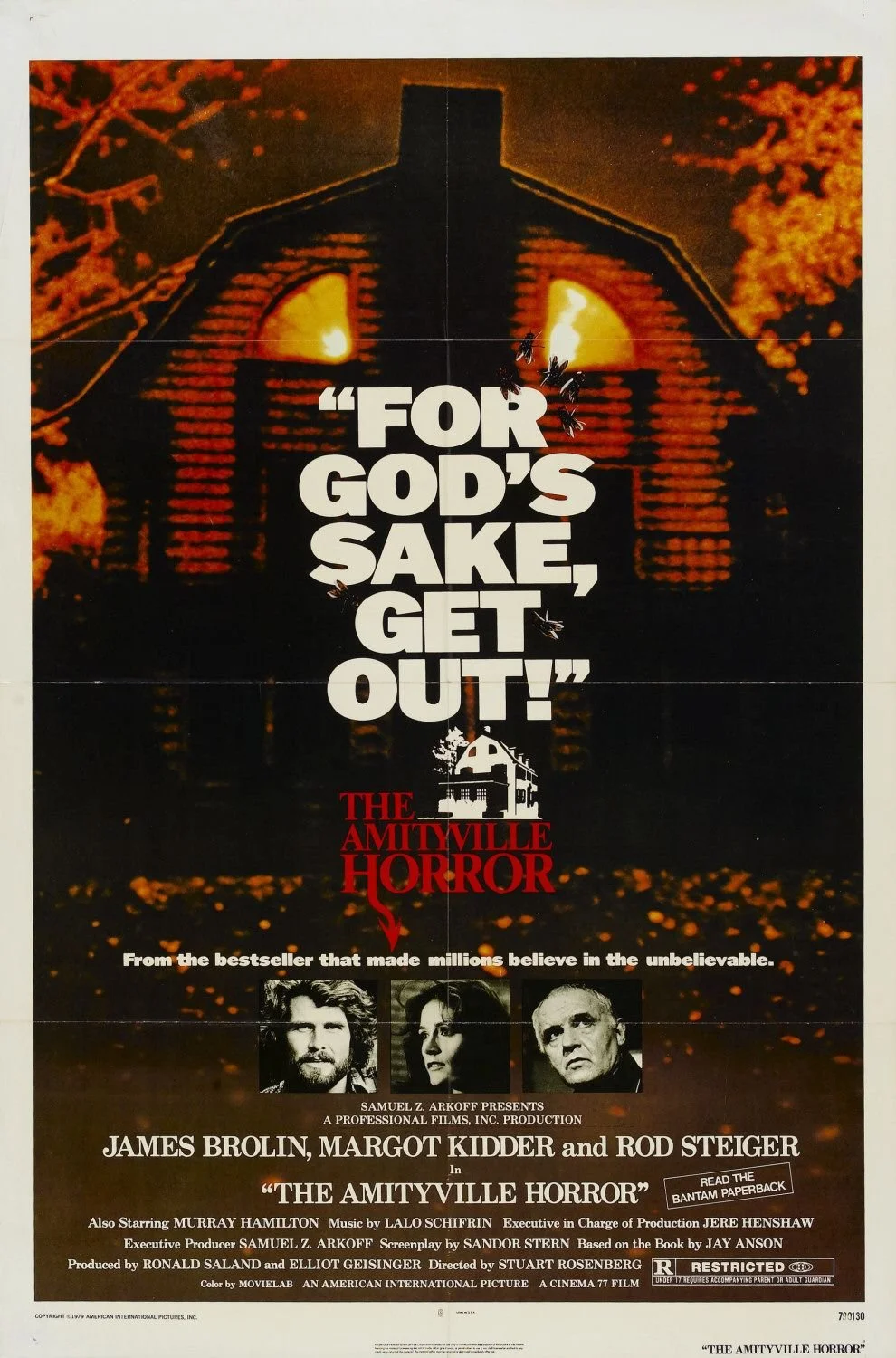
Classic Movie Review : The Amityville Horror (1979)
In the pre-digital wilderness (back when you didn’t have the moral duty to verify information), certain objects accumulated a kind of cultural aura. Horror movies, especially, were judged less by what they contained and more by the stories orbiting them. Adults who had no intention of ever watching The Amityville Horror spoke about it as if survival required abstinence, as though simply being aware of its existence might destabilize your personality.
And, of course, that was the exact chemical formula that made kids like me want to see it: the forbidden fruit of someone else’s secondhand panic. The results were always anticlimactic. The promise of psychological ruin rarely survived contact with the actual VHS tape.
Another thing that made that era feel alien (almost mythological) was scarcity itself. A movie didn’t become iconic because you watched it, it became iconic because you couldn’t. My local video store never carried The Amityville Horror, which meant it existed for me as a kind of phantom text, a theoretical wrecking ball for my psyche that remained behind the glass partition of cultural reputation. I didn’t want to love it or hate it. I just didn’t want to be permanently stationed outside another supposedly haunted house, staring in through someone else’s memories of fear. So, I finally watched it.
The Amityville Horror is based on a real life crime, which I wasn’t aware of .The movie follows the Lutz family as they move into the house where Ronald DeFeo Jr. murdered his, which is the kind of real estate detail that sounds like it should reduce the price but instead turns the home into a moral riddle: How cheap does a house have to be before you’re willing to share square footage with the haunted residue someone else’s trauma?
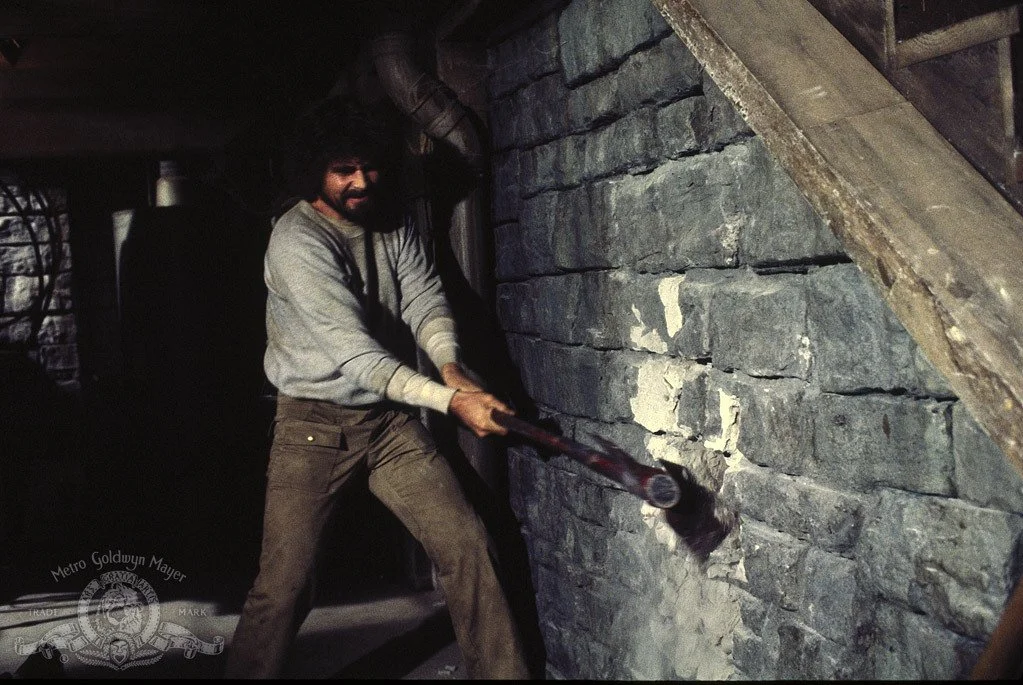
The film’s logic is basically this: if you try to build a normal life on top of a historical atrocity, whatever lingers of that atrocity will eventually notice. George Lutz (played by Josh Brolin’s dad James), gradually eroded by the house’s ambient malevolence. Few overt things happen at first. The house just kind of exists in a threatening posture, like a cat staring at you from across the room for reasons you can’t possibly understand. Then it charges the Lutzes a metaphysical rent for the audacity of attempting to be happy in a place where happiness previously died.
The World’s Most Haunted Flu
Here’s the part that genuinely threw me: how is George supposed to be "taken over" by Ronald DeFeo if Ronald DeFeo is very much alive during the events of this movie? Most films would use that contradiction to pivot into a TED Talk about how real hauntings are internal, psychological, metaphorical, whatever. But The Amityville Horror isn’t arguing that spirits cling to people. It’s arguing that the house itself is the existential contagion, that DeFeo was just one of the guys who caught it.
Once you view the place as an autonomous organism, the movie’s behavior suddenly makes sense. The house doesn’t seduce George or whisper cryptic warnings; it simply begins to work on him, the way a glitching government bioweapon might work on lab rats. Its tactics aren’t subtle. They’re more like symptoms: temperature drops, temperament shifts, a creeping sense of dislocation. George isn’t being possessed by a murderer, he’s being rewired by the same malignant architecture that rewired the murderer before him.
It turns out DeFeo wasn’t even the house’s original tragedy. The film casually drops the detail (because of course it does) that the place was built on a First Nations burial ground, as if every square foot of American suburbia secretly rests on a foundation of broken treaties and unfinished business. But what actually elevates the hauntings in The Amityville Horror. what makes them outlast time, technology, and the technological flattening of fear, is how weirdly plural they are. The Lutzes aren’t dealing with one ghost or one curse or one narrative. They’re dealing with a kind of supernatural coalition government.
By chasing the American Dream, the family essentially negotiated with every metaphysical entity that had ever been inconvenienced by the property. The blood seeping from the walls, the flies ambushing the priest, the undefined swelling inside George’s psyche, none of it feels like it’s coming from the same source. They’re the civic disturbances of a property where the American Dream tried to muscle in on history’s lease without reading the terms.
The movie’s accidental genius is the implication that postwar modernity is the world’s worst roommate for history, loud, entitled, and convinced that repainting a traumatized space makes it new again. The Amityville Horror keeps reminding you that you can’t revise the past by insisting on a better present. The past isn’t gone; it’s just waiting for you to turn the lights off.
Is This An Anticolonialist Movie?
It’s not an accident that every late-70s horror movie blamed its problems on a First Nations burial ground. That was the decade when America finally sobered up from the sixties and realized the utopian experiment hadn’t just failed, it had also defaulted on the loan. The country was neck-deep in inflation, political scandal, and the creeping realization that all our "new beginnings" were built on foundations we never bothered to examine. So of course the villains of these stories weren’t demons or ghosts, but the past itself filing a noise complaint.
The families in these movies always look like they stepped out of a 1950s Sears catalog: earnest, optimistic, aggressively normal. They’re not evil: they’re just pretending history doesn’t apply to them. Which, in the moral physics of seventies horror, makes them the perfect victims. If you move into a house with a cursed backstory because the mortgage is good, the movie isn’t punishing you for arrogance. It’s punishing you for believing the rules didn’t apply to you because you’re American.
The Amityville Horror, Poltergeist, The Shining, these aren’t militant movies. They don’t lecture. They just arrive with the weary, bruised logic of someone coming home from the first day of school with a black eye and no lunch money. The ghosts they conjure aren’t there to be negotiated with; they’re predators, constantly reminding their victims that the American Dream is a moving target, always somewhere else, always just beyond the horizon of safety.
The brilliance of Amityville isn’t in moral outrage or social commentary. It’s in its quiet, almost instinctual grasp of collapse: the house doesn’t argue, it waits. It doesn’t teach, it punishes. And in that waiting, that watching, the movie captures a uniquely American talent: the ability to intuit your own ideological undoing and still pretend it’s possible to be happy anyway.
*
There’s no hidden psychological trauma in The Amityville Horror. Not unless your own father already carried one. What makes the movie endure is not cheap scares or gimmicks. it’s the way it lays bare the weight of the past we pretend doesn’t exist, the history we ignore until it starts seeping through the walls. That’s why it’s still unnerving, even if the movie itself is older than I am and my knees start reminding me of that fact before 11 AM.
This isn’t the haunted house your parents promised you. It’s the one they should’ve seen and, in some quiet, necessary way, warned you about. A mirror not of monsters, but of the world they helped create.
7.4/10
* Follow me on Instagram and Bluesky to keep up with new posts *