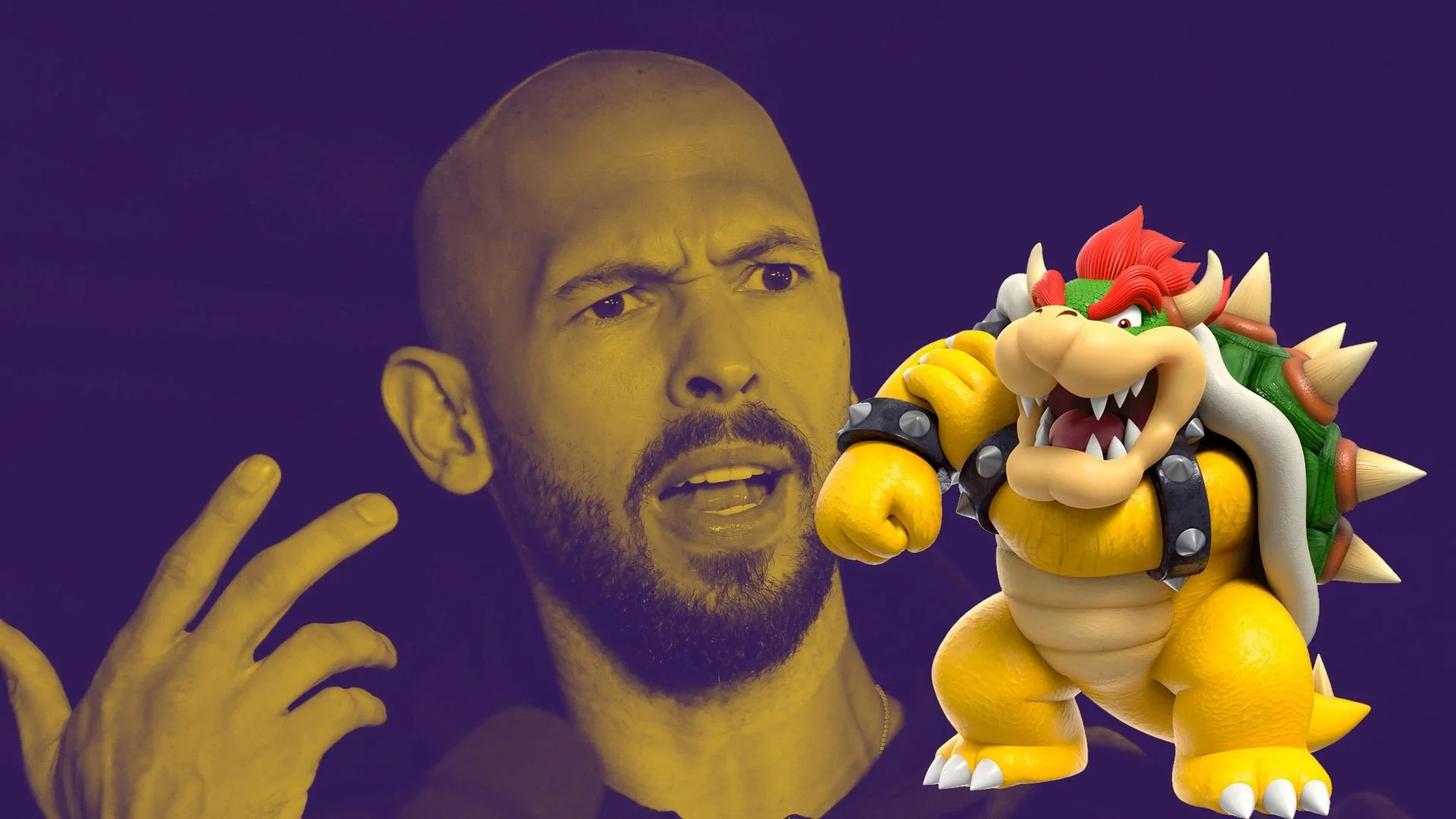
Andrew Tate Might Be Bowser, But We're Not Mario
Masculinity has never been more popular to analyze, argue about, or aggressively monetize. Thanks to Donald Trump’s nihilistic bravado, Andrew Tate's TikTok toxicity, and a generation of freshly minted gender studies grads who can’t land tenure but can definitely dominate a group chat, the cultural conversation has officially caught fire. We are collectively rethinking everything we thought we knew about gender. Judith Butler didn’t walk so we could run. She walked so we could trip over each other and pile up on YouTube comment sections.
Now, this could be good. It should be good. A society interrogating its gender roles is a society with potential for real growth. But right now? This isn’t dialogue. Both sides are riling up their base for money without creating any real dialogue. It feels less like a movement and more like a RAW episode between soulcycle dads and Twitch streamers.
Chuck Klosterman once said that on a long enough timeline, progressive ideals always win. That’s still probably true. But what we’re seeing now is something messier than a linear progression. The masculinity debate hasn’t evolved; it’s metastasized. What we’re dealing with is a cultural operating system that never stopped running in the background. Andrew Tate isn’t a glitch in the matrix. He is the matrix (even if he would like to convince you otherwise). Or at least, the final boss of a game we designed in our own image.
Let’s play this out: if Andrew Tate is Bowser, the snorting, flaming last obstacle between you and the princess, we need to ask the uncomfortable question: are we even Mario? What if we’re just Goombas? Or worse, Wario: bloated on entitlement, bitter about being left out, and still demanding a turn.
What if the princess wasn't to be saved and just wanted to mind her own damn business?
Because here’s the thing. Tate didn’t invent toxic masculinity. He just branded it with bugattis and buzzwords. What he’s selling is an old, deeply embedded cultural idea: that women are milestones on the path to male greatness. That having a beautiful woman is proof that you’ve arrived, like a Rolex, or an offshore bank account. And for that idea to work, women can’t be people. They have to be props.
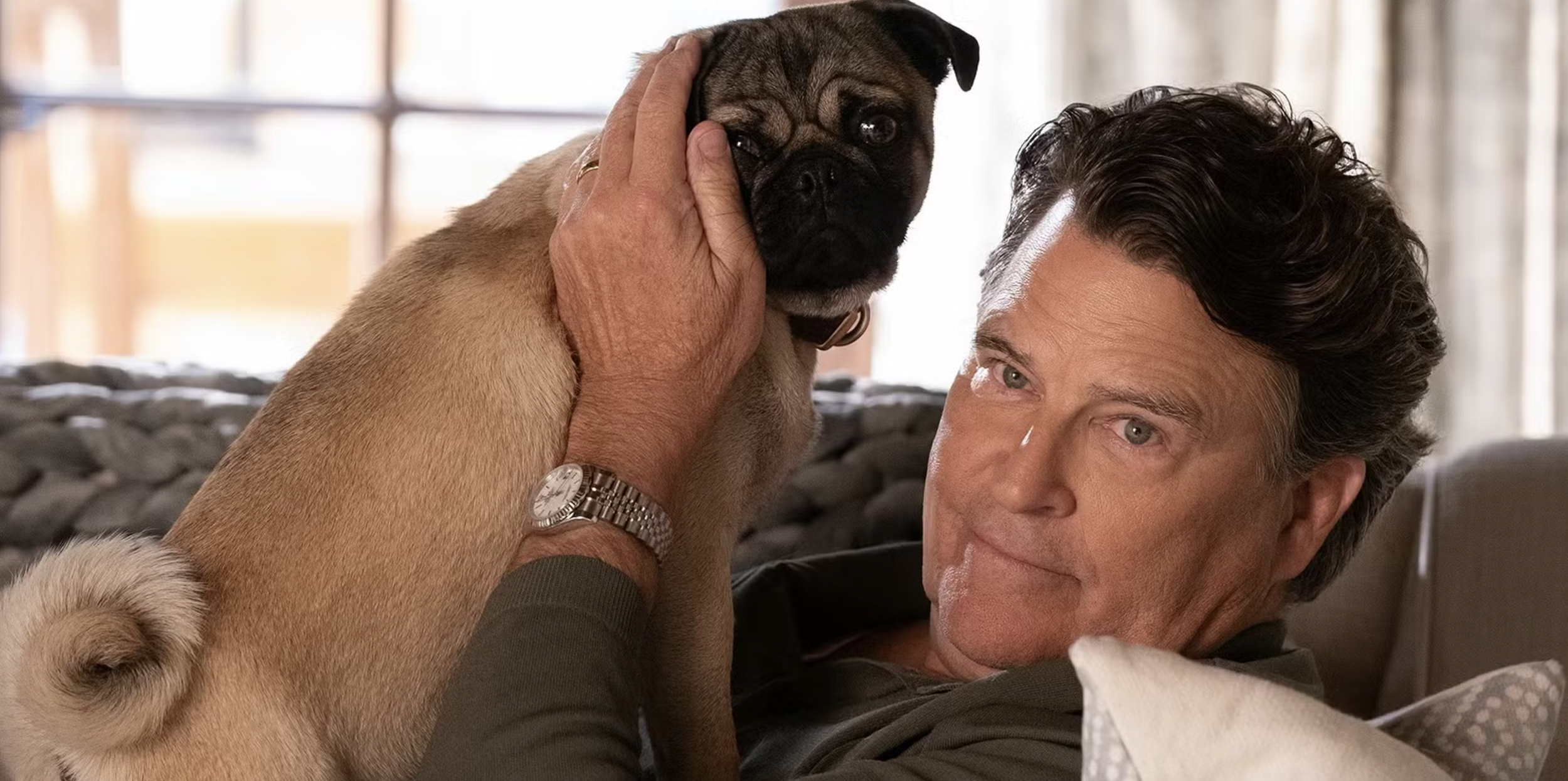
I didn’t come to this idea through the news cycle or a freshman sociology course. I came to it watching St. Elmo’s Fire, a deeply 1985 Brat Pack movie about young men transitioning into adulthood by attempting to possess women. Alec (Judd Nelson) is obsessed with getting married because it will validate his political career, even though he’s cheating on his girlfriend (Ally Sheedy). Billy (Rob Lowe) sexually assaults Demi Moore, then gaslights her into thinking she’s the unstable one and it's somehow framed as charming. Kirby (Emilio Estevez) spends the entire film stalking a woman with a successful life, completely indifferent to the fact that she already has a boyfriend. These dudes don’t love women. They need women to mean something, to confirm their manhood, their ambition, their importance.
And here’s the rub: we like this movie. It’s canon. It’s remembered as a wistful portrait of post-college ennui, a meditation on how hard it is to grow up. And it is hard to grow up. Especially when you’re never taught that women aren’t just mirrors for your desire. That they exist outside your gaze. That they can be full, complete, and interesting humans who do not owe you love or attention just because you feel sad and poetic about them.
This isn’t limited to film. Music, especially music marketed to young men, has always done a bang-up job of flattening women into one-dimensional rewards. Look at Appetite for Destruction by Guns N’ Roses. It’s a sonic punch in the face, and it unapologetically glamorizes domestic violence and portrays women as either vixens or victims. Or take Whitesnake’s immortal power ballad Is This Love? where the woman is metaphorically a key to every door. Not a person. A multi-tool. Bon Jovi's Bed of Roses is basically a fever dream of euphemisms for wanting to get laid. The bed of nails thing? Weirdly poetic. Still objectifying.
Think it’s just rock? Think again. Justin Bieber’s Boyfriend treats possessiveness like a selling point: "I’d never let you go," as if being kept on someone’s arm is a desirable form of romance. Drake’s Hotline Bling is basically him calling his ex a slut for going out and having a good time. There is an entire pop canon about romanticizing female passivity, projecting male insecurity as universal truth, and recasting self-pity as virtue. That’s what a lot of young boys grow up hearing. That’s how they’re taught to construct the idea of love. But desire isn’t love. It’s the prequel. It has no idea what comes next.
Cashback and the fallacy of the lonely geek as an object of desire
Maybe the most egregious example of this cultural disease is a 2006 British indie film calledCashback. It’s often remembered fondly by people who haven’t rewatched it since puberty. But the premise is this: Ben, a shy artsy teenager, gets dumped and takes a job at a supermarket, where he kills time by freezing reality and sketching nude women as they shop. His sadness is framed as sensitive. His horniness is framed as sweet. And eventually, he’s rewarded with a new girlfriend for his efforts, as if being a lonely creep with decent shading technique earns you happiness.
Cashback is the thesis statement of a generation of films that tell boys: if you feel deeply enough, women will appear. If you’re broken in a beautiful way, they’ll come to fix you. Women, in these narratives, aren’t people. They’re puzzle pieces. You complete your story, and they show up in the last act to congratulate you.
So yeah. Andrew Tate is awful. He radicalizes young men. He sells misogyny as lifestyle coaching. He deserves every ounce of public backlash he gets. But the rot didn’t start with him. He is not the alpha and the omega of toxic masculinity. He’s just the loudest guy at the seminar. He's the grownup kid in Cashback who realized women can't save him, so he decided to own them.
If we want to change anything, we have to stop pretending that killing the final boss resets the game. It doesn’t. Another one will pop up, slightly different, maybe sneakier. The real solution? We need to let more women tell stories. We need more narratives where men aren’t the protagonists by default. We need cultural literacy that teaches boys how to read these stories critically, not just consume them passively only to claim the protagonist is literally them (I'm as much to blame for buying into this as anybody else)
We won’t fix this in our lifetime. But we can plant the seed. We can start making peace with the fact that we aren’t Mario. Most of the time, we’re Wario: strange, self-serving, convinced the game was rigged against us. But even Wario can change if he starts looking at the game differently. Tate might be your favorite punching bag, but are you punching patriarchy or you're punching because it feels good?
That’s not a revolution. But it’s a respawn point. And that’s where the work begins.
* Follow me on Instagram and Bluesky to keep up with new posts *