A Subjective History of Technical Death Metal
There’s a peculiar tension at the heart of extreme music, and it comes down to something embarrassingly simple: no one can agree on what “extreme” actually means. For some, it’s a matter of speed. Pure, unrelenting velocity. These people tend to view thrash and death metal as the genre’s outer limits, like if you just double-bass hard enough, Satan himself will file a noise complaint.
For others, extremity isn’t about performance but vibe. How deep into the pit of despair you’re willing to stare without blinking. These are the tortured lifers who swear by black metal and funeral doom, convinced that true darkness can only be communicated at a BPM that barely qualifies as a pulse.
As we’ve already established, metal is a breeding ground for misunderstood geniuses who treat the word "extreme" like a dare. Specifically, a dare to write songs so complex they become unplayable to anyone who didn’t compose them in a caffeine blackout. This made technical death metal inevitable. Not technical heavy metal, because that’s just prog rock with worse hair, and definitely not technical sludge metal, unless you count dropping your guitar down a staircase as technique.
No, it had to be technical death metal. The fastest, most pissed-off subgenre was the only logical vessel for arthritis-inducing riff salads and "wait, was that even music?" moments. It’s the sonic equivalent of solving a Rubik’s Cube while being chased by bees.
I’m not the biggest fan of technical death metal myself. I like my metal more Jason Voorhees than James Bond (blunt, bloody, and wearing a mask for emotional reasons). But the genre fascinates me anyway. So here it is, my entirely subjective, occasionally confused, and slightly judgmental history of what is amicably called tech death.

LeChuck was not the first, but he was LeChuck
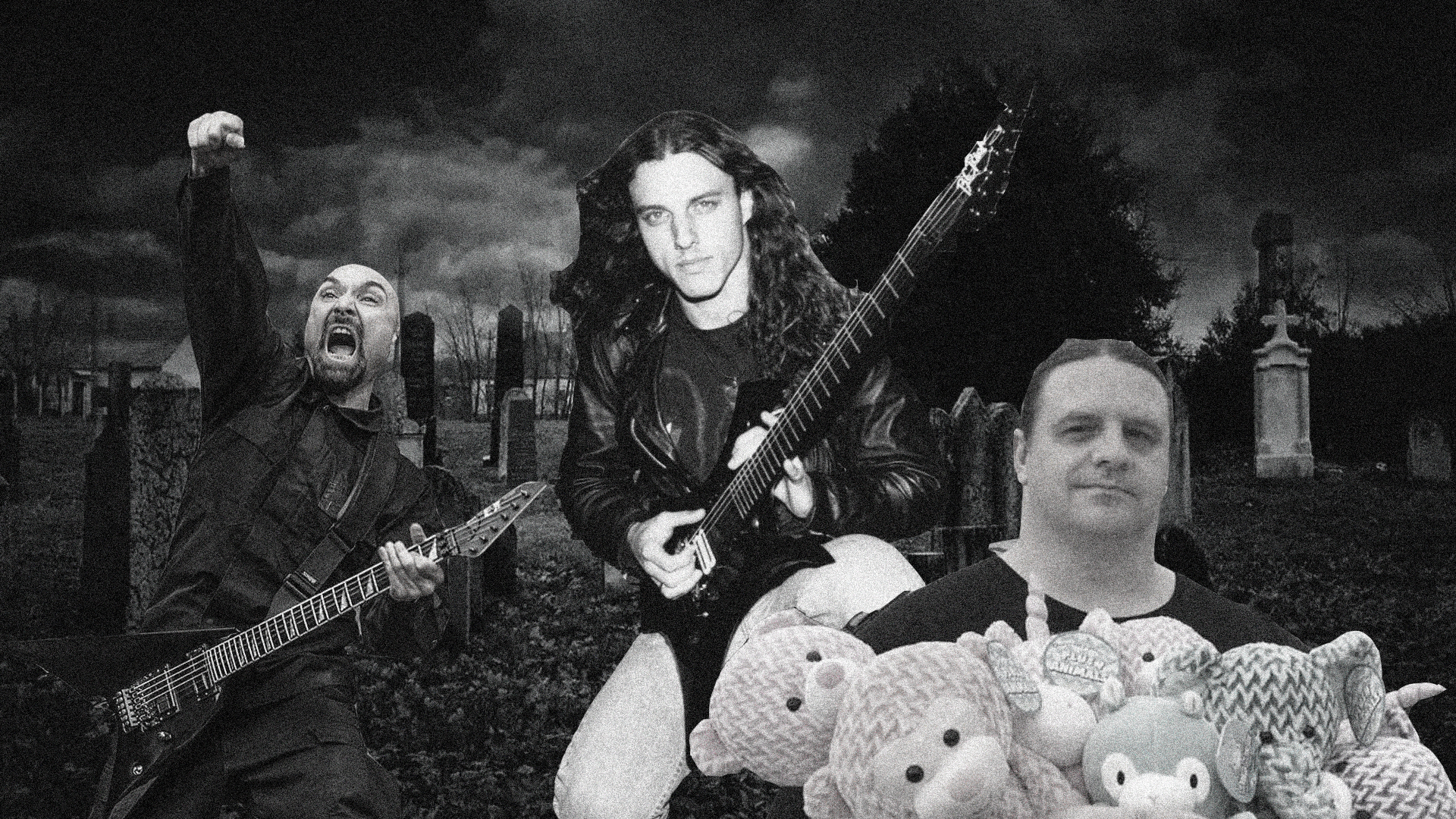
Anyone who hasn’t just Googled this like I did probably thinks Chuck Schuldiner invented technical death metal. But he didn’t. Two albums beat him to it in 1990: Nocturnus’ The Key (which is super super weirdo Scooby-Doo space metal) and Atheist’s Piece of Time, a full year before Human rewired everyone’s brain. Yeah, that Atheist. The band that just toured with Cryptopsy last year like it was no big deal. They were undeniably first on the ball, in the same way Kwame Brown technically played in the NBA before LeBron James: historically correct, spiritually misleading.
Chuck was the first guy to say, "Oh yeah, we’re definitely doing this," and then actually commit to it. Odd time signatures, sprawling song structures, riffs so wrist-mangling they should’ve come with a health warning, he went headfirst into all of it, like a guy trying to speedrun enlightenment. And then he named the album Human. Just Human. At a time when bands were naming records things like Altars of Madness and Mental Funeral, Chuck Schuldiner went the other way.
It’s the most restrained flex in the history of metal: pure, stripped-down existentialism, delivered with anger and heartbroken spleen. So no, he didn’t invent technical death metal. But he gave it a spine. He made it real. No one stumbled into the sound the way thrash metal accidentally mutated into death metal. Chuck didn’t trip over it, he declared it. LeChuck pointed at the future and growled: "it’s happening. Deal with it."
Human also did something subtly subversive: it made room for bass. Say what you will about the instrument, but it’s never really been the cool kid in rock or metal. In jazz? Sure. But in metal, bass players were usually treated like interns with amps. That changed here. Once the jazz influence seeped in, once tech-death musicians cracked that particular lid, it couldn't be closed again. The genre got infected with theory, with groove, with the kind of musical complexity that made you question whether a guy named Steve DiGiorgio was secretly the real frontman.
The compositions got wider, stranger. They drifted, sometimes right out of metal entirely. The neoclassical intro to Lack of Comprehension sounds like something Yngwie Malmsteen would hum while buttoning his pirate blouse in the morning. Cosmic Sea adds ambient keyboard textures like it’s auditioning for a sci-fi movie no one had the budget to make. Human obliterated expectations for what death metal could be, and it did it without apologizing for a single fretless note.
But if you thought Schuldiner was boundless and weird, that’s only because you hadn’t heard what Paul Masvidal and Sean Reinert were cooking with Cynic. When they dropped their seminal record Focus, it made the rest of the Florida scene sound like cave dwellers pounding rocks. Masvidal and Reinert were technically part of the same movement, but what they released felt as divorced from traditional death metal as a drunk mom belting out Adele at Monday night karaoke: emotionally intense, not quite herself and one or two decisions away from new beginnings.
Yes, Masvidal’s shrieks sometimes hit Schuldiner-adjacent frequencies, and sure, a few riffs could’ve snuck onto a Necrophagist record without anyone noticing. But that’s where the similarities end. Focus was a labyrinth of riffs, of tempos, of unexpected detours into ambient soundscapes, long jazz breaks, and those vocoded vocals that sounded like a cyborg trying to process grief.
We call Cynic death metal today mostly out of legacy convenience. Back then, Masvidal and Reinert didn’t seem interested in the whole "I drink blood and hate my dad" persona that came standard with the genre. They weren’t angry. They were curious. Less "maggots in your skull" and more “woo! Transcendence, motherfuckers. I see God when I meditate.”
Lastly, if technical death metal didn’t fully follow Masvidal and company into the astral plane of synth pads and spiritual awakenings, it’s largely because of Suffocation. They made it cool to solve calculus problems with sledgehammers. Terrance Hobbs and Frank Mullen weren’t out chasing transcendence. They were wearing shirts with logos that looked like tree branches having a seizure, hanging out in parking lots between sets, and being unapologetically metal as fuck. And honestly? Same.
I’m one of these guys.
This is where the genre splits, and we’ll be returning to this divide often: the guitar nerds vs. the music theory philosophers. It’s like high school, except no one got stuffed in a locker. At least, I hope not. But the tension between those two worldviews, the pit and the conservatory, is what shaped tech-death into what it is today: a genre that can melt your face and correct your scales.
Wait, what's the difference between tech death and prog death?
Glad you asked.
Here’s the simplest way I can break it down: technical death metal is about writing songs that are hard as hell to play. Progressive death metal is about writing songs that are hard as hell to predict. If your song is twelve minutes long and includes a three-minute pipe organ solo two-thirds of the way through? That’s prog as hell. It’s practically wearing a cape. But if your song crams thirty-one face-melting riffs and three solos into a forty-second window that not even a computer could sight-read without overheating? That’s tech death. That’s wizardry with a concussion.
The confusing part, and this is where the genre tags start getting blurry, is that you can totally be both. And a lot of bands are. It's normal for a talented and forward-thinking musician to want to do both. But the intent is different. Tech death wants you to say, "How the fuck are they doing that?" Prog death wants you to say, "Where the fuck is this going?" One is a showcase. The other is a journey. Sometimes it’s both. And sometimes it’s just a mess.
Take Death, for instance. They're a technical death metal band, no question, but LeChuck (a.k.a. Chuck Schuldiner, but he's symbolically 6 foot 8 and able to fly) often veered into weird, progressive territory, especially on Individual Thought Patterns and Symbolic. So yeah, Death can be considered both. That’s part of why Schuldiner remains one of the most influential metal musicians ever: he didn’t just play better than you, he thought bigger, too.
Nile is another good example. They’re firmly in tech-death territory: blastbeats, fretboard gymnastics, lyrics that read like cursed museum plaques, but every now and then they’ll throw in a weird twist that has nothing to do with ancient Egyptian gods. Like they forgot their brand for a second and just went, "Screw it, let’s get weird."
And then there’s Opeth, who sit comfortably in the progressive death metal camp. Miguelito Åkerfeldt doesn’t want to melt your face, he wants to caress it with a 14-minute song about the burden of memory. The man wants to shred and tell stories, preferably while surrounded by fog machines and sorrow.
Does it make any of this any clearer?
A Mandatory Detour Up North
Before we dive into the German virtuosos and shred-happy brainiacs of the 2000s, we need to take a detour north. Because for reasons that probably involve long winters, aggressive Catholicism, and a national tolerance for unnecessary complexity, an abnormal number of extremely influential French Canadian bands decided to follow the brutal path.
The Quebec tech death scene was and still is the real deal. It didn’t just keep the Suffocation lineage alive; it sharpened it, trimmed the fat, and injected it with a level of discipline and precision that bordered on monastic. It became measured brutality: riffs that hit like a snowplow and arrangements that made classical composers nod from beyond the grave.
Honestly, I’d argue that a lot of what death metal has become, especially the modern, ultra-tight, blast-happy iteration, can be traced back to what was coming out of Quebec in the late '90s and early 2000s. These bands raised raise the bar. They put it in a place only other Québécois bands could reach.
First and arguably most important is Cryptopsy. If you’ve ever wondered what the Blasphemy Made Flesh and None So Vile era sounds like, imagine throwing Cynic, Chris Barnes-era Cannibal Corpse, and Terje Rypdal into a blender, vomiting blood on the result, and serving it cold. Early Cryptopsy didn’t sound like anything else because it didn’t behave like anything else. The music was complex, yes, but not in that academic, look-at-my-scale-work kind of way. It felt volatile. Cosmic.
Like the riffs were being channeled from a much meaner version of God.
Their contribution to technical death metal was the comet that wiped out the dinosaurs and rewired the food chain. After None So Vile, you couldn’t just be brutal, and you couldn’t just be fast. You had to be deranged and flawless at the same time. Cryptopsy reset the genre’s gravitational pull.
The other ancient deity north of the border is Gorguts. Their 1998 record Obscura was a controlled demolition of what song structure and riff-writing even meant. It didn’t sound like anything. It sounded like everything breaking at once. Dissonant. Avant-garde. So far out there it made other death metal bands seem like they were playing bar mitzvahs by comparison.
Obscura was another paradigm reset, but this time the paradigm wasn’t just death metal it was music theory, spatial awareness, and maybe time itself. And to this day, it remains one of my favorite death metal records ever. I’d argue into my grave (while still screaming in 7/8) that Obscura paved the way for some of the weirdest, most inspired bands working today. Chief among them: Portal. You know, the Australian band whose vocalist performs wearing what appears to be a haunted cuckoo clock on his head.
They sound like they were summoned by Luc Lemay while writing Obscura.
Imperial Trumphant is another band who's quite influenced by Gorguts. Most (if not all) of their albums are produced by Colin Marston, a member of the band. But they're also too weird to be tech death. They're avant garde something.
Oddly enough, it was the lesser-known Martyr who offered the clearest peek into what would eventually become the modern style of technical death metal. Their albums Hopeless Hopes and especially Warp Zone were cleaner, sharper, more surgical, like someone took the blood-slick chaos of the '90s and turned it into a monument. Dan Mongrain’s guitar work was god-tiered shredding with a jazz brain and a death metal soul. Warp Zone sounded like the future and in hindsight, it basically was.
Other Quebec bands like Neuraxis and Quo Vadis also left their fingerprints on the scene. Neuraxis in particular embodied the precision and melodic layering that would become tech death’s next obsession. Their bassist, Olivier Pinard, eventually joined Cryptopsy and spent years playing with Cattle Decapitation, which means his DNA is now baked into at least three branches of the extreme metal family tree.
So while Cryptopsy and Gorguts dropped the paradigm-shifting bombs, Martyr and their peers were out in the field rebuilding the ruins, quietly pioneering a more refined, streamlined version of the genre. Quebec was a blueprint factory. The rest of the world just took a while to catch up.
Where Things Get Really Crazy
So yeah, the world finally took notice.
Which means it’s time to talk about Necrophagist. The one band technical death metal fans have never truly gotten over. They’re like that ex: fun, mysterious, brilliant, great in bed, spoke three languages, probably read Kierkegaard and somehow, you still took them for granted. German mad scientist Muhammed Suiçmez took tech death to places it had never been before, and honestly, places it might never reach again.
The two Necrophagist albums, Onset of Putrefaction and Epitaph are the Ride the Lightning and Master of Puppets of technical death metal. Genre-defining. Untouchable. Still studied like ancient scrolls by dudes with seven-string guitars and tonewood opinions. And then, just like that… nothing. Ghosted by greatness. No third album. No closure. Just a world full of YouTube guitarists trying to decode what the hell happened.
Quick aparté that might get me death threats: I saw Necrophagist live once and I barely paid attention. There was a time when they were touring constantly, and my friends literally stuffed me into a car trunk to get me to the show. (True story. Montreal friendship runs on coercion and blast beats.)
And I’ll admit it: I didn’t get it. Not fully. Not then.
The thing is, a lot of metalheads are secret musicians. Guys who shred alone in their garage with Pro Tools and an inferiority complex, convinced they should be the ones on stage, being worshipped, analyzed, deconstructed on gear forums by other music theory warlocks. Necrophagist was like the final boss for these guys. A ghost with perfect tone. A legend who dropped two impossible records, toured like a phantom, then walked away undefeated.
No scandals. No decline. No bloated comeback album. Just silence.
Which is why the speculation never dies. Did Suiçmez get bored? Did he lose his passion? Is he secretly working on a new record that’ll melt the planet’s crust? You’ll find Reddit threads with theories more elaborate than for The Leftovers. At this point, Necrophagist isn’t even a band anymore. It's a sacred math problem. A reason to keep practicing.
But they were not alone.
Their aptly named German counterparts Obscura were also starting to turn heads. Obscura were part of that post-Necrophagist wave of technical death metal bands who (let’s be honest) really wanted to blow the minds of guitar nerds. The genre started to revolve around sweep picking, ring modulation, and a whole lot of Pro Tools gymnastics. Somewhere along the way, tech death became less about being heavy and more about being impressive. For the untrained ear (like mine, back then), it just became a lot.
Not to disrespect anybody involved, but a lot of the bands from that era tend to blend together for me, like variations on the same extremely fast, extremely complicated dream. Gorod, The Faceless, Beyond Creation (apologies to my fellow Quebecers), fucking ARCHSPIRE, they're all clearly brilliant. The playing is next-level, the production is clinical in a good way, and the fretboards get no rest.
But listening to them feels less like enjoying music and more like trying to follow a heated academic debate in a language I never studied. I can tell it means something. I can tell it’s probably profound. But my ears aren’t built for this kind of geometry. These bands were turning music into a math problem I didn’t know I’d signed up to solve.
I do enjoy the more brutal side of the spectrum. Bands like Spawn of Possession, Ulcerate (a kind of cosmic death-doom-prog-tech hybrid that deserves its own taxonomy), Defeated Sanity, and Demilich. Now, technically, Defeated Sanity and Demilich date back to the early '90s, but they didn't fully click with the scene until tech death’s more flamboyant pioneers paved the way for grotesque complexity to feel culturally normal.
Both bands adjusted their sound over time, becoming even more labyrinthine and dissonant without sacrificing that cave-dwelling violence. And I’ll be honest: I can absolutely love something even if I have no fucking clue what’s happening. It just needs to explode in my ears like a sentient bomb. I’m an energy-over-precision guy. Sue me.
Where technical death metal stands today
You know that Suffocation–Cynic schism?
Yeah, well, its aftershocks are still rattling the genre. The gruffer, more organic camp took an increasingly abstract turn, trading blunt-force trauma for psychological warfare. Bands like Ulcerate, Artificial Brain, Pyrrhon, and the ever-resilient Gorguts turned tech death inward. These guys want to map the contours of existential dread with sound. The result is emotionally colder, more contemplative, and in its own pissed-off way, profoundly human.
Dissonance became the genre’s new emotional register. And yeah… I admit it: I love when it goes BLOOIING like a jazz band possessed by the ghost of a malfunctioning MRI machine.
The other faction, the clean, hyper-precise guys, went full cyborg. Speed, clarity, and jaw-dropping execution became the standard. A personal favorite would be Inferi, who somehow maintain a feral energy under all that surgical polish, thanks in no small part to their charismatic frontman Stevie Boiser. There's passion in their playing, a rare commodity in tech death’s post-human tier.
Then there’s Archspire, who are basically the final form of the genre. They’re dominant, they’re respected, they’re technically untouchable… but also, listening to them is like getting beaten to death by a spreadsheet. I mean, it's impressive, but halfway through an album, I start to wonder if I’ve heard four or five songs or just one really long BPM arms race. It’s like speedrunning music theory.
As is often the case with modern twists on old genres, there are bands who don’t quite fit anywhere. I’m already bracing for the virtual rocks, but here goes: Fallujah feels like a weird hybrid of tech death and proggy, atmospheric weirdness. Sure, they made their name playing deathcore, but these days? They’re clearly somewhere else, and it’s honestly fascinating to watch. I'm low key a fan.
Then there’s the djenty side of things: Rings of Saturn, TesseracT, and their kin, but that’s a whole can of worms for another day. Let’s just say it’s complicated, and I’ll need a stronger coffee before diving in. Here are five songs to familiarize yourself with technical death metal.
Nocturnus - Lake of Fire : Technically, this is the first technical death metal song ever recorded. Sorry in advance to any Nocturnus members who might be reading this, but honestly? This is funny as hell. It sounds exactly like a death metal band who got bored of blast beats and tired of schlocky lyrics, so they decided to "try some new shit" before anyone else even thought to ask.
Weird keyboards, odd riffs, and that unmistakable feeling of a band still figuring out what “technical” even meant. It’s awkward, it’s charming, and it’s absolutely essential.
Death - Lack of Comprehension : Big dog Chuck doing what he does best: thinking outside the box, getting bored of brutality for brutality’s sake, and, most importantly, having feelings. This was metal with a brain and a heart. I'm not the biggest Death guy, but Schuldiner was the single most important musician in the genre.
Back then, Chuck was already breaking our brains by ditching the usual verse-chorus-verse and diving headfirst into jazz-inflected oddities, jazzy as hell in an era when metalheads still thought jazz was just "music for old dudes." It’s a masterclass in being technical without sounding like a robot, and proof that death metal could feel as much as it could shred.
Necrophagist - Stabwound : Arguably the most discussed, and dissected, song in the Necrophagist canon. This is a straight-up dude-ish dare between guitar geniuses. Like Muhammed Suiçmez leaned in and said, "Oh yeah? Try playing this, bruh."
And then an entire generation of lonely, artistically tortured dudes spent years suffering at the altar of the almighty Suiçmez, fingers bleeding and egos bruised. Stabwound is the ultimate tech death flex: brutal, precise, and utterly merciless.
Archspire - Drone Corpse Aviator : I mean, what the hell is this even? I don't even know what to say about it. Just listen, it speaks for itself.
Demon King - Incineration Mantra : Friends of Inferi who absolutely deserve more recognition. They lean toward the slick, crazy-precise end of the tech death spectrum, but there’s an infectious grit to their sound that keeps it from ever feeling sterile. Think of them as the perfect balance between clinical virtuosity and raw, punch-you-in-the-gut energy. If you like your tech death with some bite, this is your band.
* Follow me on Instagram and Bluesky to keep up with new posts *