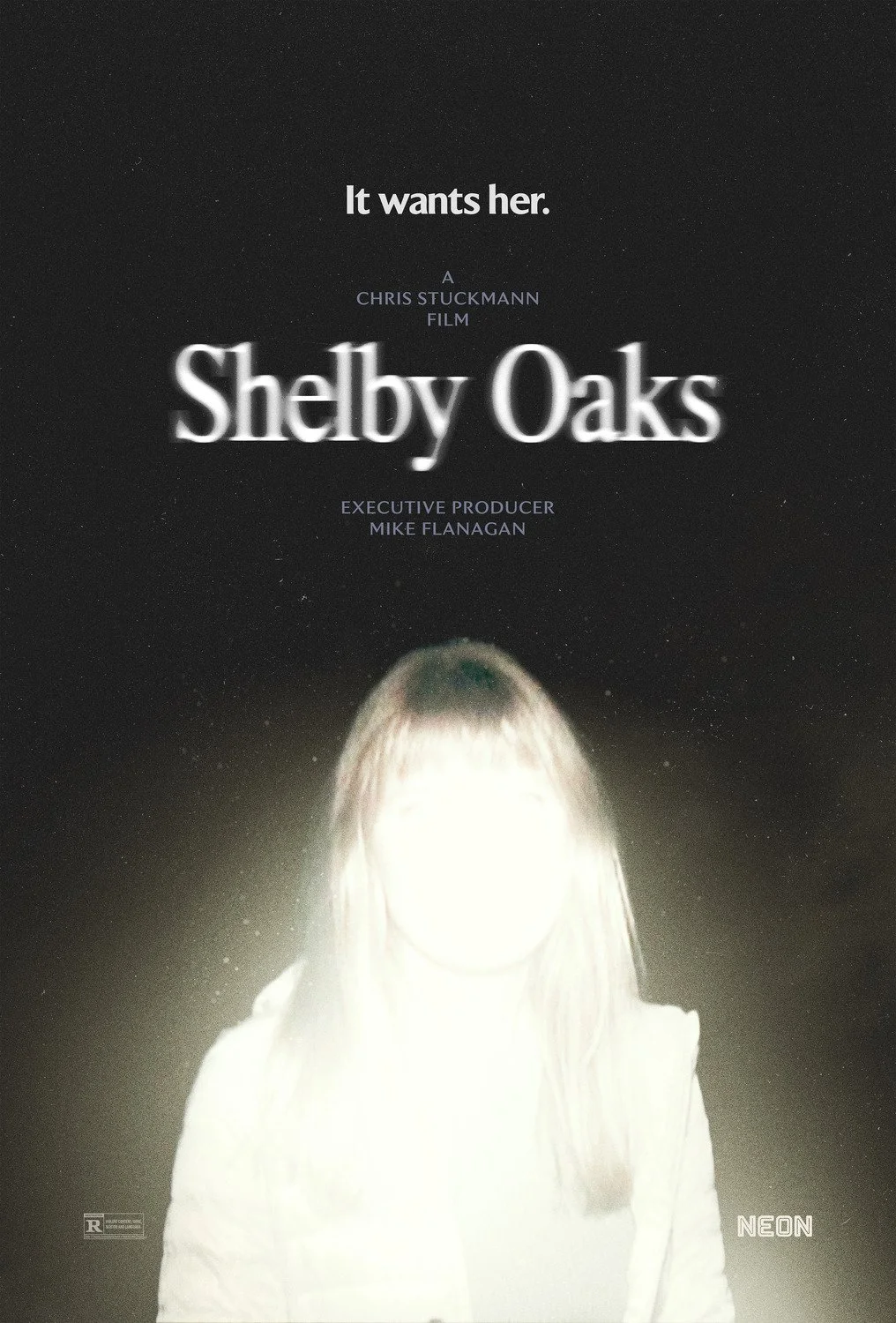
Movie Review : Shelby Oaks (2025)
I remember always being slightly disappointed by horror movies as a child. Although my parents treated them like they were moral toxic waste, they've felt manageable. My primary fear until twelve years old was to get abducted by creepy strangers and none of them really reflected that That's why I would've probably been terrified by Chris Stuckmann's movie Shelby Oaks, were it on late night television in 1994. As an adult, I've found it unsettling even if it had technical limitations I would've been oblivious to as a kid.
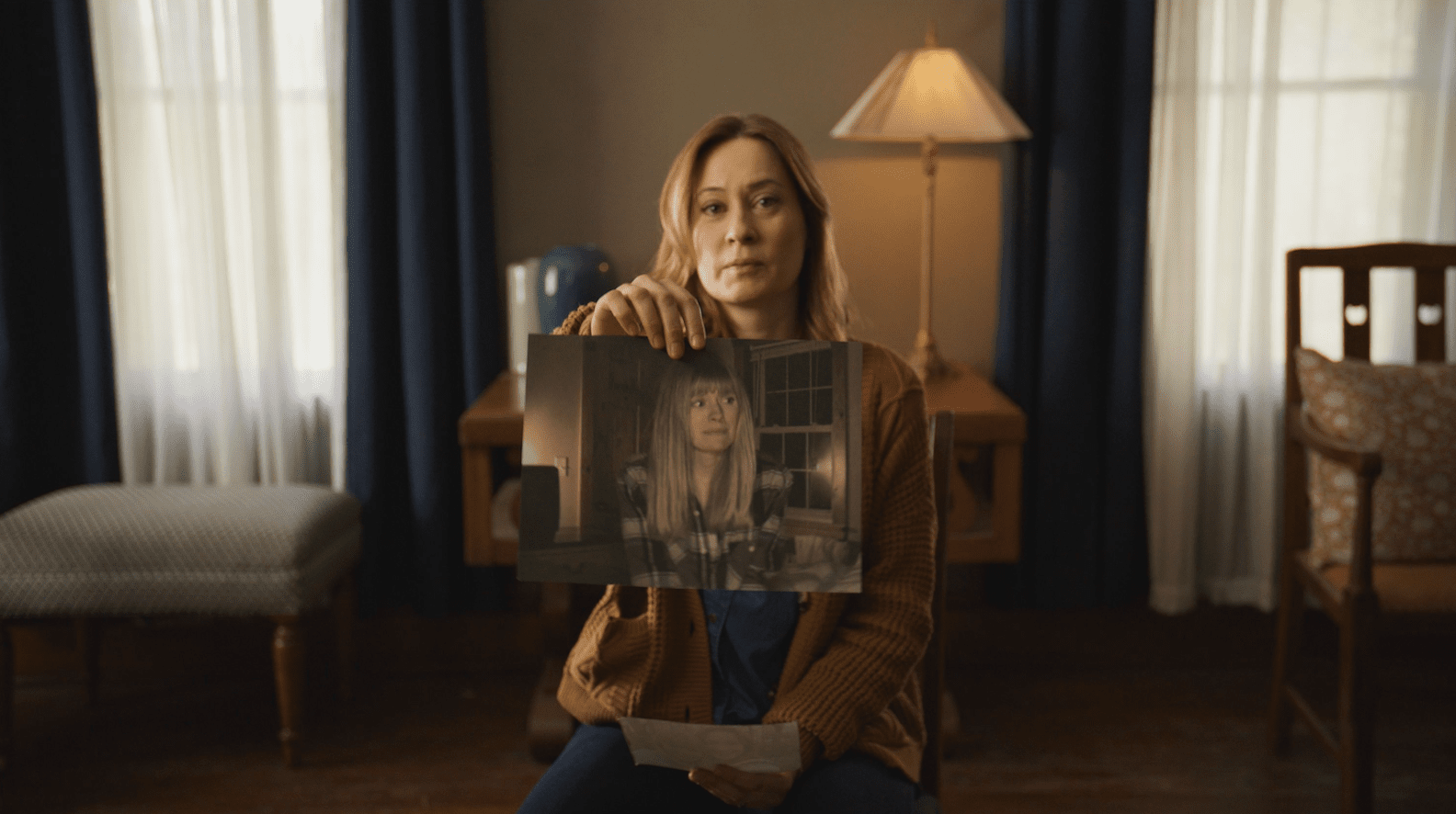
On the surface, Shelby Oaks tells the depressingly mundane story of paranormal YouTuber Riley Brennan (Sarah Durn)'s disappearance. She vanished from the face of the Earth and everybody figures that she's just buried somewhere until the day a man (Charlie Talbert) shows up on her sister Mia (Camille Sullivan)’s doorstep twelve years later, gives her a tape and shoots himself in the head. There's more to Riley's disappearance than just murder. She got caught by something no one understands.
The Face(s) of Evil
Most horror movies make a choice early: the threat is either human or cosmic. It’s a killer with a knife, or it’s something ancient and unknowable lurking behind reality. What makes Shelby Oaks quietly effective despite often looking like a lost episode of Buffy the Vampire Slayer using free CGI plugins from Y2K-era internet is that it refuses to fully commit to either option. The movie exists in an uncomfortable middle space where the evil is technically present, technically visible, half-explained and still impossible to understand.
That’s a dangerous strategy. Most horror films collapse the moment the monster shows up. The unknown becomes known and the fear slowly drains out of the room like air from a punctured tire. Shelby Oaks somehow pulls the opposite trick. The more it shows you, the worse it feels. And that’s interesting.
What makes the movie’s central idea unsettling is how little supernatural glamour it has. The suggestion isn’t that certain people tap into forbidden cosmic knowledge or unlock some secret magical dimension. It’s worse than that. The implication is that ancient, incomprehensible evil occasionally expresses itself through completely normal human beings. No ritual. No prophecy. Just ordinary people briefly functioning as conduits for something they don’t understand.
That possibility mirrors the same bleak unknowability that already exists in the real world. Abduction and murder are horrifying enough on their own terms. Shelby Oaks quietly adds another layer: what if those acts weren’t random or purely human, but small mechanical parts in a much darker design whose only purpose is to keep evil circulating through reality?
That’s an idea aimed squarely at adult fears. And at times, the film actually gets there.
The Curse of Almost Great Movies
The cruelest flaw in Shelby Oaks is that it’s about five minutes too long. The movie lands on the exact ending it needs and then keeps talking. It tries to clarify the machinery of the nightmare we’ve just experienced. That instinct is baffling, especially when you notice that horror royalty Mike Flanagan is listed as an executive producer. One imagines a quiet moment where someone might have told Chris Stuckmann that uncertainty is the mother of all terrors and that explaining the monster is usually the same thing as killing it.
But modern horror doesn’t exist in a vacuum anymore. It exists in the ecosystem of YouTube explainers and Reddit threads where audiences immediately begin reverse-engineering the lore. There were people online claiming they had been part of Shelby Oaks focus groups. And focus groups, historically, possess a supernatural ability of their own: the power to turn to make the bullets disappear a firearms. Random people's opinions will turn any lethal wildlife predator into a house pet.
The other limitation hanging over Shelby Oaks is the budget. It feels cruel to hold that against a film financed through Kickstarter, but the gap between ambition and resources is impossible to ignore. When the main antagonist finally appears, you may have to suspend disbelief hard enough to forget every late night you’ve spent playing Diablo III while pounding jugs of Mountain Dew. The visual language just isn’t quite there yet.
Some low-budget horror films lean into that problem. They get scrappy, self-aware, occasionally even comedic about their own limitations. Shelby Oaks doesn’t do that. It plays everything straight. And you can clearly see what Chris Stuckmann is reaching for, a kind of cosmic dread that deserves a much bigger canvas than the one he currently has.
Which, oddly enough, makes the movie a little heartbreaking. The ideas are stronger than the resources available to realize them.
*
Shelby Oaks is absolutely worth seeing and more importantly, worth letting it scare you. It asks for a little good faith along the way, but the gamble pays off more often than it doesn’t. What makes the film compelling is how stubbornly it refuses to settle into a single category, drifting in the uneasy space between supernatural horror and psychological breakdown in a way that is obviously influenced by Hereditary.
And honestly, movies that are interestingly flawed tend to linger longer than the ones that chase technical perfection. Shelby Oaks may not fully realize its ambitions, but the ambition itself is the point. It’s the kind of horror film that feels like it almost discovered something terrifying and that alone makes it more memorable than a dozen safer movies that actually stick the landing.
7.2/10
* Follow me on Instagram , Bluesky and Substack to keep up with new posts *