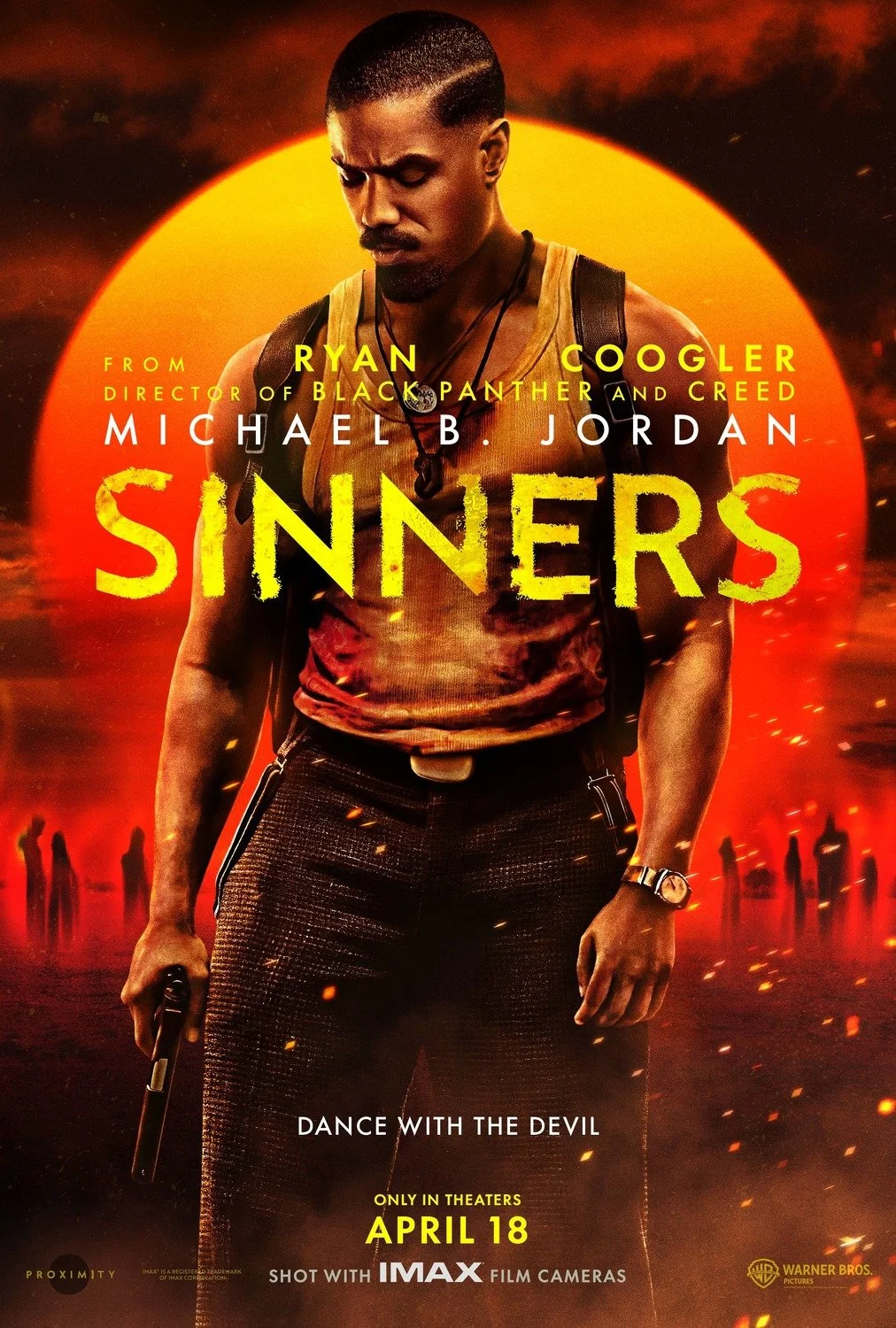
Movie Review : Sinners (2025)
Ryan Coogler has never really disappointed me, but he’s never swept me off my feet either. At least not the way people claim to be enraptured by the films of Ryan Coogler either, but he either tells intelligent stories or dumb stories, but in an intelligent way. That’s more than most film directors do. What makes his latest movie Sinners interesting is that I’m not sure on what end of the spectrum it falls on. I just know that I liked it even if I really don’t care about vampire movies anymore (who does?) and I find it intriguing.
Sinners tells the story of Preacher Boy Sammie (Miles Caton), a young, talented bluesman recruited by shady businessmen returning to town (both awesomely played by Michael B. Jordan) for the opening of a new night club in 1932 Mississippi. I’m sure you can imagine white folks having their panties twisted in a bunch as we still often do, but the main threat doesn’t come from the cartoon racists up front. It comes from creepy people who feel they have something in common with the sinners of the night.
It’s really about Preacher Boy
There are a lot of interesting (and less interesting) ideas swirling around Sinners, but it’s a less complicated movie than it seems. Strip away the supernatural coating and what you have is a story about a young artist staring down the choice every young artist eventually faces: stay true to what he is, or bend into whatever shape the world demands. Which is both profound and kind of obvious, depending on how you feel about artists in the first place. Sinners is the story of what lead him to having to make this choice.
In the opening scene, Preacher Boy is limping into a church, bruised and battered like he’s been worked over by the devil himself and told he can only be saved if he renounces the very thing that makes him who he is. One of the things Sinners nails is the way it frames the blues as more than just music. For Preacher Boy, it’s basically a spiritual Wi-Fi connection.
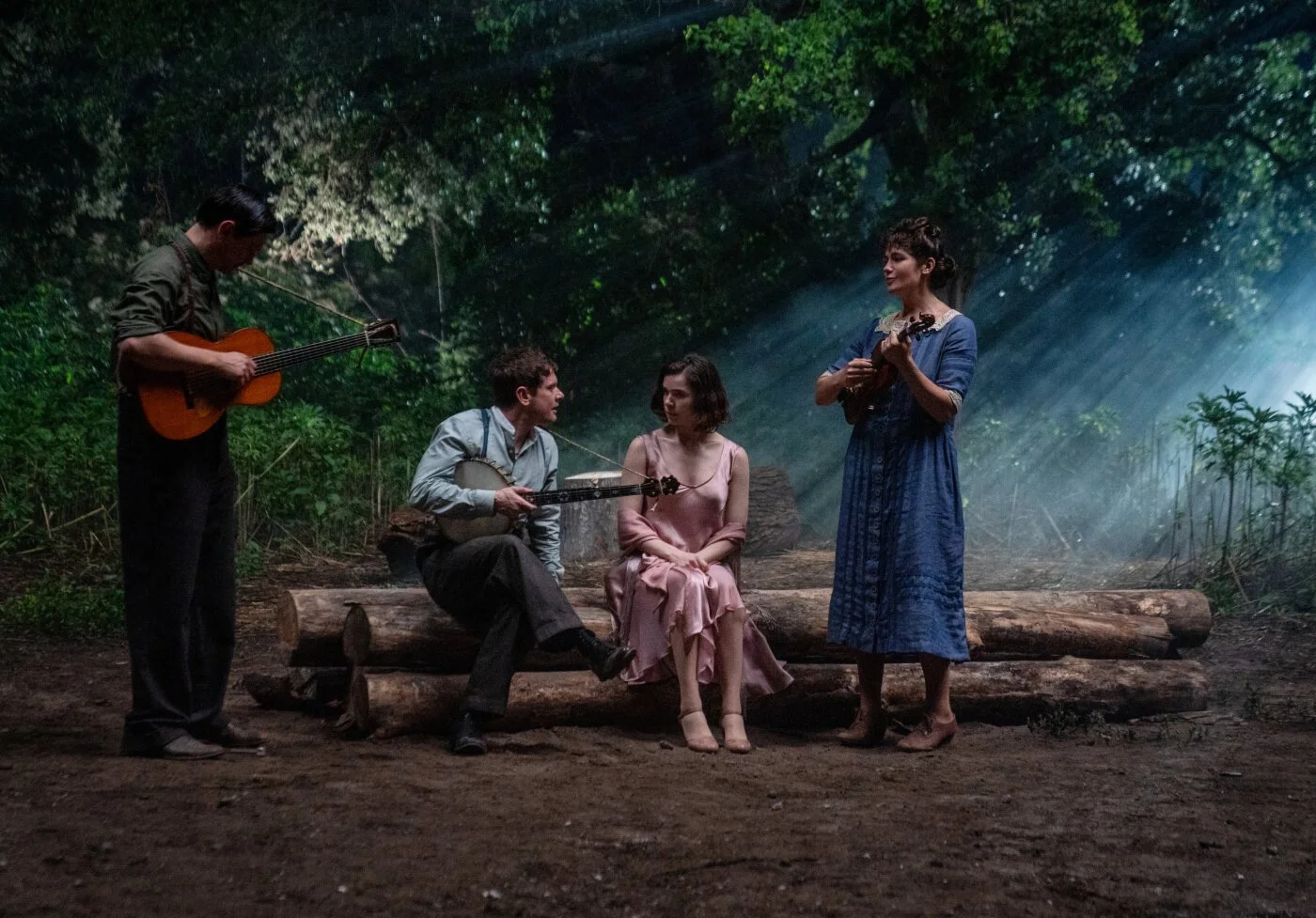
About a third of the way in, there’s this gorgeous, Moulin Rouge style sequence that depicts the blues as a kind of ghost language, one where generations can talk across time without bothering with words. Preacher Boy doesn’t just play it; he’s fluent in it, like he was born already tuned to the frequency.
The choice of Preacher Boy between religion and spiritual connection is motivated by a single night where he's both witnesses the power and the beauty of his gift, but also its fragility. When the juke joint is attacked by literal singing vampires, it’s not just that voices are silenced; they’re absorbed into an entirely different form of expression. One that erases the blues as lived experience and rebrands it as something abstract, bloodless, and foreign from Black culture.
That’s when Preacher Boy gets it: his choice isn’t just personal, it’s historical. To renounce himself is to let the whole lineage vanish. Coogler teases this realization out slowly, and when it lands, it’s less "gotcha twist" than the steady hum of an artist understanding why he can’t afford to give himself away. Not only that is relatable, but that is also inspiring. Authenticity as a weapon to transcend death.
The Part That’s About Racism
I have to talk about it, don’t I? II’ve never liked movies that bludgeon me with history I already know, the way a bitter high school teacher assumes you’re stupid before you’ve even taken your seat (trust me, I had plenty of those), but Sinners is rather crafty with the tricky stuff. Ryan Coogler works the history kind of like Jordan Peele does: through allegory sharp enough to draw blood without you realizing you’re cut. What he’s really after is one of racism’s slipperiest blind spots: cultural appropriation.
There are two types of racists features in Sinners. First, you’ve got the obvious kind: the hood-and-torch racists who instantly curdle into the worst version of themselves at the sight of a black person. Those people existed then, they exist now, and don’t require much explanation. They’re merely a side dish in Coogley’s visual buffet, though. A palate cleanser. The scarier threat comes from the other side: the literal vampires, who don’t hate Black culture so much as they crave it, feeding on it until nothing is left.
They don’t just silence voices, they recycle them into their own reflection. In the movie they’re undead nightclub ghouls; in real life they’re record executives, festival bookers, or anyone who figured out how to turn black expression into a white commodity. Where do you think rock ’n’ roll came from? How many black rock bands have you seen topping the charts past 1965? And even then I’m generous. Chuck Berry and Little Richards were grandfathered into culture, but they were alone for decades.
That’s the quiet horror Coogler’s tapping into: appropriation as a more polite, insidious racism. One doesn’t burn crosses, but swallows culture whole and calls it progress.
*
At the end of the day, Sinners is just a good movie, and that’s the point. I initially thought I would dislike it for being too simple and straightforward, but I actually enjoyed it for being simple and straightforward .Sinners doesn't reinvent cinema or lecture you into enlightenment. It’s the work of a filmmaker who’s confident enough to know he’ll have other chances to swing for the fences, so here he just makes contact and it’s a clean hit.
What you get is a fun, weirdly affectionate horror story about white people literally being vampires, stitched together with the kind of detail and care most directors save for their "serious" projects. Coogler treats drive-in cienma like it matters, which is why Sinners ends up feeling more alive, and more thoughtful, than most movies of its ilk.
7.7/10
* Follow me on Instagram and Bluesky to keep up with new posts *