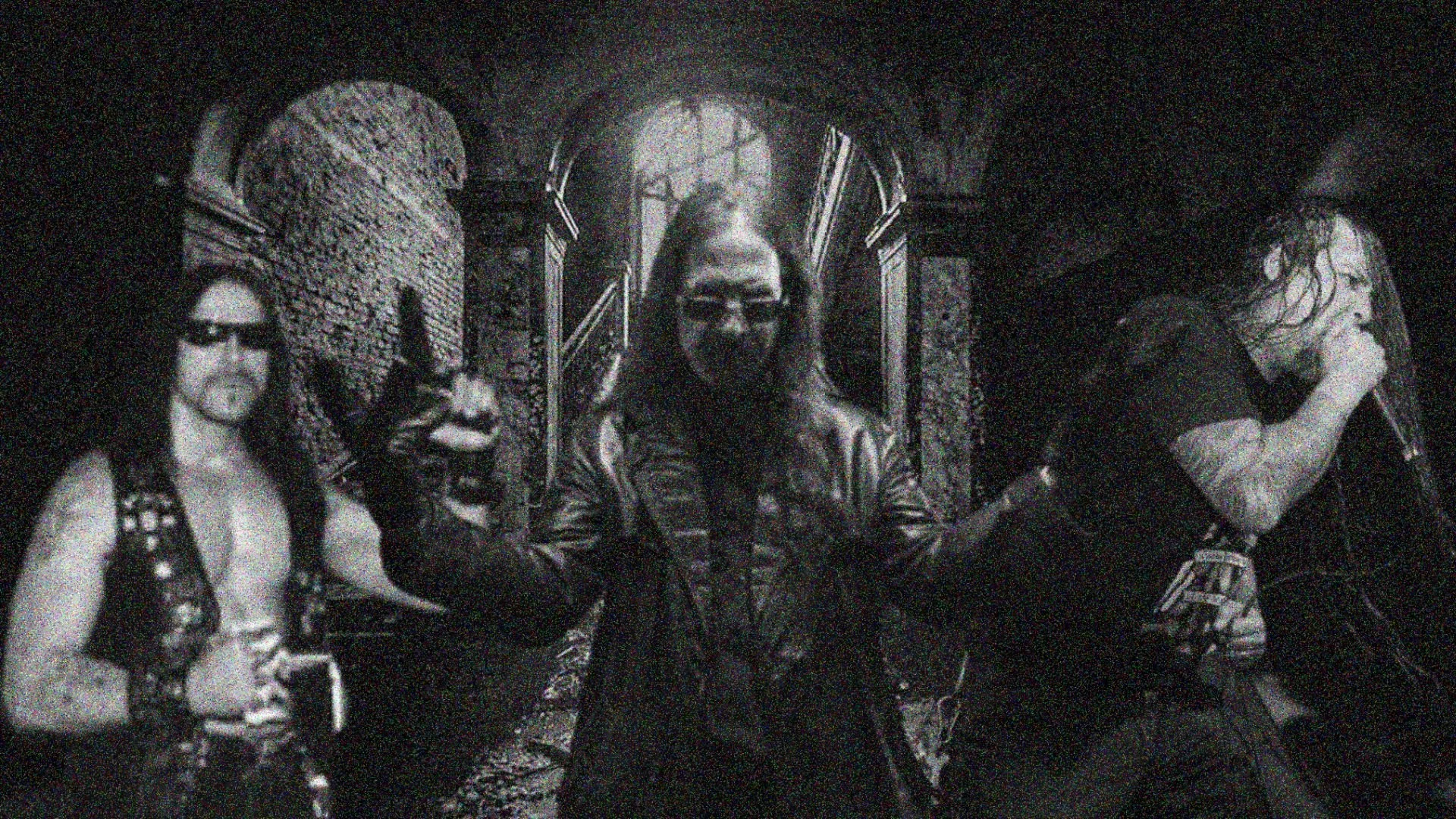
A Subjective History of Brutal Death Metal
The phrase brutal death metal should be tautological, but it’s not. In theory, it’s like saying "frozen ice" or "caffeinated coffee". There’s nothing about death metal that isn't already exquisitely brutal. The entire point of the genre was escalation: faster drums, uglier guitars, lyrics that sounded like they’d been written by a maniac inside a slaughterhouse during a thunderstorm.
But somewhere in the middle of this arms race toward sonic annihilation and increasingly ghoulish poetry, a strange counter-proposal emerged. A guitarist from Florida named Chuck Schuldiner suggested something quietly radical: death metal could also be thoughtful. It could be philosophical. It could be the kind of music you headbang to and think about at the same time.
Starting with Human in 1991, death metal became intellectual and introspective. Chuck Schuldiner slowed the whole enterprise down just enough to let actual ideas percolate. Monster hit, Lack of Comprehension even opens with a long, melancholic bass intro that sounds less like something from a Moody Blues record. It’s cripplingly beautiful in a way death metal was never supposed to be.
But metal scenes rarely move in one direction for long. The moment Schuldiner suggested death metal could be thoughtful, someone else decided it should instead become even more savage. The seeds of brutal death metal had already been planted, but Human accelerated the reaction. If Chuck Schuldiner was turning death metal into music for thinkers, someone else was going to turn it back into something closer to a demolition derby.
That someone might have been a fretboard mad scientist from New York named Terrance Hobbs. I’m not saying that it’s him, but he’s involved somehow. A new, nuclear breed of death metal emphasizing speed, ferocity, percussive power, ridiculously downtuned guitars and a whole new level of disturbing lyrics emerged from the door opened by Cannibal Corpse.
This is my quite personal, highly subjective history of brutal death metal.
A Prelude To A Brutal Death
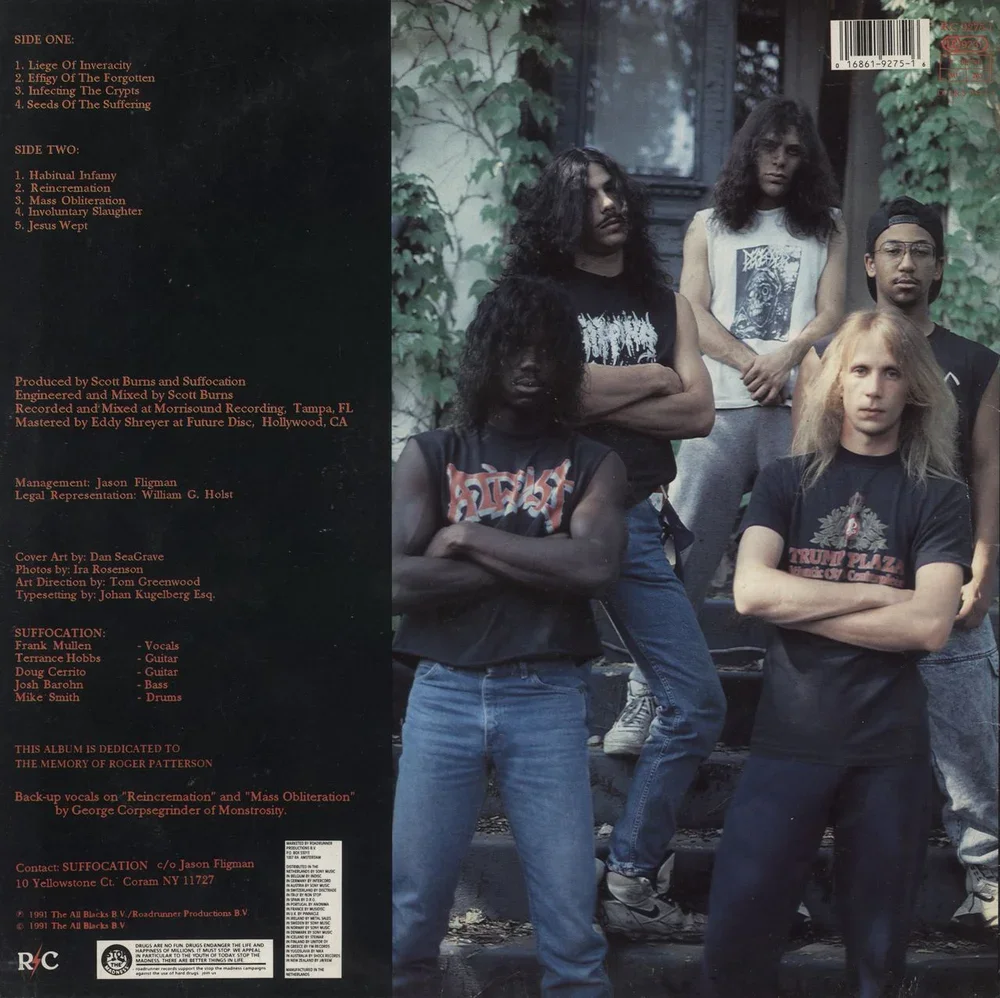
Although Suffocation’s Effigy of the Forgotten is generally recognized as the first true brutal death metal album, the phrase itself is older than the New York pioneers who gave it musical legitimacy. In 1988, Czech band Krabathor (still improbably alive and kicking today) released a demo titled Brutal Death. Around the same time, Michael Amott’s first band, Carnage, reportedly described their sound in similar terms before its members splintered off into what would become Dismember.
But this is where genre history gets weird in the way genre history always gets weird: just because people were using the phrase brutal death metal didn’t mean they were actually playing brutal death metal, at least not in the form the world would eventually recognize. As it was often the case in early years, the most brutal bands played an unnaturally harsh, bastardized take on thrash metal The label existed before the template. The word came first. The violence had to catch up.
The unofficial grandfathers of brutal death metal are Cannibal Corpse. Their first two records :Eaten Back to Life and Butchered at Birth arrived only months before Human and Effigy of the Forgotten, which places them right at the evolutionary crossroads.
If you listen to those albums today, they don’t quite sound like the Cannibal Corpse everyone now instinctively recognizes. The band was still orbiting the gravitational pull of Slayer, playing a faster, more apocalyptic variation of thrash that hadn’t fully mutated into the grotesque organism it would soon become. Even Chris Barnes hadn’t yet settled into the awesome, but long-gone cavernous guttural voice that would define the genre, that would arrive with Tomb of the Mutilated in 1992.
But what those first two records did introduce was something new: a commitment to brutality as both an aesthetic and a philosophy. The lyrics read like splatter movies drawn by someone who owned too many horror comics, and the music matched that sensibility: louder, uglier, and more gleefully excessive than anything death metal had attempted before.
Which brings us to Suffocation and to one of brutal death metal’s least acknowledged influences: New York hardcore. No self-respecting death metal musician will happily admit this, but the stripped-down, utilitarian philosophy of bands like Cro-Mags and Youth of Today quietly shaped the DNA of brutal death metal. Hardcore wasn’t interested in virtuosity or atmosphere. It existed for one purpose: to trigger an emotional reaction from the listener.
That mindset percolated into what Suffocation were doing. Death metal suddenly wasn’t just about the music itself anymore; it was about what the music did to people. The riffs became blunt instruments, the rhythms started to mimic the physics of a collapsing building and the whole experience was designed to provoke something primal in the audience. Brutal death metal became a socially acceptable environment for unleashing your inner violence without anyone actually getting arrested or stabbed.
Effigy of the Forgotten introduced things that felt almost illegal at the time: groovy, palm-muted riffs that lurched at mid-tempo instead of sprinting, breakdowns that seemed engineered specifically to trigger a room full of violent reactions. Remember, these were the baby Pantera years. Chugging riffs weren’t part of cleaner, more accessible genres. This was still boogeyman music at its finest.
The opening track, Liege of Inveracity practically invented its own micro-genre of brutality. The guitars were tuned into something ugly and subterranean, the production had a murky density that made the whole record feel physically dangerous, and Frank Mullen’s guttural vocals sounded like a language no human throat was designed to produce.
It didn’t just feel new. It felt confrontational. Like something that had been waiting to exist.
Children of the New York Scene
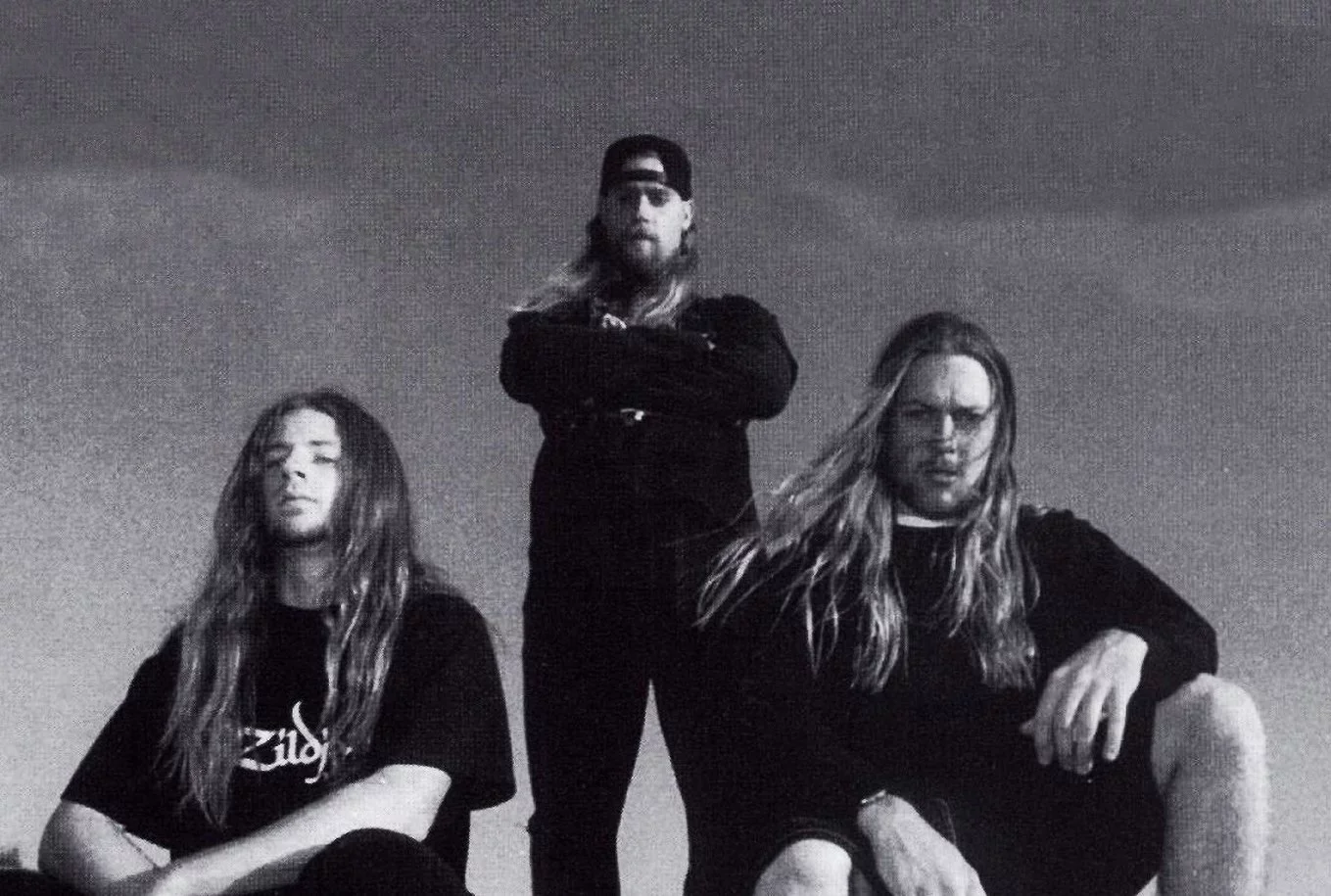
It all started with Suffocation, but the New York death metal scene was quick to follow. cenes like this don’t operate through manifestos, they happen because the same twenty-five people keep showing up at the same clubs and gradually start stealing ideas from one another. Most of these bands knew each other, saw each other play constantly, and were quietly competing over who could make the music feel heavier, uglier, and more physically overwhelming.
Pyrexia formed in 1990. Internal Bleeding followed in 1991. Within a couple of years the region produced a whole ecosystem of extremity: Immolation, Incantation, Skinless, Malignancy, Malevolent Creation and the loveable dirtbags of Mortician. Some of these groups leaned toward hardcore’s blunt-force minimalism, others toward a more suffocating kind of darkness, but they were all orbiting the same gravitational idea: brutality was now the point.
The mutation didn’t stay confined to New York for long. One of the earliest outsiders was California’s Deeds of Flesh, who approached brutality with a colder, more surgical precision. And if you stretch the definition slightly, you could even argue that Deicide briefly wandered into the territory with the relentlessly vicious Legion in 1992. They would eventually drift back toward a more conventional death metal structure with Once Upon the Cross in 1995, but for a moment they were flirting with the same abyss.
As the decade unfolded, the first generation of brutal death metal bands quietly split into two evolutionary paths. On one side were the slamming brutal death metal troglodytes, slowing everything down until the riffs hit like collapsing concrete. On the other were the brutal technical death metal lunatics, pushing speed, precision, and rhythmic complexity to absurd levels. Both camps were chasing the same idea — maximum brutality — but they disagreed completely about how to get there.
Because once brutality becomes the objective, the only logical response is escalation. Why just sound like an axe murderer when you could sound like a collapsing galaxy? By the mid-nineties, bands with absurd levels of technical skill and an almost academic appetite for violence began emerging from places no one expected, each one trying to redefine how overwhelming death metal could be. The genre started feeling like an unhealthy competition centered around the annihilation of eardrums.
Few records captured that moment better than Cryptopsy’s None So Vile in 1996. The album is so obliterating in every conceivable way:speed, precision, vocals that sound medically impossible that it has been confusing new listeners ever since the internet started keeping score. If you search long enough, you’ll find hundreds of Reddit threads dating back to the site's inception full of people asking the same question: "what exactly is happening here?" And your explanation has been as good as any's since then.
Germany’s Defeated Sanity and South Carolina’s Nile also helped define the brutal technical death metal frontier, each approaching extremity from completely different angles. Nile turned brutality into something almost scholarly, building their sound around ancient Egyptian mythology and song titles that read like untranslated museum plaques: Papyrus Containing the Spell to Preserve Its Possessor Against Attacks from He Who Is in the Water or Chapter of Obeisance Before Giving Breath to the Inert One in the Presence of the Crescent Shaped Horns. The music was just as overwhelming as the titles suggested.
Other bands like Gorgasm, Brodequin, Malignancy, and Spawn of Possession pushed the genre’s musicianship to levels that almost felt absurd. The music became so intricate, so violently precise, that it became just impressive. Watching these bands play felt like watching elite athletes compete, except the athletes were wearing Dickies shorts and Vans sneakers. But that was only one direction the genre could take. The other path rejected sophistication entirely. Instead of becoming more intricate, some bands decided brutality worked best when it was stripped down to its most primitive impulses.
Those groups remained terrifying.
GUUURH GURH GURH GURH GUUUUAAAARRGH
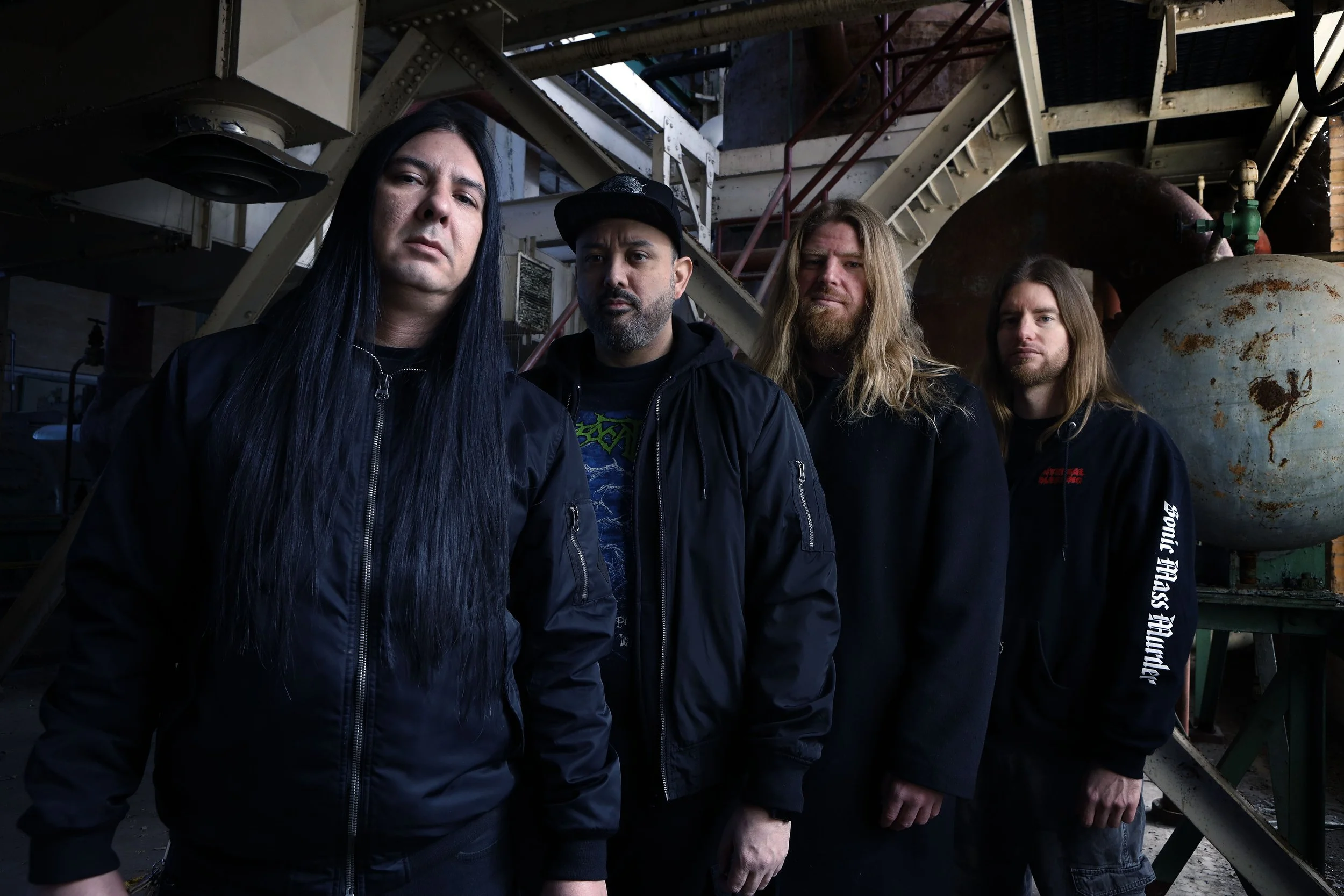
Slamming brutal death metal has technically been invented in the middle of Liege of Inveracity by Suffocation. Two thirds through the song, the band abruptly slows down into a mid-tempo groove designed to be as disgustingly heavy as physics will allow for exactly one verse. In the context of the song, it’s just a moment, a brief gravitational collapse before normal death metal resumes.
But other musicians heard that passage and came to a very different conclusion. Instead of treating it as a clever structural detour, they treated it like the Rosetta Stone of brutality. The logic became simple: what if the entire song sounded like this? What if this riff was my entire artistic personality? And once accepted that answers to these questions was yes, slam came into existence like a nightmare newborn.
That person may or may not have been Internal Bleeding guitarist Chris Pervelis, who has claimed on the Garza Podcast that he not only helped pioneer the sound but also coined the word slam itself. He’s also mentioned being influenced by hip-hop’s sense of groove and vocal cadence, which actually makes a surprising amount of sense when you remember that this entire story (or almost) takes place in New York.
Before they eventually decided to have their cake and eat it too — becoming both technical and slamming —Maryland’s Dying Fetus nearly secured their place among slam’s founding fathers as well. Their early track Grotesque Impalement, originally appearing on the band’s first demo, is so primal and gleefully violent that it feels like a prison riot set to blast beats. It’s the kind of song that could only have been written by teenagers who had just realized that making the heaviest riff possible was a perfectly valid artistic goal.
The most influential slam band of this early era is almost certainly Devourment. With their almost comically titled 1999 debut Molesting the Decapitated, they perfected what might best be described as sewer production. The record is impossibly heavy, but also disgustingly filthy. The guitars are tuned into a swampy blur, the snare drum sounds like someone kicking a dented tin can down a hallway and the vocals dissolve into incomprehensible gurgles that seem less sung than expelled.
From that moment on, slam developed a recognizable aesthetic. The goal wasn’t simply to sound brutal; it was to sound contaminated. A good slam record should feel like an artifact recovered from a serial killer’s basement or dredged up from your city’s sewer system. On top of being overwhelmingly brutal, Devourment accidentally defined how it was supposed to be recorded. They have released only five albums in their thirty years of existence, but they are all classics of the genre.
California’s Disgorge also helped push the style forward with their 1998 debut Cranial Impalement, which introduced the world to the subterranean vocal monstrosity that would become Matti Way. Around the same time, bands like Cephalotripsy and Cerebral Incubation refined the formula even further, pushing slam toward a level of sonic filth that almost felt competitive.
Soon the genre had gone fully international. Japan produced Gorevent, Russia answered with Abominable Putridity and the underground filled up with bands like Cranial Torture, Projectile Vomit, Guttural Slug and Epicardiectomy along with dozens upon dozens of others whose names all sound like rejected grindcore song titles.
By that point the standard of disgustingness set by Devourment had effectively become a challenge. Each new band seemed determined to push the aesthetic further into the gutter, chasing the same goal: to make the heaviest, ugliest, most sewer-dwelling sound imaginable.
*
All these strains of brutality are still alive and well today, but they’re often carried by a newer generation of bands who care a lot less about the stylistic boundaries their forefathers treated like sacred law. The internet flattened the underground. Scenes stopped being geographic and started being algorithmic, which made it perfectly acceptable for bands to absorb influences from everywhere at once.
The result is a modern crop of groups who can slam, blast, groove, and technicalize all within the same song. Bands like Vulvodynia, Organectomy, Ingested, Signs of the Swarm and even Belgium’s long-running Aborted who caught the mutation surprisingly late in their career, mix brutal death metal with hints of deathcore and modern production sensibilities. The result feels like the entire brutal death metal family tree collapsing back into one vile organism.
The more classic strain of brutal death metal is still alive and well too, carried by bands like Cytotoxin, NecroticGoreBeast and PeelingFlesh, who seem even more comfortable embracing the hip-hop swing that lurked inside slam long before anyone openly admitted it.
As is often the case with extreme metal, the pioneers never really went away either. Suffocation are still out there even if Frank Mullen has stepped aside, along with Cryptopsy, Dying Fetus, and Internal Bleeding. Brutal death metal never replaced its past. It simply kept adding new layers on top of it.
Which means that today, every era of the genre is happening at the same time. Before I leave you, here are 5 songs to help you understand and contextualize brutal death metal better.
Suffocation - Liege of Inveracity : All brutal death metal starts here, but things get especially nasty around the 2:53 mark. The moment lasts less than a minute, but its influence has lasted more than thirty years. In a weird way, this riff did for brutal death metal what Elvis Presley did for rock ’n’ roll when he sped up That’s All Right. It took something that technically already existed and twisted it into a form nobody had quite imagined before.
Internal Bledding - Anointed in Servitude :One of the grimiest, slammiest things ever recorded. This track perfectly captures the dripping sonic texture that would come to define slam death metal. The riffs crawl, the rhythm lurches forward like something dragging itself out of a swamp and the whole thing sounds like it was recorded somewhere damp and poorly ventilated. It’s disgusting, primitive, and weirdly fun. Exactly what slam was supposed to be.
Cryptopsy - Phobophile : This is what I meant earlier when I said some bands started sounding like collapsing galaxies. Phobophile expands in every direction at once: blasts, tempo shifts, riffs appearing and disappearing before your brain can process them, yet it somehow remains under control the entire time.
There are so many moving parts in this song that it almost feels impossible to absorb in a single listen. I’ve been coming back to it for thirty years and I’m still not convinced I’ve fully figured out what’s happening.
Devourment - Molesting the Decapitated : The gold standard for brutality. This song is so heavy and unhinged it barely sounds human anymore. The riffs drag like chains across concrete, the drums feel blunt and industrial, and the vocals resemble something being expelled from a sewer grate.
This is slam at its most unapologetic: filthy, primitive, and completely uninterested in refinement.
Cytotoxin - Radiatus Generis : A science experiment in merging every strain of brutal death metal into one organism. The song blends technical insanity, slam heaviness, and modern precision into something that feels engineered rather than written. It sounds like something conceived in a spaceship and fired toward Earth like a death ray. Powerful yet amorphous. Intense but wildly unpredictable.
Which makes perfect sense. Musicians who grew up with thirty years of brutal music at their fingertips were always going to create something like this.
* Follow me on Instagram , Bluesky and Substack to keep up with new posts *