A Subjective History of Funeral Doom Metal
Every mutation in extreme metal can be traced back to the same primordial urge: trying to be more extreme than the most extreme band you’ve ever heard. But here’s the problem with "extreme": it’s an entirely subjective metric. For some people, extreme meant "faster than Slayer." For others, it meant scarier than Mayhem." For doom metallers, it meant staring into the abyss, sighing deeply, and then deciding the abyss wasn’t slow enough for your taste.
The logic never really mattered. No one was trying to arrive at the ultimate, final form of heavy music. It was always about the process of escalation, about twisting the dial just to see what would happen when you pushed it past rationality. (And yes, I’m aware that talking about "cranking the knob" while discussing music that moves at the pace of continental drift is funny. You’re welcome.)
So if your foundational aesthetic is that existence is suffering, and your philosophical obsession is romanticizing death in the abstract, the obvious next step is: "What if we slowed this down even more? What if we wrote songs so long they start to feel geological? What if doom metal sounded like actual funeral music?"
That was the spark. Funeral doom. The subgenre of a subgenre, built on the slowest tempos, the longest songs, the occasional use of quirky instruments (like, I don’t know, mandolin) and the heaviest existential baggage anyone in metal had ever dared to shoulder. It doesn’t pump you up. It doesn’t make you want to fight, drink, or burn down a church. It just sits in the corner with you while you brood, and maybe cry, and definitely feel a little more seen in your sadness.
This isn’t an objective history of funeral doom, because such a thing is impossible. This is a subjective history, which is the only kind of history metal has ever really produced.
The Prehistory of Slow and Sad
Funeral doom metal wasn’t created overnight like some other genres. It was the sound of doom musicians tumbling down a staircase in slow motion, hitting every step on the way down.
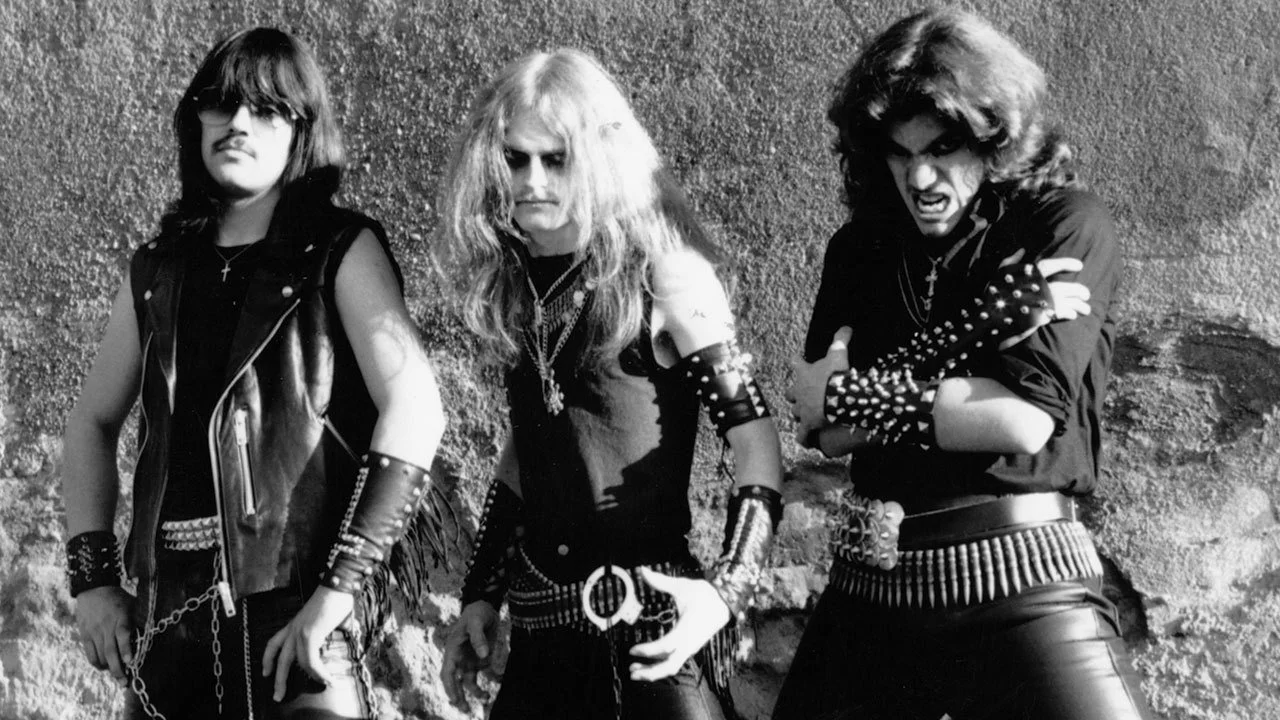
One of the first impacts was Celtic Frost’s To Mega Therion in 1985. Not because Celtic Frost weren’t even close to being funeral doom, but because they you could slow down thrash without losing intensity and that was new. They blew open the template with brass sections, operatic shrieks, and production choices that refused old, boring formulas derived from rock and blues. A song like Dawn of Megiddo doesn’t sound like a dirge at all, but it reshaped what heaviness could mean: violence not through speed, but through gravity. Also, Megiddo is one of the most satisfying words in the entire metal canon to say out loud. Try it. It’s a great name to give your dog.
But the late ’80s were still a decade obsessed with acceleration. Thrash bands were trying to out-blast one another, death metal was coming in hot like a jackhammer, grindcore was practically a dare to see how fast you could play before your wrists snapped. The idea that “extreme” might mean slowing down was almost unthinkable.
Almost.
In 1990, American band Winter released Into Darkness, and suddenly doom had its first glimpse of what the bottom of the staircase might look like. The record sounded like death metal being thawed after cryogenic sleep: riffs dragging themselves forward, drums lurching unpredictably, production so rough it felt like taped by accident by a Furby. It was primitive, confusing, and completely unlike anything else. But for the people who stumbled across Winter, it was also a revelation: extremity could mean decay instead of velocity, entropy instead of explosion.
The tape didn’t spread fast, nothing this slow ever does (especially then), but when it finally reached the tape-trading underground, it was like a collective lightbulb went off. Every disenchanted guitarist, every gloomy kid in a basement, suddenly realized: you could make heavy music about feeling the weight of the void, and it didn’t have to move faster than your heartbeat.
Then came the Peaceville Three. Paradise Lost, My Dying Bride, and Anathema weren’t funeral doom, but they recalibrated the architectural framework for what would become possible. They weren’t afraid of long songs, not just six or seven minutes but tracks that sprawled into double digits. They romanticized death and despair, not in the comic-book sense of Slayer’s demons or Metallica’s apocalypses, but as if they were penning Victorian novels with distortion pedals. They gave doom metal scale, atmosphere, and emotional magnitude. The sense that a single riff could stand for eternity.
Taken together, these bands didn’t invent funeral doom. But they loosened the bolts. They showed that doom could be slower, longer, sadder, heavier , until eventually someone was bound to stop tumbling down the staircase and hit the cold floor of the funeral hall.
It just had to start in Finland, didn’t it?
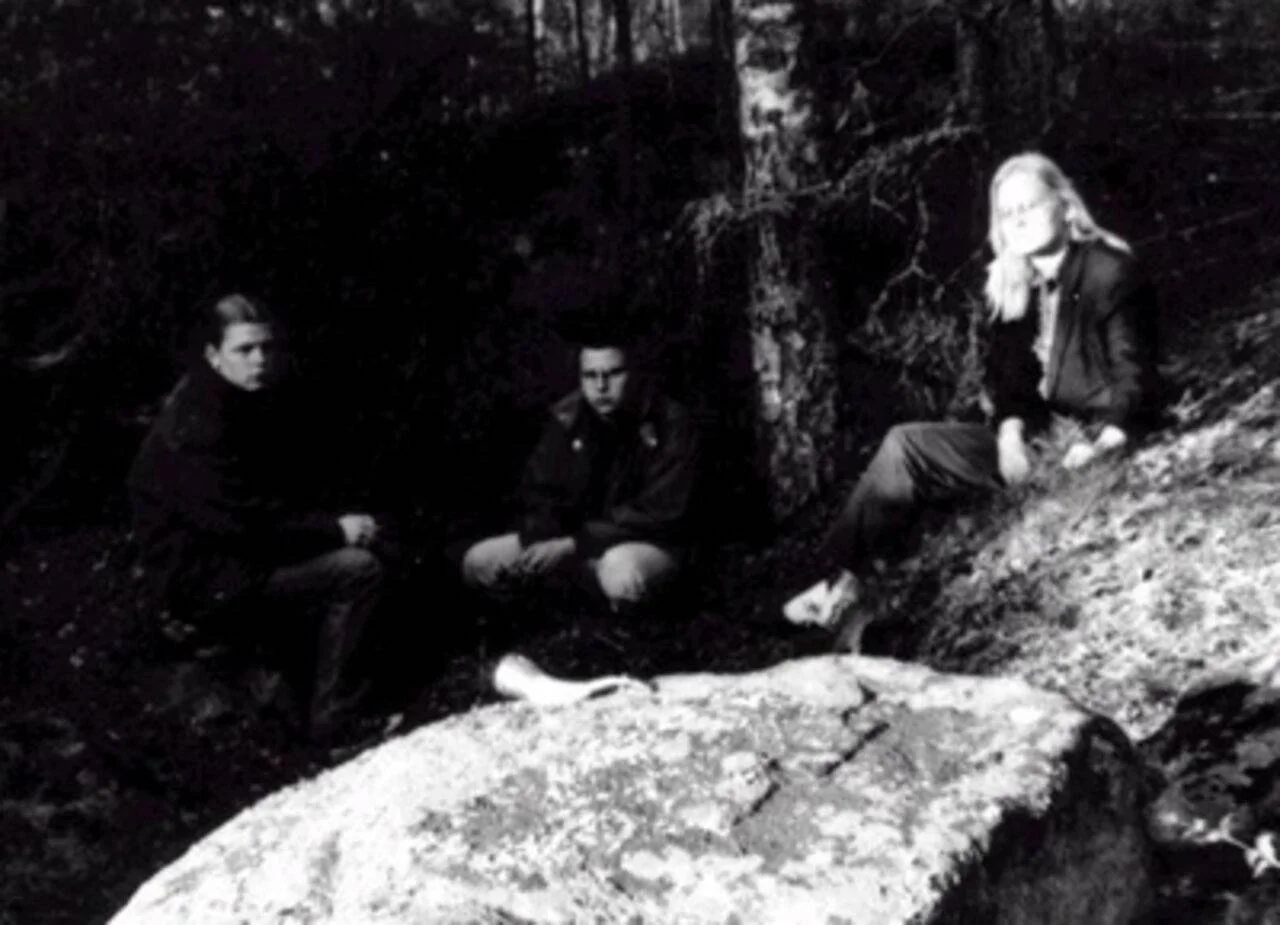
No one agrees on who invented funeral doom, but most people with functioning ears (and who also give a shit) will admit that Thergothon’s Streams from the Heavens in 1994 was the first official entry in the genre. And it makes almost too much sense that Finland would be the birthplace. If ever there was a country destined to romanticize long winters, social melancholy, and architectural churches into slow-motion metal dirges, it’s Finland.
Streams from the Heavens sounds like the moment day collapses into night, except the night never ends. The pipe organ is at the forefront, pulling everything into a bleak cathedral atmosphere. The guitars trudge around it like exhausted pallbearers, and Niko Skorpio (a name that sounds like a rejected Mortal Kombat character, but in a good way) growls in this amateurish but oddly spectral Cookie Monster register. The mismatch between the solemn organ and his guttural delivery is what makes it unforgettable. The whole record plays like end credits to a horror show airing exclusively in your subconscious.
This was the first Black Sabbath record of funeral doom: both the spark and the canon. Its influence still lingers thirty years later, helped by the fact that Thergothon promptly broke up and never recorded anything again. In metal, there’s nothing more mythic than a band that disappears after one great record. You know that saying, “the streets remember”? Metalheads love to pretend we are the streets , even if the truth is we’re mostly basement people.
If Thergothon gave funeral doom its ghostly bones, Skepticism (another Finnish band) gave it its body. Their 1995 album Stormcrowfleet added echo, production heft, and a kind of cathedral grandeur that would become one of the genre’s signatures. Where Thergothon felt thin and mortuary, Skepticism felt massive in the growling-into-an-endless-abyss funeral doom way. Their keyboards were central elements in the mix, foreshadowing the orchestral ambitions the genre would eventually embrace. Skepticism is still around, still touring graveyards, still proving that slow-motion despair can be weirdly soothing. Their music feels like finality, which is an entirely different sensation.
The third claimant to the funeral doom throne is Esoteric, out of Birmingham, who released Epistemological Despondency the very same month as Streams from the Heavens. But their story is more complicated. Thergothon recorded first, broke up, and left a clean monument. Esoteric, by contrast, were experimental to the point of absurdity. A collision of funeral doom with Abruptum’s chaos and Coil’s avant-electronics. They were sometimes grind-y too, somehow. Early Esoteric wasn’t a finished product so much as an extended adolescence: brilliant, strange, and unwieldy. They had too much weird to exorcise before they could settle into the funereal mold. Still, their excesses became part of the genre’s DNA.
Beyond that initial trinity, the early scene filled out with the likes of Evoken (New Jersey), Mournful Congregation (Australia), and the appropriately named Funeral (Norway). All three extended the vocabulary, but Funeral were the most radical: they layered in female vocals and acoustic guitars, fracturing song structures even further and expanding what “funeral” could mean. Their arrival in 1995 was late compared to the Finns, but they opened an entirely new gateway, the possibility of not just wallowing in despair but staging it as a fragile, almost sacred ritual.
So if Thergothon was like dreaming of your own slow and gruesome death, Skepticism and Esoteric felt like being buried alive, and Funeral was the sound of a reluctant, melancholic ascent to heaven.
New and Improved Funerals
Unlike metalcore (with its neat little eras, revivals, and inevitable “post-” phases), funeral doom never really evolved in a dramatic way. It just kept stretching itself out. The songs got longer, the atmosphere more ambitious, but the core impulse, making music that feels like grief solidified into sound, never changed.
One of the first true innovators after Funeral was Denmark’s Nortt, who first drew attention with the 1999 demo Graven. Nortt essentially pioneered funeral-doom-as-canvas: sprawling, atypical compositions that often drifted toward drone, prioritizing texture and mood over traditional song structure. His guitars and guttural growls became dueling voices, like two sorrowful ghosts arguing over who gets to haunt you longer. Nortt understood funeral doom not as a compositional trick but as a philosophy. In R&B terms: the brother’s got serious soul.
Without Nortt, we never would’ve gotten Wormphlegm’s 2006 masterpiece Tomb of the Ancient King (yes, Finland again). The record is only three songs, one of which runs a full thirty minutes, but listening to it feels less like spelunking into a dungeon where everything is dead and you’ve forgotten the way out. Eventually, you stop caring whether you escape. Tomb of the Ancient King is crushing in the same way Khanate is crushing: not an everyday listen, but an emotional gravity well that changes your entire mood on contact.
That same year, Germany’s Ahab charted a very different course with The Call of the Wretched Sea. Instead of dungeon claustrophobia, Ahab went cinematic, polishing funeral doom into something almost operatic. Their compositions were precise, deliberate, and surprisingly accessible. They wanted you to feel the weight and terror of the ocean’s depths, using guitars like flickers of light to remind you of scale. Tiny glimpses of the surface world you’ve left behind. They were heavy, but epic, even pompous. You can almost hear the influence of Candlemass in their DNA, like a grim younger brother who can’t stop imagining himself drowning.
Then there’s Shape of Despair (yes, Finland again), who emphasized vocals as instruments, often blending male and female voices into a single mournful texture. They’re less my thing, many of their songs blur together for me, but they remain hugely popular and undeniably influential. Their commitment to voice-as-instrument has become a major thread in modern funeral doom.
Still, the undisputed titans of the present day are Seattle’s Bell Witch. Their consecration came with Mirror Reaper (2017), recorded after drummer Adrian Guerra passed away. It’s eighty-three minutes long, one continuous funeral dirge dedicated to their lost bandmate. Funeral doom has always been about death, but here it became literal: a work of grief and remembrance, a piece of art that actually felt like mourning. You could write something longer, sure , four hours, eight hours, but Mirror Reaper proved there was no need. It already pushed the genre to its emotional endpoint. It’s beautiful, elegiac, and devastating, but also strangely generous: you can dip in and out, always finding new corners of sadness to explore. It’s a buffet of grief replenished with every listen.
Bell Witch followed it with 2023’s The Clandestine Gate. It’s still good, still heavy, still fun in its morbid way. But it can’t match Mirror Reaper, and that’s fine. When you’ve written the genre’s definitive work, you’re allowed to become a legend and coast a little.
Other names deserve mention: Catacombs, who strike a balance between Skepticism’s misery and Ahab’s polish; The Howling Void, who embrace the genre’s symphonic side (very My Dying Bride-pilled); Colosseum, who channel Esoteric’s expansive weirdness in the best way; Ataraxie, more muscular and grounded; Hellish Form, gloriously sludgy. Funeral doom has always been a genre of niches, but those niches all circle the same emotional abyss.
And that’s the thing: funeral doom doesn’t need a sprawling history, because its mission has always been narrow. It’s the sound of mortality stretched until it becomes unbearable. It’s a peculiar pleasure, but one that makes you feel something you can’t get anywhere else.
So here’s your starter kit:
Winter – Eternal Frost: The ancestor. Raw, thin production, barren structure, quirky vocals that foreshadowed Thergothon. A nuclear winter no one else bothered to claim.
Skepticism – The Rising of the Flames: God-tier production. Expansive yet suffocating, with keyboards that dictate the atmosphere. Doom as architecture.
Nortt – Af Døde: Textural, entrancing, otherworldly. A soundtrack for unspoken feelings, intimate and overwhelming at the same time.
Shape of Despair – Reaching the Innermost: Not my favorite, but crucial. Intricate, unpredictable, pushing the genre toward its modern form. This song is good, though.