A Subjective History of Stoner Doom Metal
There’s a long, stupidly consistent tradition of blaming music on the devil. It predates Ozzy Osbourne swanning around the stage like a high-functioning gargoyle in the late sixties and it predates Robert Johnson whispering to the crossroads. Hell, people were already calling Paganini "the devil’s violinist" back when the average European thought bathing was witchcraft. The underlying logic never changes: if someone is too good at something, if their talent feels slightly superhuman, there must be an invisible shortcut.
It couldn’t possibly be discipline or practice. It has to be Lucifer, or the occult, or (when Christianity got tired) drugs. Because nothing scares people like the idea that a regular human could transcend the rules. Drugs basically replaced the devil in that equation: a modern boogeyman promising revelation at the cost of morality, sanity, or your mom’s approval.
Drugs have been fueling human creativity for way longer than they’ve been condemned for it, but no one actually celebrated them until psychedelic rock showed up and treated chemical alteration like a spiritual achievement. At first it was coded, LSD hiding inside children’s book imagery, Jim Morrison singing about something that felt dangerous but never quite said what. Then the subtlety vanished.
The Velvet Underground wrote Heroin like it was a religious hymn and didn’t bother pretending it was metaphor. But even that was just a warm-up act. No genre ever loved a substance as openly or as loyally as stoner doom metal loves weed. It’s not just a vice or a theme, it’s the organizing principle. Weed isn’t decoration. It’s doctrine. In fact, weed and Black Sabbath are the center around which the entire subgenre revolves. It seems simple, but it’s quite the trip.
Welcome to my subjective history of stoner doom metal.
Sabbath and the Prehistory of Stoner Music
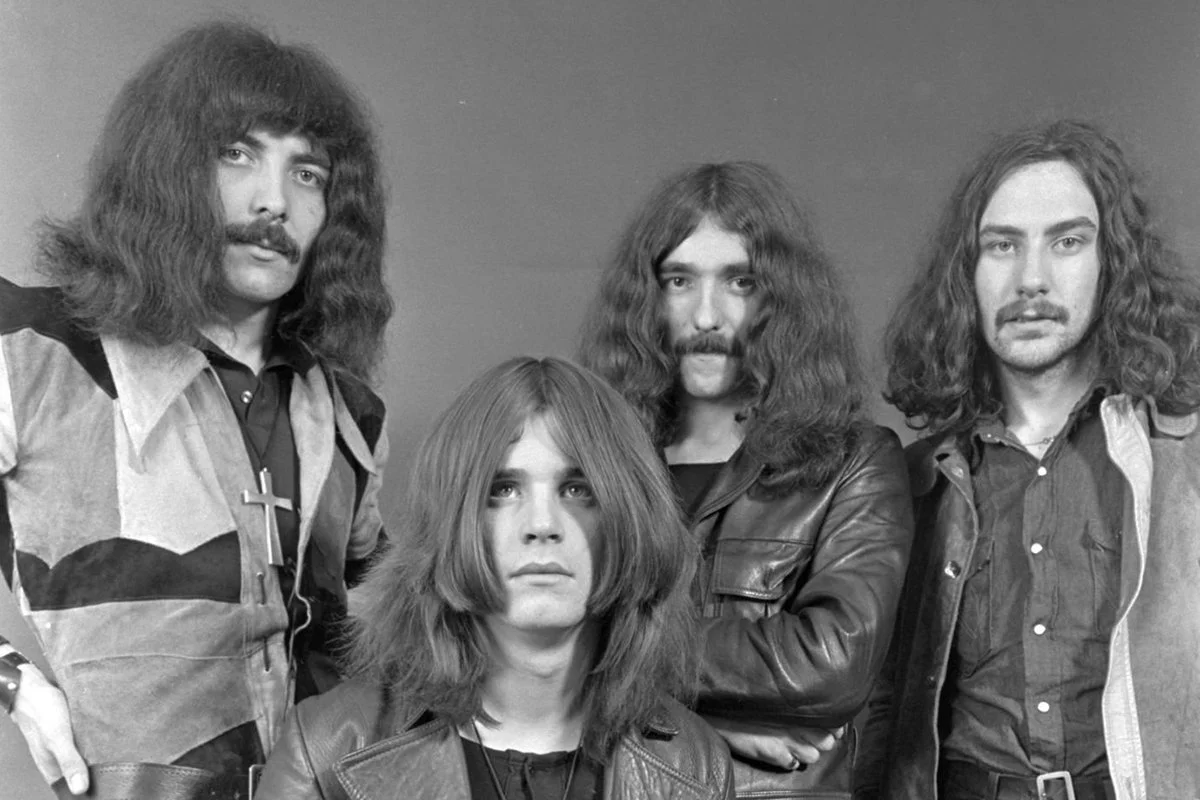
Before Black Sabbath dropped Sweet Leaf on Master of Reality in 1971, you could basically count every pro-weed song in popular culture on one hand and you wouldn’t even need all the fingers.
Steppenwolf had Don’t Step on the Grass, Sam in ’68, which was basically a weed PSA disguised as rock. Cab Calloway sang Reefer Man back in 1933, when smoking anything other than tobacco could get you labeled a communist or a jazz musician (which were treated as the same thing). Neil Diamond even released The Pot Smoker’s Song, a moral panic set to music that sounded like he wanted to personally narc on his audience.
Back then, it was culturally radioactive to endorse marijuana. Nobody wanted to be the villain who said: "yeah, get high, it’s fine." Nobody except Ozzy Osbourne. Ozzy took one look at the situation and basically shrugged: people already think I’m a maniac, so why not?
Sweet Leaf laid down the rules for stoner doom: Slow to mid-tempo. Heavy but hypnotic. A riff so monolithic it feels like it was carved into a mountain instead of written by a human person. It was an anthem designed for communal intoxication. The blueprint wasn’t complicated, but it was non-negotiable. Everything in stoner doom evolved from that moment: the bluesy, Iommi-descended riff became the genre’s DNA strand, the one creative law nobody is allowed to break.
It made Tony Iommi immortal, not as a historical figure, but as a cosmological constant. Stoner doom is incredibly single-minded. It has one true north. Which raises the obvious question: what the hell happened between Black Sabbath and, let’s say Kyuss?
The short answer is: not much happened. Black Sabbath stayed active, and Tony Iommi kept feeding the world riffs the way an ancient harvest god feeds worshippers grain. Slow, inexhaustible, eternal. As long as Sabbath existed, there wasn’t much urgency to invent a successor religion. It wasn’t until the Dio era ended and Tony Martin took over in ’87 that the faithful really started scanning the horizon for a new revelation.
But the in-between years weren’t empty. Hawkwind, Deep Purple, and Blue Öyster Cult were quietly engineering a fusion between psychedelic rock and heavy metal, sneaking cosmic weirdness into places it didn’t belong. They weren’t stoner doom yet, but they were unknowingly raising the child. You could also slip in bands like Pentagram and Sir Lord Baltimore: proto-doom acts who sounded like Sabbath if Sabbath had been raised on UFO sightings and illegal pharmaceuticals. These groups were the transitional fossils.
The genre didn’t appear fully formed, it evolved in the margins, carried by bands who never realized they were building a new temple.
Children of Sabbath (A.K.A The Best Fucking Bands in the World)
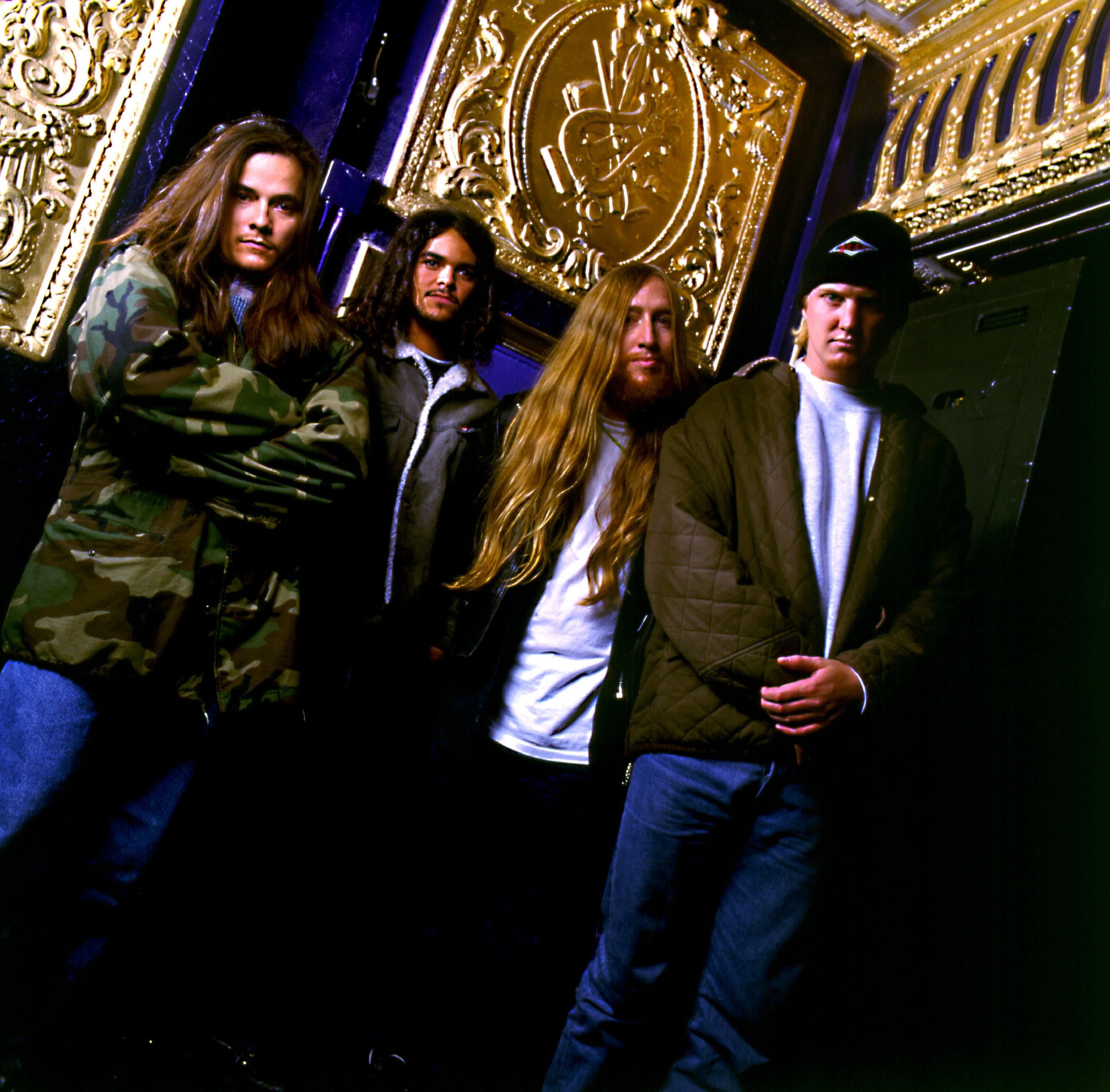
Even if they were a game changer, Kyuss exactly didn’t trigger the second Big Bang of stoner doom.
They didn’t show up fully formed. They spent years as Katzenjammer and then Sons of Kyuss, wandering through the desert like biblical figures in a band van, figuring out what the hell they were supposed to become. Meanwhile, the larger metal landscape was beginning to mutate. Classic doom bands like Trouble and Cathedral started importing psychedelic elements into their sound: extended jams, spiraling solos, and in Cathedral’s case, horror samples that felt like someone slipped blotter acid into your slasher movie.
They weren’t necessarily influencing the future titans because the future titans were already loading their weapons. But the collective consciousness was shifting. Everyone was thinking the same thought at the same time as if guided by Iommi himself. Stoner doom wasn’t invented so much as it crystallized. It was inevitable.
Then, Blues for the Red Sun happened.
Well, Sleep’s Holy Mountain technically happened three months prior to Blues for the Red Sun, but it took longer for people to give a shit. But Kyuss floored everyone right off the bat. TThey weren’t calling themselves stoner metal yet. They called themselves Desert Rock, but labels didn’t matter. They resurrected the riff and dragged it into an entirely new dimension. Kyuss didn’t just continue what Sabbath started. They mutated it.
Josh Homme’s riffs were groovier, fuzzier, and formless, as if they were less written than summoned from the desert itself. The songs were lengthy, asynchronous and shamanistic. And the most important thing about that shift isn’t that it was new. It’s that it was undeniable. The riff had pointed the way forward again. My respect to John Garcia and his sultry voice, it’s one of the components that made Kyuss so infectious, but Homme’s guitar as much the lead vocals of Kyuss than he is.
Meanwhile, in San Jose, three committed THC maximalists named Al Cisneros, Matt Pike, and Chris Hakius recorded a demo and mailed it to Earache Records. Earache didn’t tweak it, polish it, or question it. They just released the damn thing. Sleep didn’t sound like Kyuss. They didn’t need to. Where Kyuss felt graceful and tectonic, Sleep felt like someone weaponizing a mountain. What Matt Pike lacked in finesse, he made up for in raw, unstoppable force.
The third pillar came from a completely different direction: Monster Magnet. If Kyuss supplied the mystique and Sleep supplied the mass, Monster Magnet were the hallucinogenic bridge, perfectly balancing cosmic psychedelia and brute strength. Together, these bands formed the holy trinity of modern stoner doom: desert mysticism, riff-driven force, and space-age delirium. Everything that came after was built on that triangle.
The Cult Is Alive
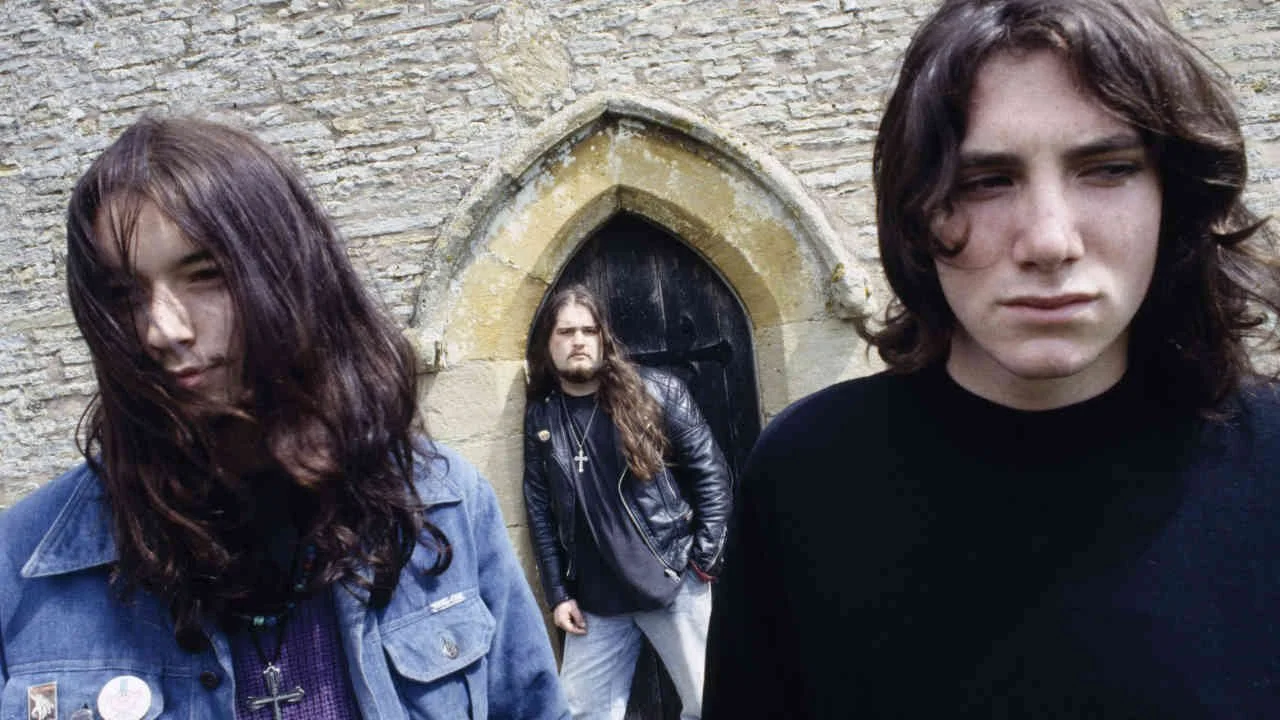
Before the third seismic event in stoner doom, there were plenty of bands building the infrastructure without necessarily becoming part of the mythology. Fu Manchu had been alive since ’85 and releasing music since ’94. They’ve been a model of consistency for four decades: reliable, riff-forward, endlessly steady. In hindsight they’re one of the most respected bands in the scene, but they were never the icons of the movement. They were part of the backbone. Fu Manchu is a band you see on every festival’s bill.
Clutch occupied a similar space, maybe even more so. They were never a band powered by charisma or mystique. Their legacy came from unkillable touring schedules and the occasional song that hit harder than it had any right to. In the working-class wing of stoner rock, he bands who just want to play loud, long nd forever, Clutch are the union reps. They are one of these bands that your dad can appreciate as much as you do, but he’ll insist that you stay out of the pit if you go to a concert together.
But the band that changed everything (again), the one that detonated the genre’s next mutation, was Electric Wizard.
Their debut dropped in ’94, sure, but the real cosmic rupture came with their second record, Come My Fanatics…. The opening track Return Trip is stoner doom’s equivalent of discovering a new geological layer. It’s ten minutes of pure excess, a slab of noise and distortion so monumental it almost stops being music and becomes environment. Aside from one lone sample, the first three minutes are just riffs. Nothing else. It’s degenerate in the most glorious way, like someone freed doom metal from the burden of subtlety and asked, "What if we just keep going?"
Jus Oborn claimed that Return Trip sounds disgusting because of his lack of technical ability. And maybe that’s true. But technical ineptitude doesn’t accidentally produce a cultural landmark. What he really did was stumble onto a new principle: riffs could be oppressive, ugly, and overwhelming and that ugliness could be transcendent. This song is so pure. It announced Electric Wizard as the band concerned parents were afraid Black Sabbath was. Their vision was total, 115% committed.
The following year, Sleep (yes, our three Californian THC mystics) decided to one-up Electric Wizard with Jerusalem, a fifty-two-minute song built around a single riff. One riff. One altar. A monument so committed to repetition and transcendence that it felt less like a record and more like a ceremonial object. The devotion behind it was insane: total surrender to the riff, powered by a level of weed consumption that borders on performance art.
The entire scene split in two, either you bent the knee or you found the courage to admit that the thing you once thought was a disgusting fantasy was actually possible. 1997–98 is when stoner doom fully came into focus. This was the moment it evolved into an apocalyptic blues, music you could learn in a garage but also music that could fuel your addiction to something bigger than sound. These weren’t just bands anymore. These were prophets lighting up the way further.
Goatsnake arrived next, a criminally underrated wrecking ball powered by Greg Anderson from Sunn O))), with their record Flower of Disease the following year. Orange Goblin also happened, the ultimate working-class riff merchants. They started closer to death-doom, but as the genre crystallized, they mutated with it. Lowrider emerged from Sweden with the kind of fuzz-drunk tone that felt like someone captured Kyuss in a freezer and defrosted them wrong. Bands like Acid King, Spirit Caravan, and even Nebula were orbiting the same gravitational pull. By the late ’90s, stoner doom was a galaxy forming.
And yet, there was still one seismic event left. One final cosmic rearrangement that involved bands that were broken up, bands on hiatus, and bands who didn’t even know they were about to become immortal.
To The Ones Forever Stoned
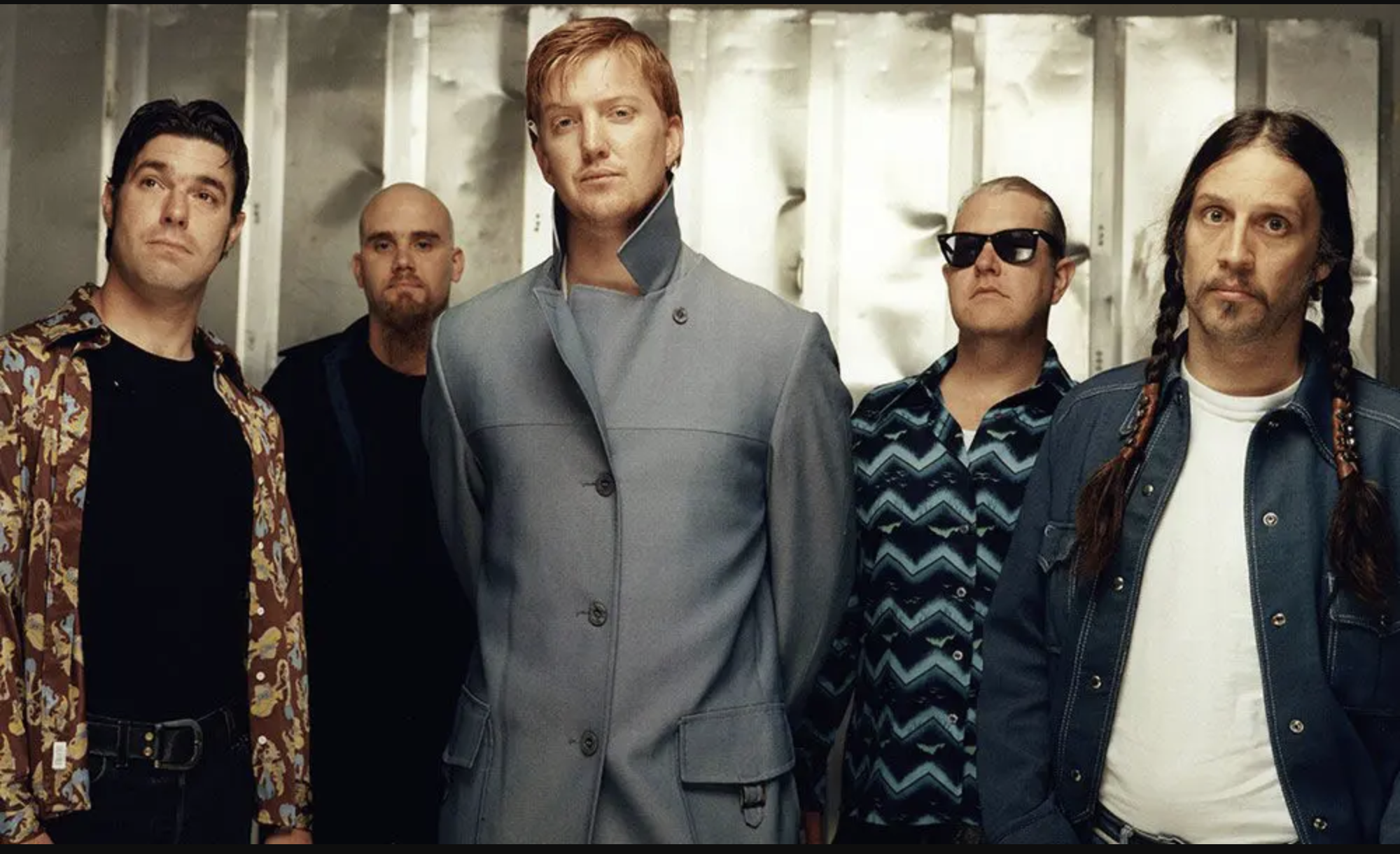
The year 2000 was the last truly canonical moment in stoner doom—a final fork in the road where the genre split into two evolutionary paths. Two records defined it, and they couldn’t have pointed in more opposite directions: Queens of the Stone Age and Dopethrone.
First, Josh Homme returned from the ashes of Kyuss. Five years after the breakup, he built Queens of the Stone Age: leaner, sleeker, and more aerodynamic than anything Kyuss ever attempted. They doubled down on the fuzzed-out desert rock aesthetic, but replaced the mysticism with swagger. Their 2002 album Songs for the Deaf even made it sexy. It wasn’t heavier or holier than Kyuss (at least not in any spiritual sense) but it did the thing Kyuss never quite managed: it made stoner rock popular. Like, actually popular.
And not everyone was thrilled. Jus Oborn saw the mainstream flirtation with the desert and thought: what a terrible, dangerous ideas. While QOTSA were polishing the riff for public consumption, Oborn was in the shadows preparing to unleash the most repulsive, sludge-covered doom record ever conceived and holy fuck was it great.
Dopethrone wasn’t just heavier or louder, it was shameless. Chaotic. A record that refused to care about legacy, professionalism, or even its own structural integrity. You could practically hear the band tearing itself apart from the inside. Electric Wizard were in the middle of a lineup overhaul, with Liz Buckingham joining in 2003 (she would eventually marry Jus), and the whole enterprise felt like it was welded together with paranoia and amplifier hum. That instability wasn’t a flaw; it was the catalyst. Dopethrone sounds like a band that has nothing left to salvage and no manager or label whispering about "the future". It’s reckless, unfiltered, and operating at the edge of collapse.
The result is a masterpiece that shouldn’t exist. The most degenerate doom record anyone has ever made. Listening to it is like watching a ritual where everyone knows the final step might kill the participants. But they keep chanting anyway. That sense of danger, of total devotion to the riff above all earthly concerns, is what makes Dopethrone spellbinding and immortal. It’s a looooong record too.
After Dopethrone, the whole landscape cracked open. Matt Pike stepped away from Sleep and formed High on Fire, a band that sounded like Sleep’s subconscious if it had been wired with jumper cables instead of prayer beads. Pike was always the least mystical member of Sleep, so while Al Cisneros and Chris Hakius went deeper into OM’s desert-minimalist search for spiritual revelation, Pike became the street-corner bruiser of the Stoner Doom working class.
High on Fire is the feral, carnivorous branch of the tree, music for throwing punches at invisible enemies and winning (always). They’re a single-minded freight train designed to weaponize instinct. Matt Pike writes riffs for that reptile-level part of your psyche that predates language. High on Fire are the fucking best. Even if you consciously disagree with that statement, three songs will make you go: "man, they’re the fucking best". They have a song titled Lightning Beard, for fuck’s sake.
YOB also became essential around the turn of the millennium, proving doom could be more than riffs, it could be a spiritual experience. Boris don’t fit neatly into the genre, but they’ve been sneaking in and out of its orbit with colossal, tectonic riffs that feel like alternate universes folding in on themselves. Monolord are the direct children of Electric Wizard and Sleep: sludgy, unstoppable, and unapologetically obsessed with doom’s darkest impulses.
Then there’s the rest of the constellation: Conan, Windhand, Bongzilla, Weedeater, Church of Misery, Graves at Sea, King Buffalo (one of my personal favorites). These bands weren’t necessarily inventing new laws, but they were the cartographers of doom’s boundaries: stretching them, twisting them, seeing how far you could push a riff before it broke reality.
Mastodon fits into this lineage too, though they’re a little like Boris: always orbiting, always experimenting. Progressive, groove-driven, sometimes arena-ready. They reminded the world that doom could escape its bunker without losing its soul.
Is stoner doom aging? Probably a little. It’s a genre that’s deeply aware of its DNA, proud of its history, but waiting for someone audacious enough to shake things up. Someone with new ideas, a rebel streak, and maybe a stash of THC just to keep things interesting.
And now, as usual, to help you feel the pulse of it all, here are five songs that will teach you exactly what Stoner Doom sounds like:
Black Sabbath - Sweet Leaf : mid-tempo. Bluesy. Infectiously heavy. A feral madman of a vocalist who doesn’t give a damn about being called degenerate. Without even meaning to, Black Sabbath invented the meditative simplicity,t he kind of riff that can be worshipped upon, that every stoner doom band would spend decades building on. This is where the church begins.
Kyuss - Gardenia : I don’t want to hear anything about this. One of the best songs of all time. Dirty, groovy, and sassy as hell. Ever driven a motorcycle stoned in the desert while high? Me neither, this is what that feels like. Playful, disjointed, chaotic, but with a purpose so clear it could be carved into stone. Songs that make you feel emotions you weren’t meant to feel are rare. This is the transcendence of stoner doom distilled: freedom, grit, and pure, unshakable groove.
Electric Wizard - Return Trip : An absolute, grotesque masterpiece. A bloated, overstuffed balloon of a song that feels like it might crush your speakers if you’re not careful. Some of the loudest, angriest and most heartbroken blues ever recorded, communicating through sheer musical force more than lyrics could ever hope to. This is a song that could only have existed when it was written, but give it to an old bluesman and it would make them weep. Not for its excess, but for the raw, unfiltered power it channels. It’s pure, degenerate, and utterly unforgettable.
Monolord - Rust : These guys are frighteningly efficient. Songwriting so precise it almost feels unnatural. Rust is a perfect example of what stoner doom has evolved into: not about breaking ground in a genre that encourages excess and experimentation, but about devotion and execution. Every riff is heavy as sin, every groove obsessive. It’s catchy in the way that feels dangerous, like you’re hearing something ancient but delivered with absolute focus. Monolord took the lessons of Sleep and Electric Wizard and refined them into something that hits the soul without apology.
High on Fire - Tristmegistus : A bowling ball hurled at full force into a living room crowded with guests. The feral energy and commanding power of this song are undeniable. Sometimes Matt Pike loses his voice entirely and goes: GUUUUURREEEAAARRRGGHH and it’s shockingly relatable. Whatever Pike decides to play, the resolve with which he plays it makes it impossible not to respect, admire, and get completely obliterated by it. He is, for better or worse, my spirit animal and I hate it when people say "that’s my spirit animal". But there it is.
* Follow me on Instagram and Bluesky to keep up with new posts *