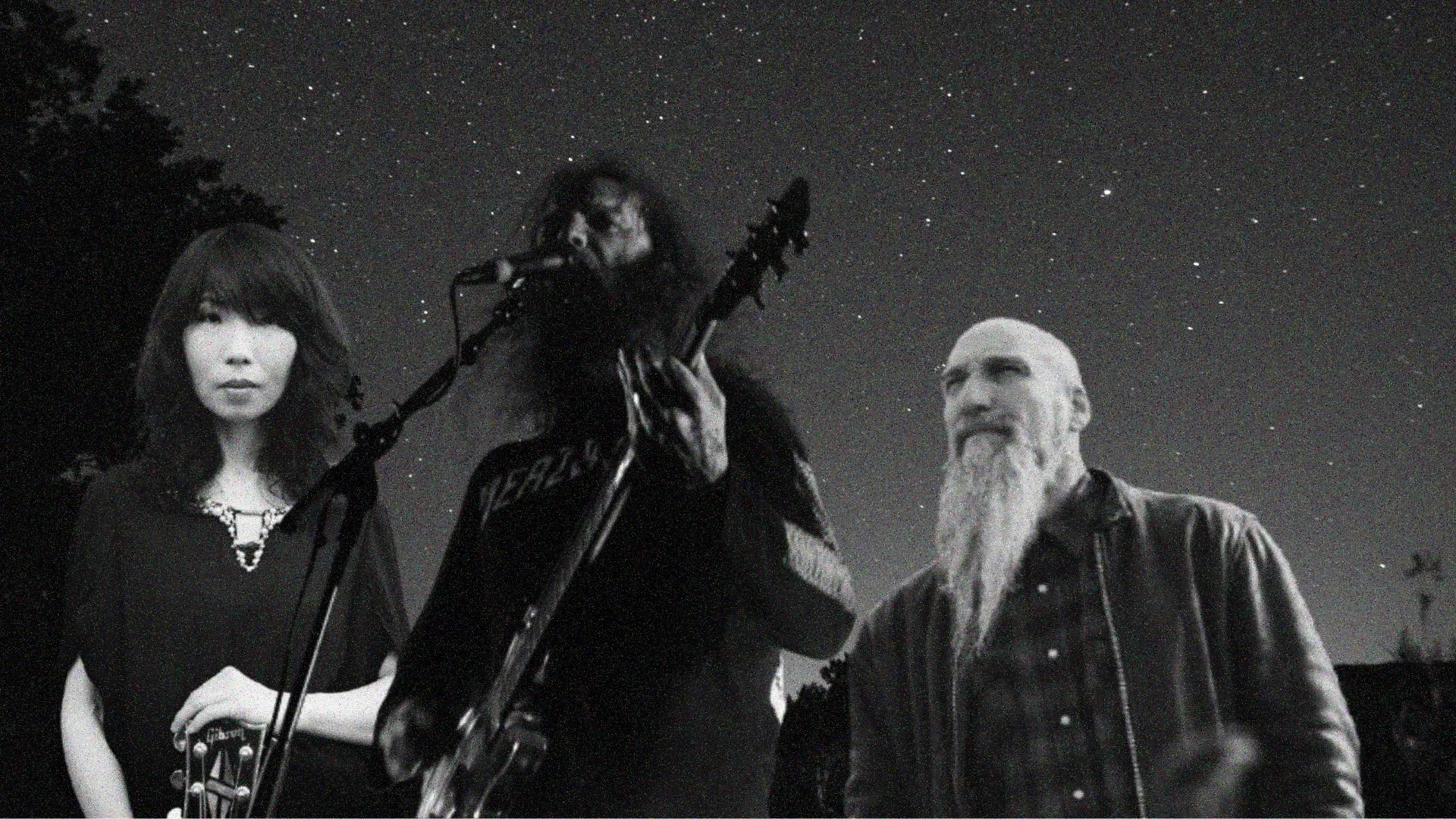
A Subjective History of Post-Metal
Metal is essentially a set of principles.
Some are negotiable and some aren’t. For example, distorted guitars and overall loudness are pretty much mandatory. These are the bare bones of the genre. I don’t want to gatekeep, but if you’re playing acoustic guitar and chirping into a microphone, you’re just not playing metal. You’re Bon Iver. But everything else is flexible to some degree: vocals can be clean, shrieked or growled; songs can feature either solos or breakdowns; they can last twelve seconds or eighty-three minutes.
It’s the negotiable principles that land you into the subgenre of metal you belong to. Growled vocals, blast beats, and playing like your hands are possessed by demons? That’s death metal. Shrieks, tremolo picking, and the occasional haunted-sounding synth line? You’ve wandered into black metal. Drop the BPM to near-catatonic levels and start obsessing over your own demise, and you’re in doom territory. You get the gist.
But what happens when a band ditches the map entirely, ignores the blueprints, chucks the tropes, and still manages to go hard enough to earn the M word? That’s where post-metal comes in. It’s the genre for bands that color outside the lines, then smear the whole page black.
So what is post-metal, exactly? Here’s the best way I can put it: post-metal keeps the non-negotiable principles of metal: loudness, distortion, a dark imaginary, and stretches them in directions the genre was never supposed to go. It’s still metal, but only technically. The compositions are long, sometimes glacial, sometimes volcanic. They’re abstract. They unfold. They breathe. And they aren’t afraid to get quiet. Uncomfortably so. Depending on the band, you might hear traces of ambient, shoegaze, drone, even post-rock. Stuff that would get you laughed out of a thrash show in ’88.
Post-metal doesn’t break the rules so much as pretend they never existed in the first place. Here’s my subjective history of the subgenre of the genreless.
An Accelerated History of Accelerating Past Genres
So who had the idea first? Who was the first to look at a genre’s boundaries and think: What if I just ignored all this bullshit and made something bigger? Technically, it was post-punk in the late ’70s. Which is funny, because post-punk is often treated like a fixed aesthetic now: goth basslines, haunted vocals, and enough reverb to drown a cathedral. But the original idea wasn’t about a sound. It was about attitude. It kept punk’s DIY spirit but ditched its self-imposed limitations.
You didn’t have to play the same three chords and scream about the cops for ninety seconds at a time. You could do better. You could be better. Before post-punk though, The Velvet Underground were making music a decade earlier that seemed almost allergic to radio-friendliness. A few years later, krautrock blew up the idea of what rock was, favoring repetition, texture, and hypnosis over swagger and sex appeal.
But it wasn’t until 1994, when a dreamy little band from Iceland called Sigur Rós dropped their first record, that the shape started to come into focus. This was rock, sure, but not the kind obsessed with time signatures, forward momentum, or even gravity. This was rock with a sense of space. Critics didn’t know what to call it. Eventually, Simon Reynolds coined "post-rock while talking about a different band altogether, but the name stuck. You get the idea.
So how did we end up with post-metal, exactly? No one’s entirely sure, but almost everyone ends up pointing in the general direction of Buzz Osborne and The Melvins like everyone’s silently pointing at the kid who most likely did no.2 on the teacher’s desk. They’re usually credited with inventing sludge metal, but honestly? Their music doesn’t sound like any other sludge metal or post-metal band I’ve ever heard of. But it’s not the first, nor the last parallel between the two genres you’ll hear.
On Bullhead, they flipped the table on what metal was supposed to be. While the rest of the scene kept speeding up, more notes, faster solos, tighter drums, The Melvins slowed down. Way down. They bent riffs into weird shapes, stretched songs past the breaking point, and started treating "structure" like a joke with a bad punchline. They wanted purists to hate it. Instead, everyone kind of loved it, because even when it didn’t make sense, it still fucked. Metal doesn’t need precision if it hits hard enough.
Metal As A Canvas
Did The Melvins invent post-metal? Or were they just being The Melvins? Chaotic, unclassifiable, and decades ahead of their time, while the rest of us retroactively tried to make their noise make sense? It’s hard to say. Their music was a stew of doom metal, hardcore punk, noise rock, and whatever else they felt like throwing in that day. Half the ingredients didn’t even belong in the same kitchen, let alone the same pot. But somehow it worked. And whether they meant to or not, they cracked something open.
However you slice it, the start of post-metal is cluttered with bands best known for something else. Alongside The Melvins, two usual suspects always come up: sludge titans Neurosis who injected a ritualistic, almost spiritual weight into heavy music and Godflesh, who took the cold, mechanical aggression of industrial and turned it into something far too oppressive, too human, to be filed away as just another industrial metal act. Both bands belong to their genre, but they’re also something else.
After dropping one of the most punishing industrial metal albums of all time, Godflesh doubled down on disorientation. Their 1992 follow-up Pure was colder, weirder—less riff-based, more digital, more paranoid. It blurred the line between mechanical and electronic until you couldn’t tell whether you were listening to a drum machine or an actual nervous breakdown.
That same year, Neurosis released Souls at Zero, a dense and unsettling fusion of sludge, noise rock, and psychedelic sprawl. In hindsight, it kind of sounded like The Melvins, if they’d gotten really into Carl Jung, and then exploded. They played violin on that record. Who the hell played violin metal then? No one. It didn’t fully arrive at the brand of post-metal they became famous for, but it cracked open the door. What came next would walk straight through it and burn the hinges off on the way.
The other major name hovering around post-metal’s birth is Boris, the Japanese trio that refuses to sit still for more than ten seconds. In the ’90s, they played whatever they felt like, as long as it involved distortion and danger. One album might lean into drone, the next into punk, the next into something like ambient doom with a hangover. And technically, you also had Agalloch and Isis on the map before the millennium turned. Bands that hadn’t peaked yet, but were clearly onto something.
What all these artists shared was a mindset: metal wasn’t a genre anymore—it was a canvas. A way to paint with intensity, not follow a formula.
But that’s about as far as it went in the ’90s. Post-metal wasn’t consecrated yet. It didn’t have a name, a community, or even an agreed-upon shape. It felt like a mutation in progress—one that might fade out like alternative metal did, or worse, get swallowed up by it.
The Post-Metal Era
The band that made post-metal cool (or at least undeniable) was ISIS. The Boston-based outfit dropped a statement of intent in 2000 with Celestial, an album that borrowed post-rock’s abstract, labyrinthine song structures and fused them to sludge metal’s brute physicality. A single track could drift from silence to skull-crushing volume in under nine minutes in a way that never felt gimmicky.
Frontman Aaron Turner and his boys also wove drone and ambient textures into their sound. Not as window dressing, but as essential DNA. It was counterintuitive. It was bold. And it worked. They took metal’s ugliest tendencies and made them feel meditative. They made heaviness feel designed. More than anything, ISIS made the boundaries of metal feel… negotiable? Like you could bend them without breaking the whole thing.
It was with their second album, Oceanic, that ISIS delivered post-metal’s first real watershed moment. Released in 2002, it didn’t just expand the genre’s sound; it reframed what post-metal could mean. Suddenly, there were themes. Motifs. A narrative superstructure. If Celestial kicked the door open, Oceanic built a cathedral on the other side.
Maybe Aaron Turner and company had always planned it that way, but with Oceanic, it became a thing. The album told a story loosely, abstractly, emotionally, but a story nonetheless. And that intellectual weight made the genre feel grander. More purposeful. More important. If you’d never connected with metal’s usual obsessions, death, destruction, gore, Satan, here was something different. Something heavy that didn’t just punish you, but moved you.
Meanwhile, on the other side of the Atlantic (take that for conceptual symmetry), another heir to Neurosis was quietly reshaping metal into something grander. Sweden’s Cult of Luna emerged as post-metal’s other mad scientist: stretching, dislocating, and reassembling heavy music into cinematic, awe-inducing compositions. Their songs didn’t just move; they unfolded.
Admittedly, they were inspired by Radiohead (ugh, who wasn’t in the early 2000s?), but they took that influence in a different direction. Cult of Luna crafted long, evolving crescendos that built toward explosive climaxes, releasing tension in ways that never felt predictable. They delivered catharsis through unconventional means. Structure bent without breaking. Emotion bled through the distortion. Post-metal was perfecting itself.
Salvation was the first Cult of Luna record that really turned heads, but lightning struck more than once in their long, still-unfolding career. Vertikal in 2013 brought dystopian precision; their 2016 collaboration with the explosive Julie Christmas, Mariner, added emotional volatility to their controlled burn; and 2019’s A Dawn to Fear proved they could still summon awe like few others in heavy music.
Together, ISIS and Cult of Luna didn’t just define post-metal, they built a blueprint. They made a sound that others could follow, borrow from, twist into new shapes. And with the help of Aaron Turner’s label Hydra Head, essentially a curated archive of whatever the ISISI frontman thought deserved to exist, a full-blown scene began to take shape.
Then came the flood.
Pelican and Russian Circles emerged out of Chicago in 2001 and 2004, respectively, two instrumental powerhouses that abandoned conventional narrativity in favor of cinematic sprawl. Their music didn’t tell stories so much as suggested them through texture, tone, and tectonic dynamic shifts.
Across the ocean, Belgium’s Amenra spent the next two decades constructing towering monoliths to suffering and redemption, songs that felt less like compositions and more like emotional exorcisms. Seriously, you HAVE to watch these guys live if you can. It’s an otherworldly experience. Meanwhile, Godflesh’s Justin Broadrick returned in 2003 with Jesu, a project that embraced post-metal’s full potential: glacial, melodic, melancholic, loud enough to flatten your ribcage.
There was Rosetta. There was Battle of Mice. There were dozens more. Post-metal was no longer an experiment or a question mark, it was suddenly everywhere.
Alcest became another pillar of post-metal, though they came at it sideways. Led by the soft-spoken, shoegaze-loving black metal nerd Neige, Alcest stripped the genre of its theatrical aggression and replaced it with emotional grandeur. They made black metal pretty and somehow it still hit hard. Their sound would open the door for Deafheaven down the line, but that’s a story for another chapter.
Then there was Agalloch. Equal parts neofolk, post-rock, and atmospheric black metal, they built entire worlds out of texture and tone. By then, the idea had taken root: once musicians realized that everything was negotiable, everything became negotiable.
Post-metal is still alive and well today for one very simple reason and it might be the only simple thing about it: it’s the kind of heavy music that appeals to people who aren’t entirely comfortable with the extremes of metal. The blast beats. The gore. The growling. Post-metal gives you the weight without the baggage.
Go to a post-metal show and you’ll see a different crowd than at, say, a Cannibal Corpse gig. Guys who noodle around on guitar in their garage. Dreamy intellectuals in denim jackets. People who enjoy a good mosh pit, but only for one song, ideally as a controlled, cathartic climax to the night, surrounded by friends who won’t try to break their nose.
It’s been a while since a post-metal band truly wowed anyone. It’s been a while since one wowed me. But the door is never really closed. The genre’s built to absorb new ideas, even if they’ve been slow to arrive lately. The pioneers are aging, and the newer bands tend to blur the line with post-rock more often than they blaze new trails. Still, I’m less worried about post-metal growing old than I am for its more rigid, unrepentant cousins. That openness, that willingness to mutate, is what’s always set it apart.
Has it plateaued? Probably. It’s been hovering at the same altitude for about a decade now. But unlike other subgenres, it doesn’t need to reinvent itself to stay alive. It just needs a spark. And sparks, thankfully, can come from anywhere.
Before leaving, here are five songs to help you understand post-metal:
Neurosis - The Tide: Not the most obvious pick, but a perfect one A later-career cut from Neurosis that completely embodies post-metal’s core principles. Harshness drifts in and out like weather, and the song’s free-flowing structure prioritizes emotional weight over power or precision. It’s not trying to impress you. It’s trying to reach you. And in that slow, deliberate build, you can hear the entire genre echo.
Mayhem - Crystallized Pain in Deconstruction: Metal royalty briefly cracked open their sound and let in something stranger. This song brings together industrial textures, spoken word, and cavernous atmosphere without fully abandoning their core brutality. It felt new. It felt risky. And maybe it would’ve been iconic if they’d committed just a little harder. But even as a half-measure, it shows how post-metal’s gravitational pull reached places you wouldn’t expect.
ISIS - In Fiction: If you only hear one ISIS track, let it be this one. It’s post-metal at its most refined and emotionally resonant. It starts slow, almost hesitant, building textures like scaffolding until the whole thing erupts with purpose. The vocals barely need to be understood to be felt. It’s the sound of something massive taking shape in real time and the clearest example of Isis turning heaviness into transcendence.
Russian Circles - Tupilak: A towering instrumental that feels like it was carved out of stone. It evokes grandeur without ever telling you what to feel. It builds, it broods, it explodes, but the emotional climax is entirely yours to construct. This is post-metal at its most potent: immersive, open-ended, and deeply collaborative. And when it all comes crashing down, it somehow feels like your story ending.
Amenra - Diaken: I have no idea what this song is about and I don’t need to. Diaken hits me on a nanocellular level. It bypasses thought and plugs straight into some primal circuit for grief, endurance, and release. Grit-scorched frontman Colin Van Eeckhout channels suffering like a universal signal and guitarist Mathieu Vandekerckhove just builds and builds and builds until the whole thing detonates in an atomic final act where nothing is resolved and nothing needs to be.
I love Diaken beyond reason. It makes me feel things every time. And yes, it is criminal that this YouTube link has a commercial right in the middle. There oughta be laws against that.
* Follow me on Instagram and Bluesky to keep up with new posts *