
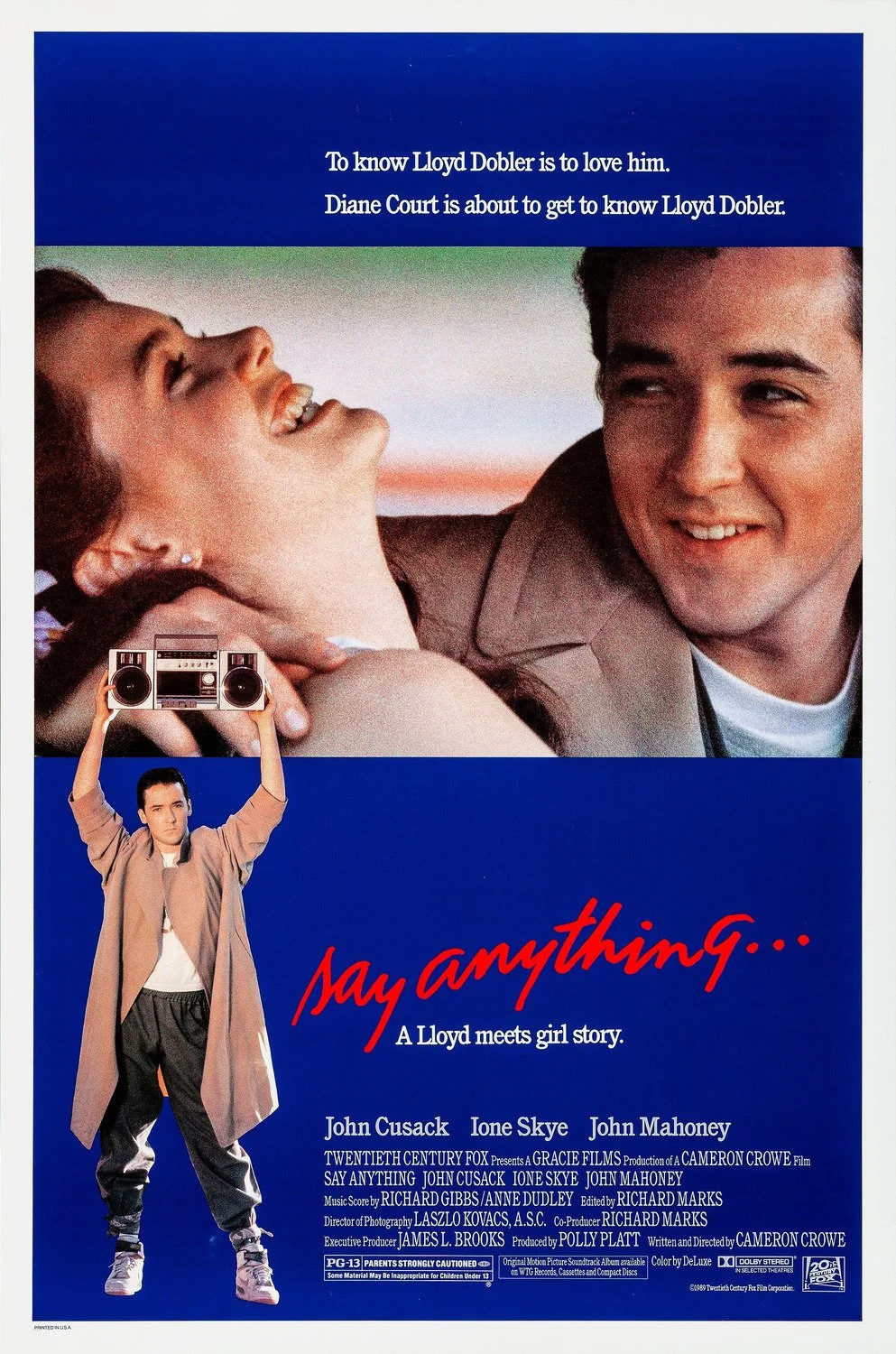
Classic Movie Review : Say Anything (1989)
We love to misremember the eighties. Since they happened before the internet, it’s tempting to understand them retroactively as this moment of great moral clarity. There were rich kids and poor kids. Reaganomics and the people it forgot. Lacquered privilege and a growing brokenhearted underclass that would eventually buy flannel shirts and triumph in the nineties. It’s a satisfying way to think about the decade because it makes history feel like a teen movie where everyone eventually reveals who they really are at prom.
But nothing is ever that clean. Most people in the eighties were not trying to overthrow the social order. They were trying to coexist inside it, even when the terms of that coexistence were obviously unfair. They had less language for social, economic, and cultural equity, which did not make the inequity less real. I just watched Cameron Crowe’s Say Anything for the first time, and it is not the underdog love story I was promised. Not really. It might be the most reasonable romantic movie I have ever seen.
In case you’ve been living under the same rock I was, Say Anything tells the story of Lloyd Dobler (John Cusack), a directionless, strangely self-possessed teenage boy whose main career plan is to become a professional kickboxer. So, yes, he is basically Joe Rogan, except sweet, emotionally literate and not yet ruined by microphones.
After graduation, Lloyd decides to confess his feelings to the beautiful class nerd Diane Court (Ione Skye). She is brilliant, disciplined, admired by adults, and headed to England on a fellowship at the end of the summer. No one thinks it’ll work, but it does. Almost immediately. That’s the first strange thing about Say Anything: the fantasy is not that an ordinary boy wins over an extraordinary girl. That happens right away. The real fantasy is that Diane meets a young man who has emotional ambition, rather than professional direction.
That almost never happens. Even in 2026.
The Dark Art of Cameron Crowe
This is another eighties movie with almost no romantic conflict, which is strange because it seems built for it. Lloyd and Diane’s relationship is so unproblematic to almost everyone involved that Cameron Crowe has to create an entirely separate subplot where her father is stealing money from elderly people at the retirement home he runs. This is a wild thing to drop into a movie that otherwise has the emotional temperature of two thoughtful teenagers trying not to disappoint anyone.
Even Diane’s father, Jim Court (John Mahoney), is not the tyrannical rich dad this story seems to require. He is worried about Lloyd’s directionlessness, but he does not hate him. He does not think his daughter is too good for him in some cartoonish country-club way. If anything, Jim’s problem is almost annoyingly reasonable: he does not want Diane to throw away a fellowship in England for a boy she started dating five minutes ago.
And he’s right. That’s what makes Say Anything so fascinating. The obstacle between Lloyd and Diane is not cruelty, class resentment, or parental control. It’s adult logic. Everyone keeps behaving in ways that make sense, which is not usually how teen romance works, because teen romance depends on at least three people acting like idiots at the same time.
So why should you care about this movie? Why has it survived for almost four decades as a beloved romantic memory? Because Say Anything portrays the paradigm change young adults experience after high school in an endearing way. That’s what Lloyd offers Diane. Not rebellion, exactly. Not escape, either. He gives her permission to experience herself outside the machinery that has been praising her into a corner. Diane is brilliant, disciplined, and adored by adults, but those qualities have become a cage made out of compliments. Lloyd makes her feel like she is more than the sum of what everyone has decided she is.
That’s why Lloyd Dobler became a pop culture heartthrob. It’s not because he’s cool. He is barely cool. It’s because he arrives at the exact moment when being understood feels more erotic than being desired. That is the real Cameron Crowe trick: he creates nostalgia for emotional experiences most people only get once, then makes you remember them as if they happened to you personally.
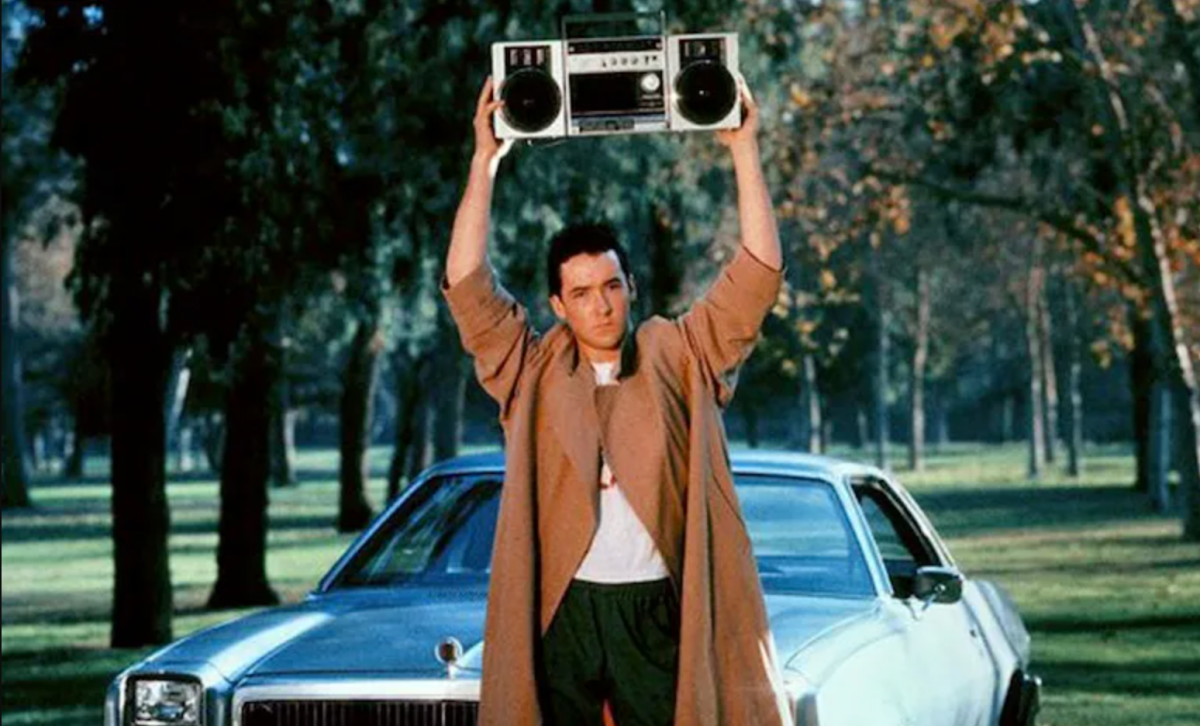
But Is Lloyd Dobler A Good Boyfriend At All?
Well, he’s considerate. He actually cares for what Diane wants and he's not jealous of her intelligence or the opportunities that she has even if they will require sacrifices for him. Lloyd’s great romantic virtue is not that he knows what he wants. Most teenage boys know what they want. Lloyd’s virtue is that he does not confuse wanting Diane with owning her future. He's got that going for himself.
But Lloyd Dobler also created a new archetype of male desirability, didn’t he? He exists halfway between the jock’s self-reliance and the nerd’s emotional depth. He can throw a kick, drive a car, talk to women, and still appear sensitive enough to understand that loneliness is not automatically made more interesting by pretending to be above it. He is not the quarterback and not the outcast. He is the emotionally available fringe athlete, which might be one of the most dangerous things popular culture ever invented for teenage girls with literary ambitions.
I quite relate to this archetype myself and I know all too well it cannot carry your relationship into the sunset alone.
The funny thing is that Say Anything never really explores Lloyd’s problems, because Lloyd is not actually the central character. Diane is. Lloyd has obvious abandonment issues that he self-medicates with the idealization of romantic love, but the movie never asks what happens after the fantasy stabilizes. Does he become a Mechafuckboy once he gets Diane all to himself? Does he chase that same feeling somewhere else once it becomes domesticated with her?
Because that is the part of the Lloyd Dobler archetype popular culture has never wanted to inspect too closely. A guy whose entire identity is built around loving someone beautifully can still be using that love to avoid becoming a person. Lloyd is appealing because he wants nothing from Diane except Diane, but that is also what makes him suspicious. Real people eventually need a self. Lloyd Dobler is not real, and that’s what makes him such a powerful romantic idea.
Lloyd Dobler never had a twenty years relationship and it shows.
*
I enjoyed Say Anything about as much as I can enjoy Cameron Crowe’s frictionless nostalgia for the kid he probably wanted to believe he was. It’s an important film because it expanded the emotional territory of teen romance beyond cafeteria politics, class humiliation and the usual battle between sensitive boys and cruel parents. Outside of the strange fiscal crime subplot, it is a surprisingly realistic depiction of how young adults begin thinking for themselves.
That does not mean it explores anything in great depth. Kids rarely do. They make decisions off the cuff, confuse intensity with certainty, and let the consequences explain them later. That’s what Say Anything understands better than most movies of its kind. Lloyd and Diane are not rebelling against the world as much as they are testing whether they can exist outside the parameters that were dealt to them.
Maybe that is why the movie lasted. It remembers the tiny (and illusory) window of life when love still feels like a credible answer to the question of who you are.
7.5/10
* Follow me on Instagram , Bluesky and Substack to keep up with new posts *