
A Subjective History Of Mathcore
Everyone knows someone who claims not to understand the appeal of jazz. Maybe you are that someone. Or maybe you’re like me and only pretend to get jazz because you once saw a beat-up copy of Kind of Blue in a dorm room and instinctively thought : "that seems like something smart people are into". Either way, we all know the guy. Usually male, usually born before Napster, often possessing a Pearl Jam tattoo he still somehow proud of.
Now, I’m the first to demand that music makes me feel something and ideally not just abstract admiration for a guy who spent 30 years memorizing scales. But here’s the secret nobody admits: technicality, countercultural ideas, and raw emotion are not enemies. They’re roommates who hate each other but keep renewing the lease. You can be a giant guitar nerd and play music that sounds like a fistfight. Just ask the nineteen dudes who’ve been a part of Cryptopsy over the last three decades.
And yes, you can be a jazzman and still angry as hell. Miles Davis has this live record, Dark Magus, that sounds like trumpet-led grindcore. The man was probably high enough to think his horn was a lightsaber while recording it, but that’s beside the point.
Zone of Truth: I do enjoy a little bit of jazz, but it’s a baby steps kind of thing.
This is the paradox: complex, brain-expanding music can also make you want to punch drywall. I do not know a single living soul who didn’t fantasize about taking a sledgehammer to their unfinished basement in 1999 when first listening to The Dillinger Escape Plan’s Calculating Infinity.
Okay, that’s a lie. I know plenty of people who didn’t. But those people are the same ones who can’t understand why anyone would yell "GUUUUAAAEERRRRGHHH" into a microphone for three minutes straight and I would never want to attend a show with them anyway. (These are the same people who probably have an Arcade Fire tattoo, which is the Pearl Jam tattoo for people who think they’ve "moved on.")
If technical death metal was about controlling chaos through monk-like discipline, mathcore was its evil twin: musicians who already knew how to play perfectly well and decided to drive themselves insane by writing music that felt like the soundtrack to your dream where a dolphin is taking your Slurpee order in Esperanto while the sun collapses and you’re naked in your high school gym. You know exactly what dream I’m talking about.
So what the hell is this? What am I even saying? Is this still about music, or am I describing the onset of a stroke? Whatever. Without further ado, here’s my highly subjective, occasionally unhinged history of mathcore.
Rock Is Boring (to Some)
Here’s the thing about rock: as culturally essential as it is, it can get boring fast for the people playing it. Especially if you don’t have a deep emotional connection to whatever vague sexual metaphor you’re singing about. Imagine being a guitarist who can sweep-pick like Yngwie Malmsteen but is stuck strumming the same four chords every night. That’s like owning a Ferrari but only ever driving it to Walmart.
Sure, there were already outlets for this frustration: technical death metal, prog rock, actual jazz, but some musicians didn’t want to leave rock. They just wanted to mutate it into something that felt challenging to play. That’s how math rock, the dorky, cargo-shorts dad of its angry mathcore children, was born.
So what even is math rock? Why does it sound like the musical equivalent of failing Algebra II? Well, most blues and rock songs are written in 4/4 time. This means you’re basically counting to four forever: one-two-three-four, repeat until death. If someone loses the count and drifts out of sync, musicians call that being "not tight." Which is basically the musical equivalent of someone insulting your mom, but specifically her rhythm.
Odd time signatures: 5/4, 7/8, (13/16 if you really hate your drummer), changed that. Suddenly, instead of counting "one-two-three-four," you’re counting something that feels like Morse code for a seizure. Add in polyrhythms (two conflicting time signatures layered over each other) and you’ve got the building blocks of math rock: music as numbers, counting as rebellion.
And because math rockers love numbers, drummers became the unofficial frontmen. The guitarists were free to bend strings, abuse pedals, or just stare into the void wishing they had girlfriends. Tom Morello probably would have been a math rocker if he hadn’t been a Harvard jock with a Che Guevara complex.
Lyrics? Almost irrelevant. Math rock was invented by musicians who were fundamentally bored of the emotional baggage of rock songs. Heartbreak is hard to care about when you’re too busy playing a 15/16 riff and wondering why your audience keeps walking out.
As for who invented math rock, that’s debated. Some say Yes. Some say Robert Fripp’s Discipline with King Crimson. Personally, I hate that record with every fiber of my being. It sounds like Genesis-era Peter Gabriel falling down a staircase and I don’t even like Genesis-era Peter Gabriel.
A more interesting case is Spiderland by Slint, which dropped in 1991. Less obnoxious, more atmospheric. Slint made music that actually felt bleak instead of just counting bleakly. They proved you could be a musician’s musician and still make emotionally devastating records.
Black Flag, weirdly enough, also mattered here. Their album My War was loaded with jazz-inspired rhythms designed specifically to alienate their own audience. (Which is punk in the purest sense: hating the people who love you.) Steve Albini helped too. Not with math rock itself, but with his production philosophy, which made noise sound like an actual weapon. Bands like Big Black, Shellac, The Jesus Lizard, Fugazi, they all created a climate where mathcore could eventually crawl out of the swamp.
But we’ll get there. I just had to let the nerds have their barbecue dad moment.
The Good Kind of Metalcore
Mathcore is basically what happens when kids raised in hardcore realize that being a tough guy has diminishing returns. Once you’ve shouted "RRRRRESPECCCCT" into a VFW hall fifty times, you start to wonder if there’s more to life than crowd-killing your friends. So the forward thinkers started writing complex, dissonant songs that didn’t just go: fast part, breakdown, repeat until the cops arrive. They wanted music that reflected how messy and non-binary their anger felt.
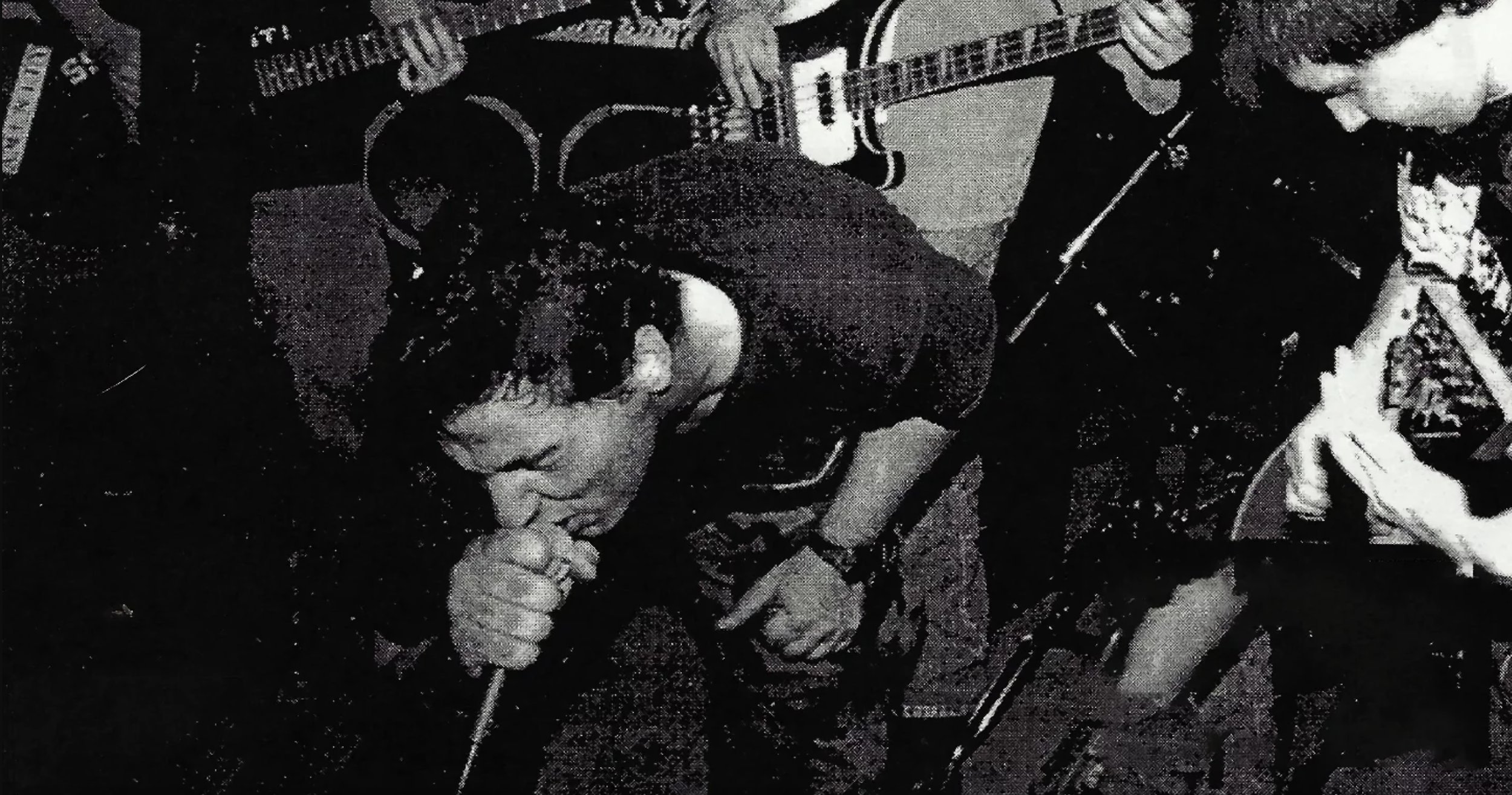
Enter Rorschach. New Jersey, 1989. They were youth crew kids: straight-edge-adjacent, into Cro-Mags and Youth of Today, all about community and betterment, but also obsessed with Voivod somehow. That combination is like taking your vitamins while listening to Slayer. Their 1990 record Remain Sedate hinted at something weird, but it wasn’t until 1993’s Protestant that the beast emerged: unpredictable tempo changes, bat-like shrieks, riffs that sounded like rusty hinges screaming in pain. Rorschach were the first band to sound like they were actively trying to make their own songs unplayable.
Around the same time, Midwestern noise rockers Dazzling Killmen were releasing Dig Out the Switch (1992) and Face of Collapse (1994). To my ears, they were basically just math rock on steroids: angry, noisy, yes, but not quite possessed. Inspirational to the right people, but not never quite alien to an entire subculture in the best possible way.
By the mid-90s, there was a genuine hunger for music that was not only pissed off but also difficult. Hardcore kids had grown tired of breakdowns being the endpoint of every emotional expression. Breakdowns are like fast food: immediate, satisfying, but unsustainable as a diet. Some kids wanted a seven-course meal prepared by a deranged chef who served dessert first and then smacked you in the face with a ladle.
Botch, from Tacoma, were those chefs. They weren’t around long, but their albums American Nervoso (1998) and We Are the Romans (1999) influenced everyone who needed to soundtrack their loneliness with complicated violence. Botch engineered heaviness with blueprints stolen from the future.
And then there’s Converge. Even if you could label them metalcore, Kurt Ballou’s writing was too chaotic, too forward-thinking, too jagged to leave them out of mathcore’s bloodline. Converge were never content just being Converge, they were like scientists trying to invent new forms of screaming. Their 1996 record Petitioning the Empty Sky and 1998’s When Forever Comes Crashing set the foundation. And then Jane Doe detonated everything in 2001. This album is more than. a cornerstone of mathcore; it’s a cornerstone of human despair, period.
This is a no Converge slander zone, by the way. If you want to slander Converge, please close this tab, log off the internet, and join a monastery where you can contemplate why you’re wrong for the rest of your natural life.
Other bands were adding bricks to the mathcore foundation, too: Coalesce, Cave-In, Knut, Starkweather. It wasn’t a massive scene, it was too technically demanding and emotionally draining for that, but the blueprint was there. The problem was mathcore hadn’t yet had its big bang moment.
That moment came with a band who named themselves after a bank robber. Which, honestly, is the most on-brand thing possible.
The John Dillinger Blues Explosion
Calculating Infinity is basically the most violent sequel to Revenge of the Nerds that never happened.
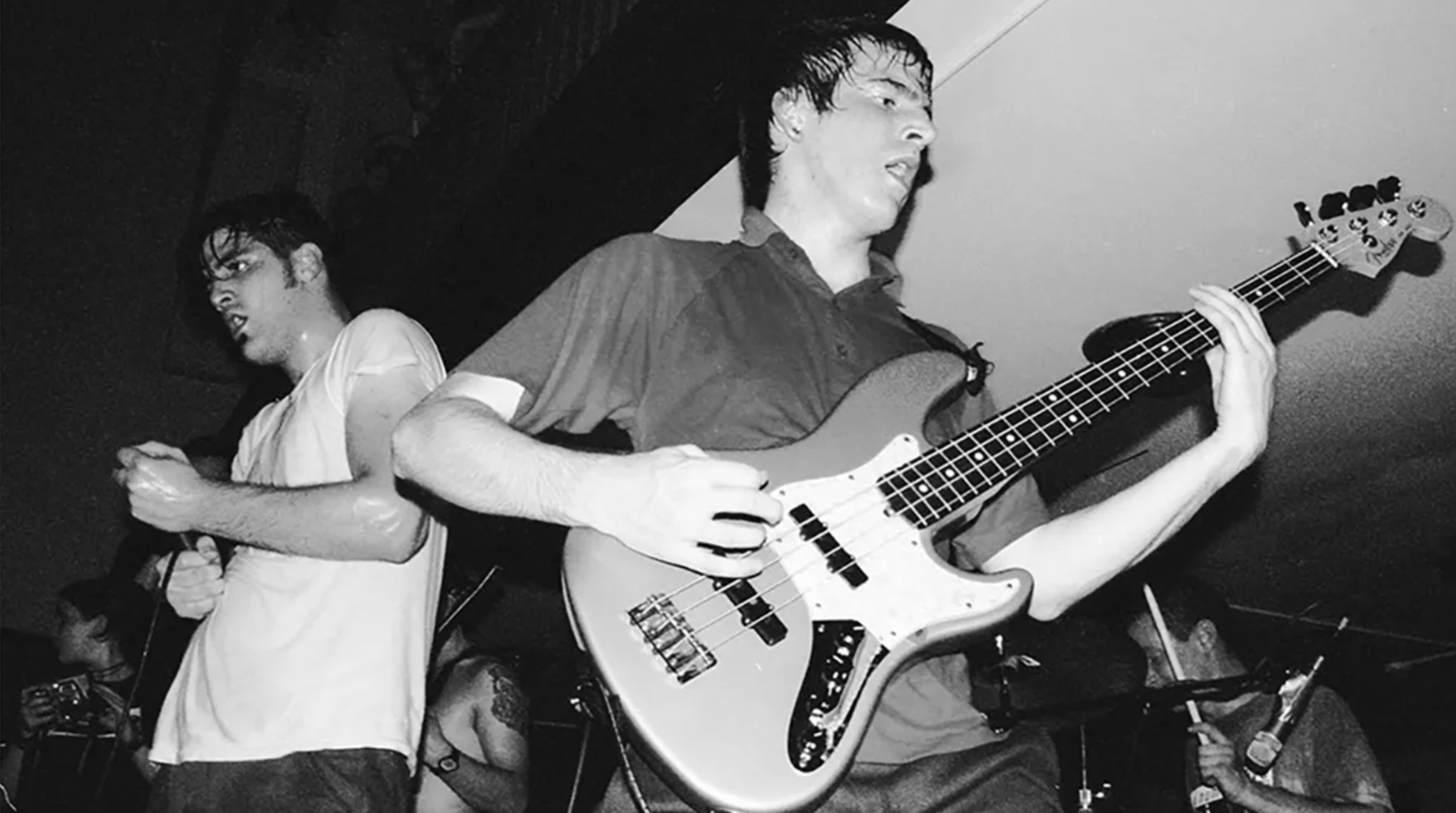
I still don’t fully understand why this album exploded the way it did. Nü metal was everything in 1999. Korn and Limp Bizkit were topping charts. So when Dillinger showed up, five dudes playing music that made Cannibal Corpse sound like Coldplay, they immediately became the weirdest thing on the prepubescent internet. It was the audio equivalent of one of these stomach churning videos that were everywhere back then. You didn’t like it exactly, you had no idea what you felt. But you couldn’t look away. I swear I’ve seen a video of a dude shitting on a paper plate to a Dillinger song then.
And it oddly made sense.
Nobody heard 43% Burnt and thought "I should learn this riff". It wasn’t inspirational in that sense. It was more like: "These guys are clearly human, so how are they making sounds that suggest possession by 14 different demons?"
The music was schizophrenic, cataclysmic, occasionally jazzy. Some parts felt like Cynic’s prog-metal spirals, others like death metal rewound and played through a blender. Dimitri Minakakis screamed in cryptic fragments, equal parts terror and poetry. Each track was a nightmare and a jazz fusion recital, simultaneously. Even today, Calculating Infinity is still a standard in unhinged intensity.
The Dillinger Escape Plan got so hot, so fast, they nearly imploded. Not exactly planning to be a rock star, Dimitri bailed and became a graphic designer (I think). Ben Weinman (who clearly wanted to be the creative force behind the hottest thing in metal) had to find a new frontman. Enter Greg Puciato: equally feral, but with better singing chops. Sometimes he could switch from shrieking to crooning in a single line, like a lunatic trying to convince you he’s sane. I love it.
With Puciato, Dillinger expanded their sound. Irony Is a Dead Scene (with fucking Mike Patton, no less), One of Us Is the Killer, Dissociation, all classics. They never again reached the sheer unhinged violence of Calculating Infinity, but they didn’t have to. That record was the big bang, the mushroom cloud, the thing that made everything else possible.
The Aftermath of Infinity
Mathcore was never going to dethrone nü metal. It was not commercial enough by design and nü metal was basically a self-imploding star, it collapsed under its own weight. You didn’t need a rival genre to kill Limp Bizkit. Limp Bizkit killed Limp Bizkit. (Though, to be fair, mathcore probably would’ve volunteered if asked.)
What mathcore did instead was remain an oddly nerdy niche, the kind of music you get into after you’ve already alienated most of your friends by insisting Meshuggah’s Nothing is actually relaxing. There weren’t that many all-out mathcore bands then. There aren’t that many now. Especially once Dillinger Escape Plan raised the standard so savagely that trying to top them was like trying to out-paint Jackson Pollock by smearing blood and feces on the can vas.
The obvious heirs were Ion Dissonance, who emerged from Quebec as a French-Canadian answer to Calculating Infinity. Their first two records Breathing Is Irrelevant and Solace rivaled Dillinger in unpredictability, and sheer savagery.
But here’s the boring reality of following in the footsteps of a paradigm-breaker: most people don’t want more Dillinger. They want Dillinger. So when Ion Dissonance doubled down on chaos, the audience didn’t double with them. Eventually they changed their sound, which was tragic, but also inevitable. I still love them, though, maybe even more than Dillinger in places. Their music feels less like math equations set on fire and more like someone shrieking with their mouth taped up while trying to set themselves on fire.
There was also awesomely named (and quite popular) Tony Danza Tap Dance Extravaganza who were really toeing the line with grindcore at times. There was a lot of metallic hardcore to what they did too. They formed in 2004 and were renowned for their chaotic live act.
Car Bomb also arrived in Dillinger’s wake, though they didn’t release anything until 2007. They’re the undisputed masters of eye-of-the-storm tempo shifts, those moments where the song feels like it’s collapsing under its own geometry and then suddenly rebuilds itself into something sharper. Meanwhile, The Locust were buzzing around California in bug costumes, making music that sounded like Atari consoles having seizures. They played with mathcore, sure, but calling them a mathcore band would be unfair to them and the genre. Same goes for Daughters, who are cancelled now, so we won’t talk about them.
Then you’ve got The Number Twelve Looks Like You, a New Jersey outfit who basically asked: what if we started from Dillinger and broek the intensity knob? They weren’t as atmospheric or Byzantine in their compositions, but they made up for it in sheer aggression. It was chaos with the volume permanently stuck at eleven.
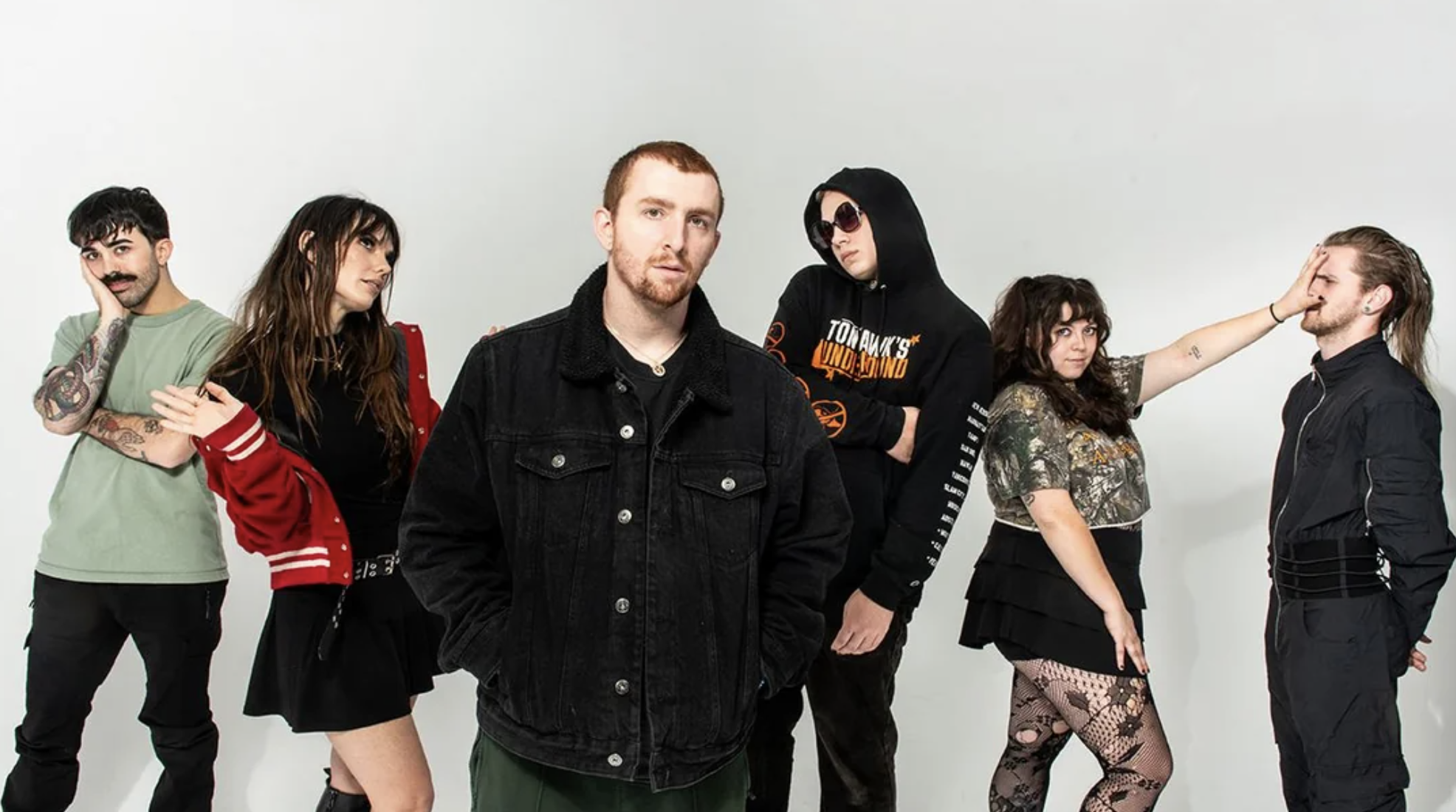
And mathcore didn’t stop there, it just mutated. Today you’ve got The Callous Daoboys, who feel like the most successful mathcore band since Dillinger’s early days. They’re psychedelic, eclectic, and willing to toss in jazz or ambient detours like they’re free samples at Costco. If Dillinger was an explosion, Callous Daoboys are the fireworks show that comes after, no less dangerous, but a little more kaleidoscopic. You’ve also got SeeYouSpaceCowboy from San Diego, and Rolo Tomassi from England, who afe coming more from post-hardcore sensibilities, bands that feel like they’ve been raised on equal parts Midwest emo and violent noise. Rolo Tomassi in particular are incredible: their music balances beauty and insanity the way a tightrope walker balances above an open elevator shaft.
But here’s the thing about mathcore: it will always be niche. Not "niche" like an underappreciated indie film, but niche in the sense that you have to fundamentally want to hear music that refuses to feel good. You can’t fake this intensity and you can never make it normal. Being groundbreaking isn’t an aesthetic, it’s a personality disorder. And whether you’re copying Dillinger or rebelling against them, Dillinger remains the template. They’re the North Star, even if your only instinct is to steer away from it.
Before I leave you befuddled and still wondering what the hell is mathcore exactly, here are five songs to help you get a better grasp of the genre:
Rorschach - In The Year Of Our Lord : This is mathcore stripped to the bone. Aggressive, dissonant, tempo changes that feel like potholes. If death metal is a commando raid, this is a wolverine trapped in your trunk. You know it’s in there, you just don’t know when it’ll claw your face.
Converge - In Harms Way : In a world where Calculating Infinity didn’t already exist, Converge were alreadydoing weird dark-jazz foreplay before collapsing into screeching chaos. Proof that Converge isn’t just heavy, they’re multidimensional. Layers on layers. A Rubik’s Cube made out of razor blades. I love them to death. No Converge slander will be tolerated.
The Dillinger Escape Plan - When Good Dogs To Bad Things : I know it’s weird to choose a song without even Dimitri nor Greg singing, but this is one of my favorite Dillinger tracks. This is a mathcore labyrinth, turning the band’s violence into a carnival of menace.
Ion Dissonance - The Budd Dwyer Effect : One of the most obliterating songs ever recorded. It uses tempo shifts and logic-defying structures as actual vehicles for mental collapse. It’s an earnestly scary song. Early Ion Dissonance is everything I ever wanted mathcore to be.