A User-Friendly Guide to Unlistenable Music, Vol. 1
I can't remember when or how exactly I became interested in difficult music.
Metal has undoubtedly something to do with it. Not everyone who blasts KoRn at thirteen ends up mainlining John Zorn and contemplating the weaponized cruelty of a saxophone solo. Most people just grow out of the eyeliner and buy sensible headphones. But metal has these trapdoors built into it. You start with something abrasive but structured and before you realize what’s happening, you’re standing at a crossroads where the guardrails are gone and a strung out gatekeeper is whispering to you: If you think this is intense, wait until you hear what’s behind this door.
There was no Indiana Jones moment where I discovered the motherlode, no Ali Baba cave glowing with forbidden riffs. It was more incremental. I remember listening to Ildjarn's lo-fi barking in Norwegian that sounded like it was recorded on a Hello Kitty cassette recorder buried under wet soil sometime around 2005 and calmly thinking calmly: this is terrible. I cannot stop playing it.
My friend Audrey has been gently nudging me toward becoming that strung-out gatekeeper who seems more invested in detonating your expectations than in actually enjoying the song. You know the type. The guy who says "oh, you think that’s crazy?" with the faintest glimmer of sadism in his eyes. I’m not the most comprehensive encyclopedia of the extreme underground. I can’t trace every demo lineage back to the appropriate Japanese basement in 1996. But I do possess two qualifications that matter: unrelenting enthusiasm and mild tinnitus. That's enough credentials for me.
If you’re here for the books or the films, think of this as a cabaret of curiosities. A sideshow. A traveling exhibit of sounds that actively resist your affection. This isn’t about conversion. It’s about confrontation. Consider it an open challenge to your aesthetic tolerance — how far are you willing to follow a feeling once it stops rewarding you?
I’m starting with the classics — records by artists I genuinely love. The ones that pushed me to my physical and intellectual limits. The rules are simple: no irony, no condescension. This has to be music I enjoy, at least to a degree. It also has to resist casual understanding. The kind of album that provokes an almost involuntary question: What is this? How can this possibly exist? Am I under sonic attack by unseen government forces?
If the reaction to this guide is strong enough, I’ll write more volumes. So let me know you’re out there.
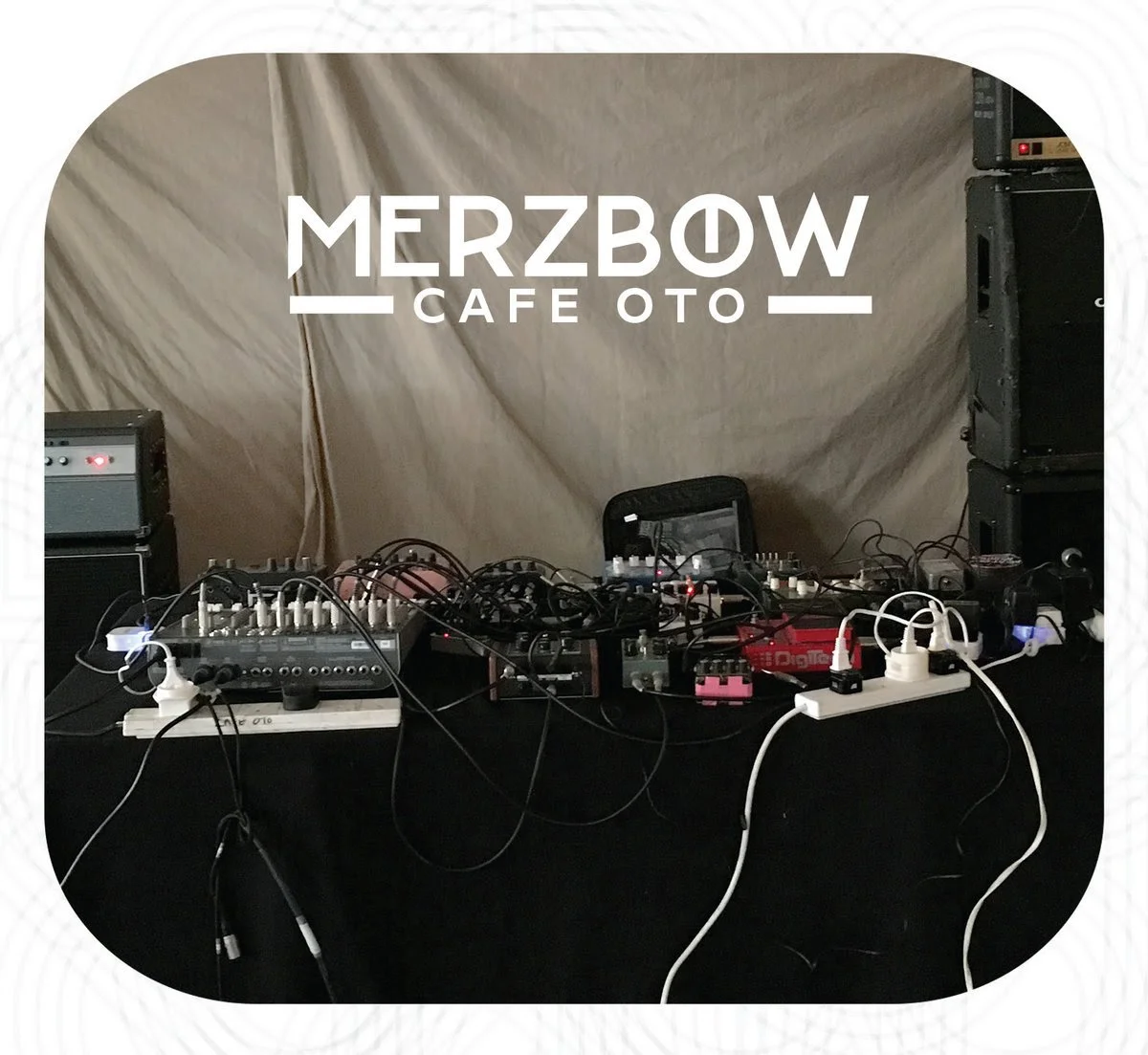
Merzbow - Pulse Demon
The Sgt. Pepper of unlistenable music. This would technically make Merzbow an alternate reality version of John Lennon if Lennon had recorded 300 albums, rejected every external idea about what music should be, and spiritually fused with Yoko Ono in a lab experiment designed to erase melody from human memory. To the untrained ear, Pulse Demon sounds like hostile gibberish. The kind of sound a dying stereo makes right before it bursts into flame. And you could argue that it is hostile gibberish. But hostility can be intentional. And gibberish, when sustained long enough, starts to resemble philosophy.
I’ve listened to Pulse Demon front to back exactly once at low volume and it genuinely tested my will to live. This isn’t background music. It’s not even foreground music. The sound is so total, so aggressively present, that thinking becomes impossible. There is no room left for your interior monologue. Pulse Demon colonizes the mind and declares martial law. And that’s why it’s endured for three decades. It’s not liberated from meaning. It’s actively arguing against meaning. It’s what happens when deconstruction stops being theoretical and becomes physical. Music cannot be more aggressively dismantled than this without ceasing to be sound altogether.
Lou Reed - Metal Machine Music
The best way I can describe how Metal Machine Music sound is: imagine what a 56K modem would sound like inside a washing machine with a thousand pennies and no one in the house knows how to turn it off. For an hour. Maybe longer, depending on how stubborn you are. Reed cited La Monte Young and Iannis Xenakis as influences, and you can hear the drone, the endurance, the architectural cruelty of sustained tone. You can hear the avant-garde ambition. Do you know what else you can hear? A rock star being actively hostile toward the people who made him famous.
There’s something almost performance-art about it. Not just the sound, but the gesture. Four sides of shrieking guitar feedback released at the height of commercial viability. To be fair, it’s nowhere near as physically punishing as Pulse Demon. There are textures. There’s space. If you already have tinnitus, you can almost call it meditative. And in retrospect, it mattered. That reverb-saturated wall of feedback quietly expanded the vocabulary of what guitars could do. It suggested that distortion wasn’t an accident to be corrected but a material to be explored.
The anti-commercial gesture may have been more culturally seismic than the record itself. Forget self-sabotage. The real shockwave was conceptual permission. If Lou Reed could release this on a major label, what exactly was off-limits? Industrial music was already forming in the shadows, but Reed enabled unpleasant people to write their own unpleasant music.
Last Days of Humanity - Putrefaction in Progress
This is the sound of falling down a flight of straight on fast forward except the stairs are made of drums and you're falling for twenty-five minutes straight. Last Days of Humanity was already almost twenty years into its existence when they released Putrefaction in Progress and had already mapped how goregrind music was supposed to sound. But this? This is an exercise in playing as fast and hard as you humanly can without caring about how it’s going to sound like. It's what music sounds like when it's structured around non-stop blast beats.
The result isn’t so much painful as it is disorienting. Like being sucker-punched by a bear, mugged mid-air, stuffed into a barrel, and sent over a waterfall before you’ve processed the first impact. There’s so much motion that it starts to erase cause and effect. And here’s the uncomfortable part: the artistic intent feels razor-thin. Not absent, but reduced to something primal. Expression here doesn’t come from composition. It comes from exertion. From musicians unloading negative emotion directly into their instruments at a speed that suggests they’re trying to outrun it.
It’s my least favorite Last Days of Humanity record. But I can’t deny the achievement. They stretched aggression to its logical endpoint. Past catharsis. Past structure. Almost past music.
Khanate - Clean Hands Go Foul
I could’ve picked any Khanate record. Their self-titled debut is arguably more abrasive in the traditional sense, but Clean Hands Go Foul is their strangest, their most abstract, and, if I’m being honest, probably my favorite. There’s a thirty-minute talisman at the end called Every God Damn Thing that is so exquisitely thin on instrumentation it barely qualifies as arrangement. It’s closer to being locked in a lightless dungeon while Alan Dubin shrieks from somewhere just out of sight than it is to listening to a song.
If you believe you’ve encountered unhealthy music before, this track recalibrates the scale. It doesn’t assault you with volume or speed. It starves you. It stretches time until you’re forced to sit in your own apprehension with nothing to distract you. The negative space becomes the instrument.
This isn’t their most conventionally abrasive record. It’s their most spatially sadistic. They toy with duration and silence in a way that feels architectural. You don’t move through the songs; they enclose you. It’s closer to the imagined soundtrack of the most depraved film you’ve never actually seen than to a standard drone metal release. Listening to it feels like being pursuedt. Like the musicians aren’t playing at you, they’re advancing on you, prodding your nervous system to see where it breaks.
Portal - Hagbulbia
My favorite album on this list. It’s the only one I return to with anything resembling regularity, which is either a testament to its power or a small red flag about my inner life. After two decades of releasing some of the most dissonant, labyrinthine death metal imaginable, Portal did something perversely restrained: they removed the metal. No blast beats. No cavernous vocals. Just the sound of the abyss clearing its throat.
If I had to describe what I think hell sounds like. Not the cartoon version with pitchforks, but the existential version where time folds in on itself. Hagbulbia is a living tapestry of abrasive textures that refuse to resolve into riffs or patterns. Nothing builds toward a payoff. Nothing crystallizes into something you can hum. It’s entropy documented in real time. Like Pulse Demon, it occupies the full bandwidth of your mind. There’s no spare cognitive space. But where Merzbow glitches and spasms, Portal swells. Hagbulbia expands slowly, like a balloon filling the room until you’re pressed gently against the walls. It doesn’t break down. It envelops.
And here’s the strange part: it can be soothing.
Because when a record is this total, this immersive, it vacuums up everything else. The intrusive thoughts don’t compete with it; they dissolve into it. It becomes a kind of sonic whiteout. Not silence, but obliteration. By the time it ends, there’s nothing left to think about. It’s a reset button disguised as damnation.
* Follow me on Instagram , Bluesky and Substack to keep up with new posts *